
What Should A Livestock Wastewater Solution Include?
A livestock wastewater solution should include solids separation up front, anaerobic digestion to stabilize the manure and recover biogas, nutrient recovery or managed land application, and a compliant discharge or reuse path - scoped to herd size, manure type, and local permit. The order matters: separate first, digest the soluble load, then close the nutrient loop.
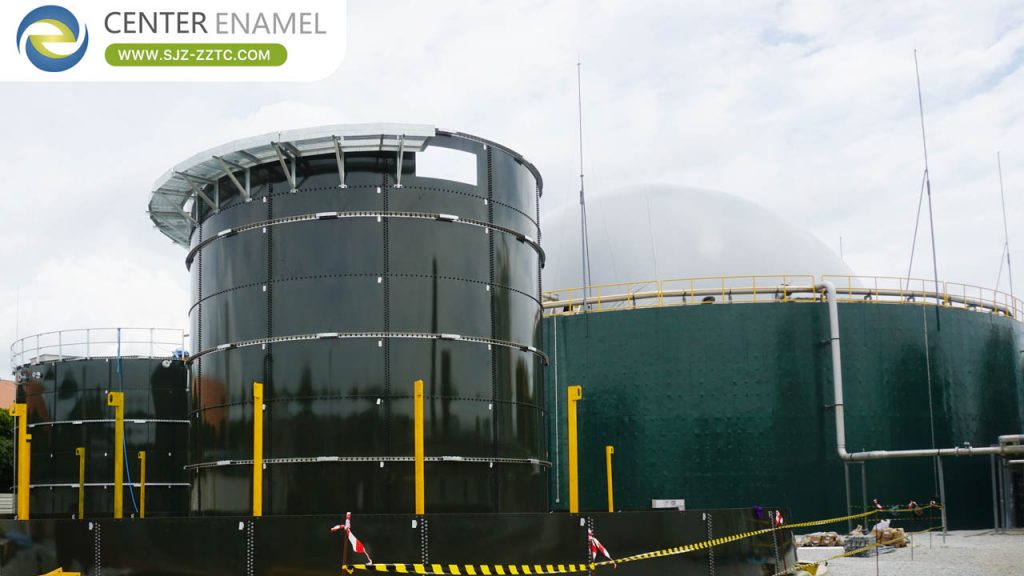
Solids Separation First
Livestock wastewater carries a lot of suspended solids and bedding. Separation - screens or screw presses - splits the stream so the liquid fraction is easier to digest and the solid fraction becomes a manageable, stackable product. Skipping this step overloads the digester with inert mass.
Anaerobic Digestion And Nutrients
The liquid fraction feeds an anaerobic reactor (CSTR or UASB) that converts the dissolved organics into biogas while cutting odor and pathogen load. The nutrient-rich digestate is then the residual to manage - land-applied within a nitrogen and phosphorus budget, or further treated where discharge limits are tight.
| Stage | Role | Output |
| Separation | Split solids/liquid | Stackable solid, liquid feed |
| Anaerobic | Stabilize + biogas | Biogas, digestate |
| Nutrient | Balance N and P | Land application / polish |
| Discharge | Meet permit | Compliant effluent |
A Boundary Condition
Herd size and local spreading rules set the tankage and storage volume, not convenience. Cold regions need enough digestate and biogas storage to cover the spreading ban. Size from the ban length and the nutrient area available.
Project Case Study: Beijing 5S Pig Farm Wastewater Treatment
Project / Application: Pig farm wastewater, Beijing, China. Industry: Livestock / hoggery. Tank Type: UASB + AOAO process train. Key Requirements: Comprehensive pollutant removal from high-strength manure water.
| Field | Value | Source / Evidence |
| Daily Treatment Volume | 580 m3/day | Company project reference |
| Treatment Process | UASB + AOAO (Physical + Biological + Chemical) | Company project reference |
| Influent COD | Greater than or equal to 10,000 mg/L | Company project reference |
| Effluent COD | Less than or equal to 200 mg/L | Company project reference |
| Influent Ammonia N | Greater than or equal to 1,000 mg/L | Company project reference |
| Effluent Ammonia N | Less than or equal to 80 mg/L | Company project reference |
| Installation Year | 2020 | Company project reference |
About Company
Shijiazhuang Zhengzhong Technology Co., Ltd (Center Enamel) is a comprehensive high-tech enterprise specializing in wastewater engineering, process section contracting, and equipment manufacturing. The company delivers biogas and wastewater projects through three main lines - EPC (turnkey) contracting, equipment supply, and process packages - covering livestock and municipal wastewater, biomass energy, industrial wastewater, and food waste. Its reactor portfolio spans CSTR, USR, UBF, UASB, IC, and EGSB, backed by in-house Glass-Fused-to-Steel tank manufacturing (enamel firing at 820-930 C) and certifications including ISO 9001, NSF/ANSI 61, and CE-EN 1090. With 35+ years of operation, a 150,000 m2 manufacturing base, and projects in 100+ countries, Center Enamel provides the single-responsibility engineering behind livestock wastewater trains such as the Beijing pig-farm plant treating 580 m3/day of manure water from COD above 10,000 mg/L down to 200 mg/L with a UASB + AOAO process - separation, digestion, and nutrient control as one scoped solution.
Comparison: Separation Then Digest
| Without separation | With separation |
| Digester overloaded by solids | Liquid digests cleanly |
| More sludge handling | Stackable solid product |
| Lower biogas per volume | Higher specific biogas |
A livestock wastewater solution should include solids separation, anaerobic digestion, nutrient recovery, and a compliant discharge or reuse path - sequenced from the herd size and permit, not assembled by habit.
Frequently Asked Questions
Q1: What stages are essential? A1: Separation, anaerobic digestion, nutrient management, and compliant discharge or reuse.
Q2: Is biogas included? A2: Yes; anaerobic digestion recovers biogas from the liquid fraction.
Q3: How is nutrient handled? A3: Digestate is land-applied within an N and P budget or further polished.
Q4: What about discharge? A4: Tight limits need polishing after digestion, as the Beijing plant shows.
Q5: What reactor is used? A5: CSTR or UASB depending on solids and strength.
Q6: What temperature is used? A6: Mesophilic 35-38 C for digestion.
Q7: What tank resists manure? A7: A Glass-Fused-to-Steel tank resists the corrosive, high-ammonia liquid.
Q8: Does herd size matter? A8: Yes; it sets digester and storage volume.
Suggested CTA
Share your herd size and local rules to an engineer, or request a livestock wastewater solution scope.