
What to Do with Fruit and Vegetable Waste? The Best Solution: Turn It into Biogas
Every day, millions of tons of fruit and vegetable waste are generated around the world—from fruit peels, vegetable trimmings, rotten produce, leftover salad, unsold market fruits, and processing plant residues. Many people ask: What to do with fruit and vegetable waste? Traditional methods like landfilling, incineration, or simple composting waste resources, create odors, release methane, and cause environmental pollution. In fact, fruit and vegetable waste is high in organic matter, easy to decompose, and extremely suitable for energy conversion. The best and most sustainable way to handle fruit and vegetable waste is to convert it into biogas through professional anaerobic digestion technology.
This method not only solves waste accumulation problems but also produces clean, renewable energy and organic fertilizer, forming a fully circular economy model. This article explains why biogas conversion is the optimal solution, how it works, and how advanced technologies and equipment make it efficient and reliable.
The Current Problems of Traditional Fruit and Vegetable Waste Treatment
Before answering what to do with fruit and vegetable waste, we must recognize the defects of traditional treatment methods.
First, landfilling fruit and vegetable waste occupies a lot of land resources. As waste decomposes, it produces a large amount of leachate that pollutes soil and groundwater. It also releases methane, a greenhouse gas far more powerful than carbon dioxide, accelerating climate change.
Second, incineration is not suitable for fruit and vegetable waste because of its high moisture content. It requires auxiliary fuel, increases costs, and may produce harmful flue gas.
Third, traditional composting is slow, takes up space, easily produces odor, attracts pests, and cannot meet large-scale urban or commercial treatment needs. It also has low efficiency and poor stability.
These methods do not really solve the problem; they only transfer pollution. So, what to do with fruit and vegetable waste in a truly environmentally friendly and resource-efficient way? The answer is to use it as feedstock for biogas production.
Why Fruit and Vegetable Waste Is Perfect for Biogas Production
Fruit and vegetable waste has natural advantages for anaerobic digestion and biogas generation:
- High organic content, rich in sugar, fiber, and carbohydrates
- High moisture content, easy to grind and adjust into slurry
- Fast biodegradation speed, short fermentation cycle
- High biogas yield, stable gas production
- Low oil and salt content, less interference to microbial activity
- Wide sources, large output, and sustainable supply
These characteristics make fruit and vegetable waste one of the best raw materials for biogas projects. When you wonder what to do with fruit and vegetable waste, biogas technology provides the most scientific and economically valuable path.
How Fruit and Vegetable Waste Is Converted into Biogas
The process of converting fruit and vegetable waste into biogas uses anaerobic digestion—a closed, oxygen-free decomposition system driven by microorganisms. The process includes four key stages:
Pretreatment: Sorting to remove impurities, crushing, pulping, and adjusting concentration and temperature.
Hydrolysis: Macromolecular organic substances are broken down into small soluble molecules.
Acidification and acetogenesis: Organic matter is converted into acetic acid, hydrogen, and carbon dioxide.
Methanation: Methanogenic bacteria produce biogas, which is about 55%–70% methane.
After purification and desulfurization, biogas can be directly used for cooking, heating, on-site power generation, or grid-connected power supply. The remaining digestate is processed into high-quality organic fertilizer for planting, gardens, and farms. This closed-loop system completely solves the problem of what to do with fruit and vegetable waste while creating economic benefits.
Benefits of Converting Fruit and Vegetable Waste into Biogas
Turning fruit and vegetable waste into biogas brings comprehensive environmental, economic, and social benefits:
- Reduces the amount of waste entering landfills and extends service life
- Controls odor, leachate, and pest breeding
- Recovers clean energy to ease power supply pressure
- Reduces methane emissions and meets carbon reduction targets
- Produces safe organic fertilizer and supports green agriculture
- Suitable for large-scale centralized treatment in cities, markets, and food processing zones
This method is widely recognized as the most ideal solution for what to do with fruit and vegetable waste.
Four Advanced Anaerobic Technologies for Fruit and Vegetable Waste Biogas Projects
To achieve stable and efficient biogas production from fruit and vegetable waste, four mature anaerobic technologies are widely used:
1. CSTR (Continuous Stirred-Tank Reactor)
With mechanical stirring, CSTR ensures full mixing of materials and microorganisms. It has strong anti-shock load capacity, stable gas production, and is suitable for large-scale fruit and vegetable waste treatment.
2. UASB (Upflow Anaerobic Sludge Blanket)
Relies on high-activity granular sludge with high organic load and high treatment efficiency. Ideal for pre-treated soluble fruit and vegetable waste, with a small footprint.
3. USR (Upflow Solid Reactor)
Simple structure, low investment, anti-clogging, low operation cost. Perfect for small and medium-sized projects in rural areas, markets, and farms.
4. IC (Internal Circulation)
High-efficiency reactor with 3–5 times higher load than traditional systems. Saves space and supports large-scale urban centralized treatment plants.
These technologies make the solution to what to do with fruit and vegetable waste more efficient, stable, and adaptable.
Advantages of GFS Tanks in Fruit and Vegetable Waste Biogas Projects
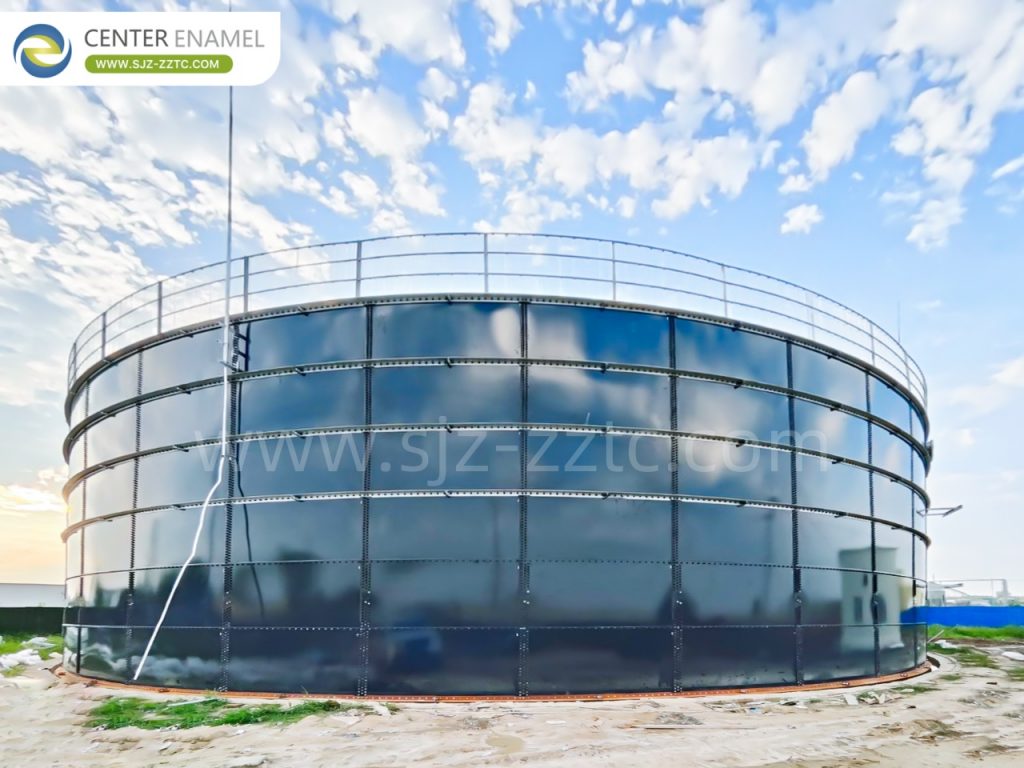
Glass-Fused-to-Steel (GFS) Tanks are the core equipment for modern biogas projects and provide strong support for fruit and vegetable waste treatment:
Super corrosion resistance: Resists acid, alkali, and organic acid corrosion from fruit and vegetable waste
Excellent airtightness: Prevents biogas leakage and ensures safe and stable gas collection
Modular bolted design: Factory prefabricated, fast on-site installation, no welding required
Long service life: Over 30 years, smooth surface not easy to scale, low maintenance cost
Strong weather resistance: Adapts to high temperature, humidity, and tropical climates
Flexible expansion: Can expand capacity as waste volume increases
GFS Tanks make biogas projects more durable, reliable, and cost-effective, perfectly solving the problem of what to do with fruit and vegetable waste.
Center Enamel: Professional EPC Contractor for Fruit and Vegetable Waste Biogas Projects
When you need a complete solution for what to do with fruit and vegetable waste, Center Enamel is your trusted global EPC partner with rich experience in organic waste-to-energy projects.
Our core advantages include:
- Full turnkey EPC services: design, production, transportation, installation, commissioning, training, and after-sales
- Customized anaerobic systems: CSTR, UASB, USR, IC tailored to waste characteristics and project scale
- High-quality GFS Tanks with patented enamel technology, certified by ISO, AWWA, and international standards
- Professional hydraulic jacking installation technology, safe and fast even in narrow sites
- Hundreds of successful biogas projects worldwide, stable operation and high customer recognition
- High biogas yield, low failure rate, and long-term economic benefits
Center Enamel helps governments, enterprises, and communities turn fruit and vegetable waste into clean energy and achieve real sustainable development.
To the question what to do with fruit and vegetable waste, the best answer is to convert it into biogas through anaerobic digestion. This method is environmentally friendly, energy-generating, economically beneficial, and suitable for large-scale applications. Supported by four advanced anaerobic technologies and high-performance GFS Tanks, fruit and vegetable waste biogas projects are stable, efficient, and long-lasting. As a professional EPC contractor, Center Enamel provides full-cycle, reliable solutions to turn waste into wealth. If you are looking for a sustainable way to handle fruit and vegetable waste, biogas technology is the optimal choice, and Center Enamel is your best partner.