
Which Feedstock Strategy Is Better for a Biogas Project?
For most farm biogas projects, co-digestion beats single-manure feeding. Running cattle or pig manure alone is operationally simple, but blending in a complementary substrate—food waste, ag residue, or slurry—balances the C:N ratio toward the 20–30:1 sweet spot, lifts volatile-solids conversion, and adds tipping-fee or waste-gate revenue. Pure manure wins only when simplicity and zero feed cost outweigh the extra gas.
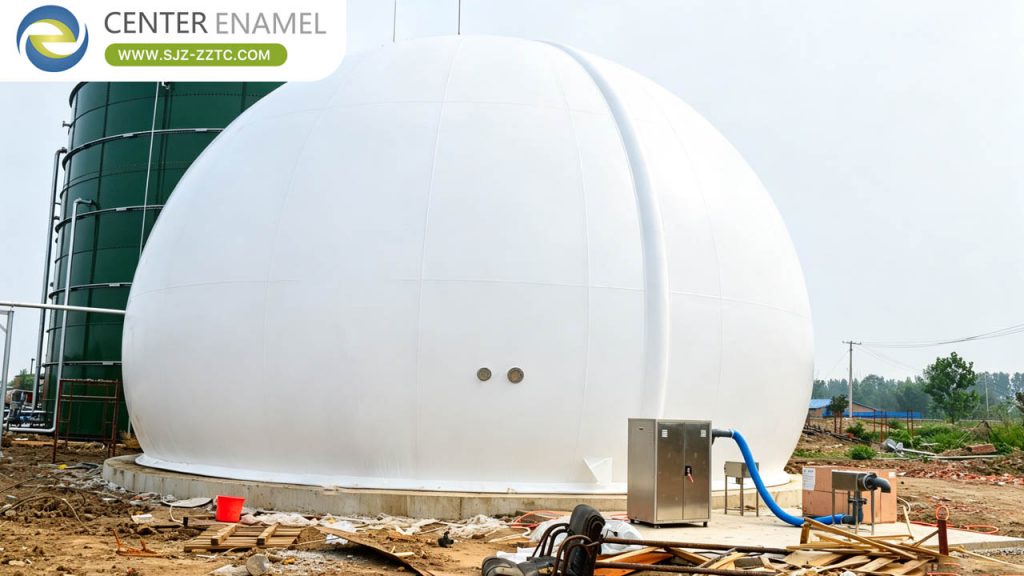
What the Choice Really Means
The decision is not “cow dung vs something else” in isolation—it is single-stream vs multi-stream feeding. Single-stream (one manure) minimizes intake complexity. Multi-stream (manure + co-substrate) optimizes biology and economics but adds receiving, screening, and contamination control.
Single-Manure Feeding
Advantages: one source, no intake cost, familiar biology, low contamination risk. Limits: manure alone is often nitrogen-heavy and carbon-light (high C:N), so methane yield per m³ of reactor is modest, and gas output is capped by herd size. If the herd is small, the plant may never reach bankable scale.
Co-Digestion (Manure + Co-Substrate)
Adding a carbon-rich, easily degradable co-substrate (food waste, glycerin, crop residue) balances C:N toward 20–30:1, raises BMP utilization, and stabilizes loading through seasonal herd swings. It also opens gate fees for accepting organic waste—turning a cost center into income. The trade is more intake engineering and stricter contamination control.
| Strategy | Yield / m³ | Complexity | Revenue levers |
| Single manure | baseline | low | energy only |
| Manure + food waste | higher, stable | medium | energy + gate fee |
| Manure + crop residue | higher | medium | energy + residue use |
| Manure + energy crop | higher | high land need | energy only |
Energy Crops — Usually a Distractor
Purpose-grown energy crops (maize silage, grass) boost yield but compete for land and carry a real cultivation cost and carbon debate. For a *farm* project they make sense only when spare land and a guaranteed off-take exist; for most, waste co-substrates are cheaper and greener.
Applications and Site Fit
A closed dairy with steady manure and no nearby waste should keep it simple. A dairy near a city, food processor, or abattoir should co-digest. Municipal-adjacent farms can turn gate fees into the project’s strongest cash flow.
Technical Considerations
Co-digestion must respect ammonia and trace-element limits (excess nitrogen from manure plus protein-rich food waste can inhibit). Introduce co-substrates gradually, screen out plastics/glass, and keep OLR in the 2–4 kg VS/m³·day band for manure mixes. Tank receiving design (locked hoppers, screw feeders) matters more than the chemistry.
How to Decide for Your Site
Rank by: (1) available feed volume and TS/VS; (2) proximity to a waste stream; (3) tolerance for intake complexity; (4) local gate-fee economics. If a clean co-substrate is within haul range, co-digestion is usually better; if not, single-manure is the honest choice.
Project Case Study
Zhaqi Biogas Project — Xing’an, Inner Mongolia, China. A medium-temperature CSTR project processing 900 m³/day of animal manure plus agricultural waste (grass straw), producing 20,000 m³/day of biogas. Four CSTR reactors were specified for cold-climate operation, demonstrating a manure-plus-residue co-digestion strategy at scale.
| Project | Zhaqi Biogas Project |
| Location | Xing’an, Inner Mongolia, China |
| Industry | Agriculture / Biogas |
| Application | Manure + agricultural waste digestion |
| Product | CSTR anaerobic digester tanks |
| Capacity | 900 m³/D feed; 20,000 m³/day biogas |
| Quantity | 4 × Ø25.98 × 8.4 m reactors |
| Material | Glass-Fused-to-Steel (GFS) |
| Standards | ISO 28765, AWWA D103 |
| Status | Delivered reference project |
About Center Enamel
Center Enamel supports feedstock-flexible biogas plants with engineered bolted-tank systems (GFS, epoxy, stainless, carbon steel) and aluminum dome roofs. The engineering value here is reactor sizing for variable, multi-stream feeds: larger receiving and mixing provisions, gas-tight GFS shells rated for biogas at 35–38°C mesophilic operation, and modular expansion if a co-substrate stream is added later. Design follows ISO 28765 / AWWA D103 with ISO 9001 manufacture and CE (EN 1090) marking for European projects.
Advantages and Limitations
Co-digestion improves yield, stability, and revenue but needs intake discipline; single-manure is robust and cheap to run but caps scale and income. Neither is universally better—the right answer follows your feed map.
Comparison: Single vs Co-Digestion
| Dimension | Single manure | Co-digestion |
| Gas yield / reactor | modest | higher |
| Feed cost | zero (own) | may pay or earn |
| Revenue | energy only | energy + gate fee |
| Complexity | low | medium–high |
| Risk | scale-limited | contamination, ammonia |
Co-digestion is better for most biogas projects because it lifts yield and adds revenue, while single-manure feeding stays the right call when simplicity and zero feed cost matter most. Decide from your local feed map, not a generic rule.
Frequently Asked Questions (FAQ)
Q1: Which feedstock strategy is better for a biogas project?
A: Co-digestion (manure plus a complementary substrate) usually beats single-manure feeding on yield and revenue; single-manure wins on simplicity and zero feed cost.
Q2: Why is co-digestion better?
A: It balances C:N toward 20–30:1, raises volatile-solids conversion, stabilizes loading, and can earn gate fees for accepting waste.
Q3: Are energy crops worth it?
A: Only with spare land and guaranteed off-take; they boost yield but add cultivation cost and a carbon debate—waste co-substrates are usually cheaper.
Q4: What is the main risk of co-digestion?
A: Ammonia inhibition from nitrogen-rich mixes and physical contamination (plastics, glass) from waste streams—both managed by gradual introduction and screening.
Q5: How do I know if my site suits co-digestion?
A: Check feed volume, TS/VS, proximity to a clean waste stream, and local gate-fee economics; if a clean co-substrate is within haul range, it usually pays.
Q6: Can I start single and add co-substrate later?
A: Yes—design the digester with modular GFS tanks and receiving provisions so a co-substrate stream can be added without rebuilding.
Share your feed inventory (manure volume, any nearby waste streams, TS/VS) and we will model single vs co-digestion yield and revenue, then recommend a reactor configuration and tank capacity for your project.