
Which Gas Is Released During Anaerobic Digestion?
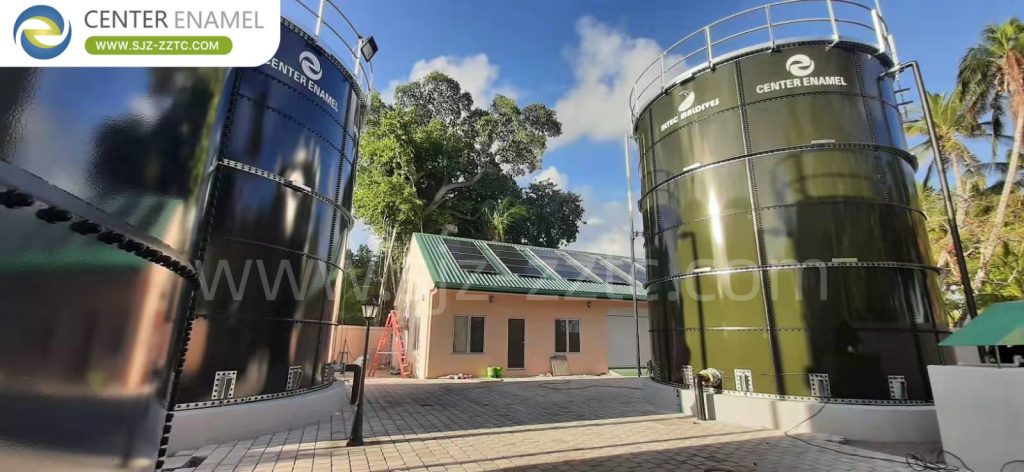
When organic waste decomposes in an oxygen-free environment, anaerobic digestion takes place and releases a mixture of renewable gases collectively known as biogas. The primary gas released during anaerobic digestion is methane (CH₄), followed by carbon dioxide (CO₂) as the second major component. Small traces of other gases are also produced, including hydrogen sulfide (H₂S), water vapor, nitrogen, and hydrogen.
In short, the gas released during anaerobic digestion is mainly biogas dominated by methane and carbon dioxide. This natural gas mixture is clean, renewable, and can be used for power generation, industrial heating, boiler fuel, cooking, and even purified into vehicle biofuel. Understanding which gas is released during anaerobic digestion helps industries, farms, and governments design proper biogas collection, storage, and utilization systems for sustainable energy development.
Main Composition of Gas Released in Anaerobic Digestion
Methane (CH₄) – 50% ~ 70%
Methane is the most valuable gas released during anaerobic digestion. It is highly combustible and serves as the main energy carrier of biogas. The higher the methane content, the higher the calorific value of biogas.
Carbon Dioxide (CO₂) – 30% ~ 45%
CO₂ is non-flammable and dilutes the heating value of biogas. It is produced throughout the four stages of anaerobic digestion: hydrolysis, acidogenesis, acetogenesis, and methanogenesis.
Trace Impurity Gases
Hydrogen sulfide (H₂S): Corrosive and odorous, needs desulfurization before utilization.
Water vapor: Must be removed through dehydration to avoid pipeline corrosion.
Minor amounts of nitrogen and hydrogen.
Professional biogas projects must equip gas treatment systems to purify the gas released during anaerobic digestion, ensuring safe, stable, and efficient energy use.
How Anaerobic Digestion Produces Biogas
The gas released during anaerobic digestion is generated through a four-stage biological reaction inside a sealed anaerobic reactor:
Hydrolysis: Complex organics break down into simple soluble molecules.
Acidogenesis: Simple substances convert into volatile fatty acids.
Acetogenesis: Fatty acids turn into acetic acid, hydrogen and carbon dioxide.
Methanogenesis: Methanogens consume acetic acid and hydrogen to produce methane — the core stage releasing the main biogas.
A well-sealed, corrosion-resistant reactor is essential to capture the gas released during anaerobic digestion without leakage, which is why GFS Tanks and professional anaerobic processes become critical infrastructure.
Four Main Anaerobic Processes from Center Enamel
To steadily produce and collect the gas released during anaerobic digestion for different waste types and project scales, Center Enamel provides four mature anaerobic technologies covering all biogas project scenarios:
1. CSTR (Completely Stirred Tank Reactor)
CSTR is ideal for high-solid waste such as livestock manure, food waste, and agro-residues. Mechanical stirring ensures full mixing of sludge and raw materials, avoiding sedimentation and stratification. It maintains stable fermentation and consistent biogas output, perfect for large farms and urban food waste biogas plants.
2. UASB (Upflow Anaerobic Sludge Blanket)
UASB is a classic anaerobic process for industrial organic wastewater. Wastewater flows upward through granular sludge to degrade organics efficiently. It features simple structure, low operation cost and easy maintenance, widely used in food processing, brewery and cassava wastewater treatment projects to generate stable biogas.
3. USR (Upflow Solid Reactor)
USR is optimized for high-concentration and high-suspended-solid waste. With simple design and low investment cost, it adapts well to scattered rural biogas projects and small-scale industrial biogas stations, reliably producing and collecting the gas released during anaerobic digestion.
4. IC (Internal Circulation) Process
IC is a high-rate advanced anaerobic technology. It uses self-produced biogas to drive internal circulation inside the reactor. Its volumetric loading rate is 3–5 times higher than traditional processes, saving land space and achieving high COD removal efficiency. It is the best choice for large industrial parks and super-scale biogas projects.
Core Advantages of Center Enamel in Biogas Projects
Center Enamel stands out as a top global EPC contractor for biogas and anaerobic digestion projects with unparalleled strengths:
Offers one-stop turnkey services including project design, equipment manufacturing, installation, commissioning and after-sales support, reducing clients’ coordination costs.
Matches customized anaerobic processes (CSTR/UASB/USR/IC) according to local waste characteristics, climate and project scale, maximizing biogas yield and stable gas collection.
Owns Asia’s largest GFS tank manufacturing base and over 200 patented enamel formulas, adapting perfectly to high humidity, tropical climate and corrosive organic wastewater.
Strictly complies with international standards such as ISO 28765, AWWA D103-09, OSHA and NSF/ANSI 61, with every tank plate passing high-voltage spark testing to ensure zero coating defects.
Adopts factory prefabricated modular design with hydraulic jacking installation, zero on-site welding, fast construction and rapid project operation.
Rich global tropical and temperate project experience ensures stable capture and utilization of the gas released during anaerobic digestion in all regions.
Advantages of GFS Tanks for Anaerobic Digestion & Biogas Storage
GFS (Glass-Fused-to-Steel) Tanks are the optimal tank solution to store and seal the gas released during anaerobic digestion, far better than concrete and ordinary steel tanks:
Perfect Air Tightness, No Gas Leakage: GFS tank’s molecular fused glass-enamel steel structure and bolted sealing design ensure complete oxygen isolation and zero biogas leakage. It fully captures the gas released during anaerobic digestion and improves energy recovery efficiency.
Super Strong Corrosion Resistance: Sintered above 820°C, GFS Tanks resist corrosion across pH 1–14. They withstand acidic wastewater, hydrogen sulfide erosion and long-term biochemical corrosion inside anaerobic reactors, extending service life greatly.
Climate & Seismic Adaptability: GFS Tanks feature flexible bolted joints with excellent seismic performance. They resist UV aging, high temperature, humid coastal air and monsoon climate without cracking or peeling.
Long Service Life & Low Maintenance: With a lifespan of over 30 years, GFS Tanks require almost no daily maintenance. They effectively lower long-term operation costs and improve the return on investment of biogas projects.
Fast Installation & Flexible Expansion: All tank parts are prefabricated in the factory and assembled by high-strength bolts. No on-site welding is needed, enabling fast project delivery and flexible capacity expansion for biogas upgrading.
Conclusion
The main gas released during anaerobic digestion is methane, accompanied by carbon dioxide and small amounts of trace gases. This renewable biogas is valuable for clean energy recycling. Center Enamel’s four mature anaerobic processes — CSTR, UASB, USR and IC — enable efficient organic waste degradation and stable biogas production. Supported by professional EPC capabilities and high-performance GFS Tanks with excellent airtightness and corrosion resistance, Center Enamel ensures safe collection, storage and utilization of the gas released during anaerobic digestion, becoming the reliable partner for global biogas sustainable energy projects.