
Which Is Better SBR or MBBR? Complete Wastewater Treatment Guide
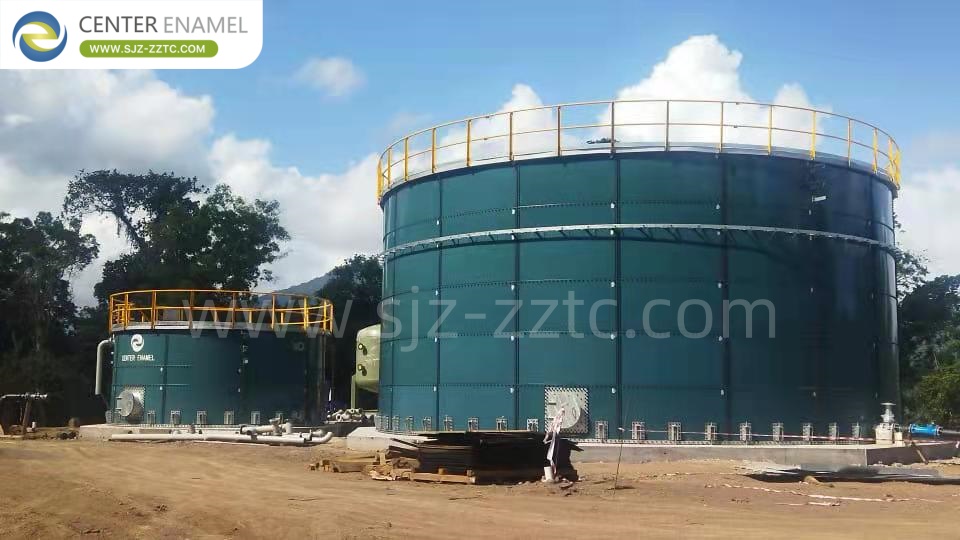
When designing municipal sewage plants, livestock wastewater stations, industrial wastewater treatment projects, and biogas supporting facilities, engineers and investors often ask: Which is better SBR or MBBR? Both are mature aerobic biological wastewater treatment technologies, widely adopted globally, but they differ greatly in working principle, floor space, operation difficulty, treatment efficiency and applicable scenarios.
This article elaborates on the definition and working principle of SBR and MBBR, compares their advantages and disadvantages in detail, analyzes suitable application fields, and further introduces Center Enamel’s four core anaerobic technologies, as well as the outstanding advantages of GFS Tanks in wastewater treatment and biogas projects.
What Is SBR? Definition & Working Principle
SBR full name: Sequencing Batch Reactor, also known as Sequencing Batch Activated Sludge Process.
SBR completes all wastewater treatment procedures in a single tank by time sequence, including water inflow, aerobic aeration reaction, static sedimentation, supernant decanting, and idle standby. It does not need additional independent secondary sedimentation tanks and sludge return systems.
Core Features of SBR
- Single tank multi-function, compact layout and flexible operation cycle
- Adjust aeration and sediment time according to water quality and flow changes
- Excellent effect on nitrogen and phosphorus removal
- Low initial civil construction cost, suitable for small and medium-scale projects
- Relatively dependent on automatic control system and professional operation management
What Is MBBR? Definition & Working Principle
MBBR full name: Moving Bed Biofilm Reactor, a high-efficiency suspended biofilm wastewater treatment technology.
MBBR adds special suspended biological carriers into the reactor. Microorganisms attach to the carrier surface to form dense biofilm. Under aeration stirring, the carriers flow freely with the water body, realizing simultaneous degradation of organic matter, nitrification and denitrification in the same tank.
Core Features of MBBR
- High biological concentration, strong impact load resistance
- Small footprint, 30%–50% less space than traditional processes
- Less sludge production, low subsequent disposal cost
- Simple operation, not easy to produce sludge bulking
- Convenient for old sewage plant capacity expansion and renovation
SBR vs MBBR: Comprehensive Comparison
1. Floor Space
MBBR is better: Higher biological load and compact structure save more land, ideal for sites with limited area.
SBR: Requires larger tank volume, occupies more land.
2. Operation & Management
MBBR is better: Stable operation, simple daily maintenance, low dependence on operators.
SBR: Needs precise cycle control, high requirements for automatic system and management personnel.
3. Impact Load Resistance
MBBR is better: Biofilm protects microorganisms, strong adaptability to sudden water quality and flow changes.SBR: Susceptible to impact load, easy to cause sludge bulking.
4. Treatment Effect
MBBR: Higher removal efficiency of COD, ammonia nitrogen and total nitrogen.
SBR: Stable standard discharge, slightly lower than MBBR in high-load wastewater treatment.
5. Investment & O&M Cost
SBR is better: Lower initial investment and simpler equipment.
MBBR: Higher initial carrier purchase cost, but lower long-term sludge treatment and operating cost.
Which Is Better SBR or MBBR? Suitable Application Scenarios
Choose SBR If:
- Small and medium municipal sewage, rural scattered wastewater
- Project budget is limited, land space is sufficient
- Water quality and flow fluctuate greatly seasonally
- Projects requiring strict nitrogen and phosphorus removal
Choose MBBR If:
- Industrial high-concentration wastewater such as food, breeding and slaughterhouses
- Urban sewage plant expansion and old project renovation
- Project land is limited and requires compact layout
- Remote projects with insufficient professional operators
In short, SBR is cost-effective and flexible for conventional projects; MBBR is high-efficiency and stable for high-load and land-limited projects.
Center Enamel’s Four Mature Anaerobic Technologies
Aerobic processes such as SBR and MBBR are mainly used for advanced wastewater treatment, while anaerobic technologies are the core links of organic wastewater pretreatment and biogas energy recovery. Center Enamel masters four classic anaerobic processes to match different wastewater and biogas project needs:
1. CSTR (Completely Stirred Tank Reactor)
Suitable for high-solid livestock manure and high-concentration organic wastewater. Mechanical stirring ensures uniform mixing of materials, avoids crusting and sedimentation, and maintains stable biogas production.
2. UASB (Upflow Anaerobic Sludge Blanket)
Classic low-cost anaerobic process. Wastewater flows upward through granular sludge blanket to efficiently degrade organic matter, widely used in food factory and medium breeding wastewater.
3. USR (Upflow Solids Reactor)
Simple structure, low investment and easy maintenance, perfect for scattered rural biogas projects and small farm wastewater treatment.
4. IC (Internal Circulation)
High-rate anaerobic technology with 3–5 times higher load than traditional reactors. It saves land and has high treatment efficiency, the first choice for large industrial wastewater and super-large biogas projects.
Advantages of Center Enamel in Wastewater & Biogas Projects
- Full Process Matching: Provide one-stop technical solutions combining anaerobic pretreatment + SBR/MBBR aerobic advanced treatment.
- Customized Design: Select optimal process combination according to local water quality, climate, land area and budget.
- Full Lifecycle EPC Service: Cover design, equipment manufacturing, installation, commissioning and after-sales support.
- Global Project Experience: Served more than 100 countries, familiar with international environmental standards and construction norms.
- Stable Operation Optimization: Reasonably optimize hydraulic retention time and sludge age to improve treatment efficiency and reduce operating costs.
Advantages of GFS Tanks in Wastewater & Biogas Projects
GFS (Glass-Fused-to-Steel) Tanks are the core infrastructure of modern wastewater and biogas projects, with irreplaceable advantages:
- Strong Corrosion Resistance: Resist pH 1–14 acid and alkali corrosion, adapt to breeding wastewater, industrial sewage and biogas fermentation environment.
- Long Service Life: More than 30 years service life with minimal maintenance, far better than concrete and ordinary steel tanks.
- Fast Installation: Factory prefabricated bolted assembly, no on-site welding, short construction cycle.
- Good Airtightness: Effectively isolate oxygen, ensure efficient anaerobic digestion and safe biogas storage.
- Adaptable to All Climates: Excellent UV resistance, wind and rain resistance, suitable for tropical, temperate and coastal areas.
In conclusion, there is no absolute better between SBR and MBBR; the choice depends on project budget, land area, water load and operation conditions. SBR is flexible and cost-effective for conventional municipal and rural wastewater, while MBBR is more suitable for high-load industrial wastewater and land-constrained projects. Supported by four mature anaerobic technologies and high-performance GFS Tanks, Center Enamel provides matched anaerobic + aerobic combined solutions for global wastewater and biogas projects, helping clients achieve standard discharge, waste recycling and clean energy recovery.