
Which Plants Are Already Energy Neutral?
Plants that are already energy neutral are mostly municipal wastewater plants that digest their sludge anaerobically and run CHP, plus organic-rich industrial and agricultural biogas facilities. The model is proven across Europe—where sludge AD plus efficient aeration is common—and in many real anaerobic-treatment projects worldwide that recover energy from high-strength waste.
What “Energy Neutral” Looks Like in Practice
An energy-neutral plant generates at least as much useful energy on site as it consumes. For municipal plants this usually means mesophilic or thermophilic sludge digestion producing biogas, a CHP unit at 35–45% electrical and 80–90% total efficiency, and aggressive aeration efficiency so the recovered power covers the plant's own load. Some export surplus.
Where It Is Already Proven
Energy-neutral operation is well established in regions with strong sludge-digestion tradition and high energy prices. Landmark municipal plants in Austria and elsewhere in central Europe have demonstrated sustained energy-positive operation for years. Equally, organic-rich industrial sites—dairies, breweries, palm-oil mills—routinely run net-positive on their own process waste.
Real Project Evidence (Anaerobic Treatment)
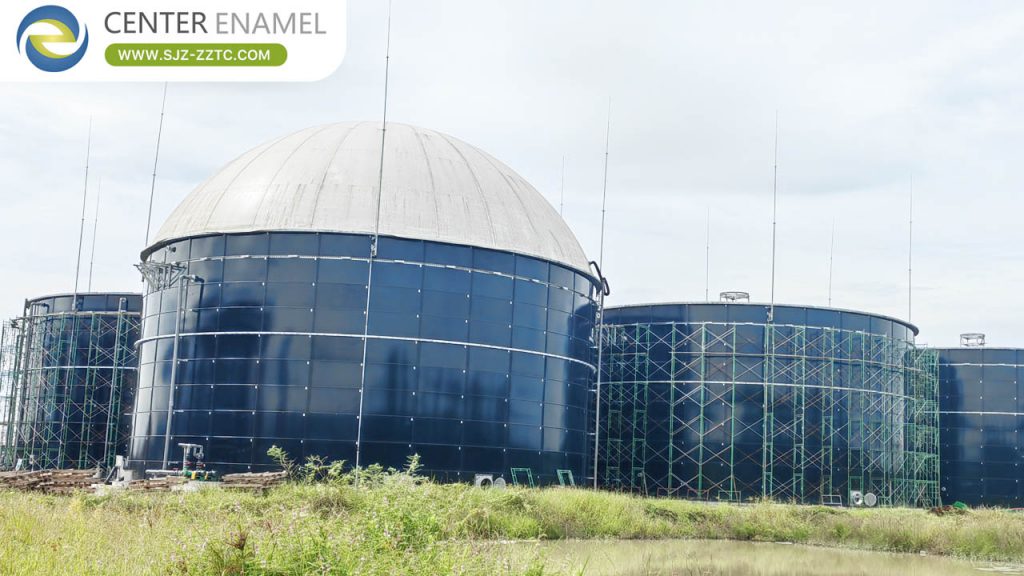
The engineering that makes neutrality possible is visible in delivered projects. The Ghana municipal plant (1,800 m³/day, UBF + A²/O) cut COD from 1,000 to 100 mg/L; the Beijing pig-farm plant (580 m³/day, UASB + AOAO) took influent COD above 10,000 mg/L down to ≤200 mg/L; the Malaysia biogas project (5 GFS tanks, 27,000 m³, 22,000 m³ biogas/day at ~80% digestibility) shows the scale anaerobic recovery can reach. These confirm the anaerobic core is field-proven, not theoretical.
Comparative Data Table: Plant Profiles
| Plant type | Core tech | Energy outcome |
| Municipal sludge AD | digester + CHP | neutral to positive |
| Dairy / brewery | AD + CHP | positive (own waste) |
| Palm-oil mill | CSTR / lagoon + CHP | positive (POME) |
| Pig / cattle farm | CSTR / UASB | positive (manure) |
| Small dilute WWTP | efficient aeration + solar | near-neutral only |
What These Plants Share
The common recipe is simple: a strong, steady organic load; anaerobic digestion to capture it as biogas; CHP sized to the steady flow; and disciplined demand reduction on aeration and pumping. Plants missing any one ingredient struggle to close the gap. Scale helps but is not the whole story—a small, organics-rich plant can beat a large, dilute one.
Advantages and Limitations
Neutral plants cut operating cost and emissions and gain resilience to energy prices. The limitation is that dilute, low-load, or highly variable plants may only approach neutrality with renewable add-ons, and the capital for digester and CHP is significant. The model is proven, but it is not free.
Best Practices / Lessons to Copy
Start with an end-use energy audit, build anaerobic capacity around your steady organic load, size CHP to steady biogas (not peaks), and attack aeration demand hard. Recover all heat. Copy the field-proven train (anaerobic core + efficient aerobic polish) rather than inventing one.
Energy-neutral plants are already a reality—municipal sludge-AD plants in Europe and organic-rich industrial and farm biogas facilities worldwide. Their shared recipe (strong steady organics + anaerobic digestion + CHP + demand discipline) is proven by delivered projects, not just models.
Frequently Asked Questions (FAQ)
Q1: Which plants are already energy neutral?
A: Municipal plants that digest sludge with CHP, and organic-rich industrial/farm biogas facilities (dairies, breweries, palm-oil mills, pig/cattle farms). The model is proven in Europe and worldwide.
Q2: Where is it proven?
A: Regions with strong sludge-digestion tradition and high energy prices (central Europe especially) have run energy-positive municipal plants for years; organic-rich industry does it routinely.
Q3: What do energy-neutral plants share?
A: A strong steady organic load, anaerobic digestion, CHP sized to steady biogas, and aggressive aeration/pumping demand reduction. Missing any one makes neutrality hard.
Q4: Is it only large plants?
A: No. A small, organics-rich plant can beat a large dilute one. Large dilute plants may need solar add-ons just to approach neutrality.
Q5: Is the technology proven or experimental?
A: Proven. Delivered projects—e.g. Ghana UBF+A²/O, Beijing UASB+AOAO, Malaysia 5-tank biogas—confirm anaerobic recovery at field scale.
Q6: How much does CHP contribute?
A: At 35–45% electrical and 80–90% total efficiency, CHP on steady biogas typically covers 50–100%+ of a plant's own electricity plus useful heat.
Project Case Reference
Malaysia Biogas Project — Malaysia · 2026
5 GFS Tanks · 27,000 m³ Total Volume · 22,000 m³ Biogas/Day
A large-scale biogas project in Malaysia featuring 5 Glass-Fused-to-Steel (GFS) tanks. The project achieves approximately 80% digestibility, with each single tank producing about 4,400 m³ of biogas daily, totaling 22,000 m³ per day across all 5 tanks.
Technical Specifications
Single Tank Volume: 5,400 m³ (Ø24.46 × 12 m)
Total Effective Volume: 27,000 m³ (5 tanks)
Daily Biogas Production: 22,000 m³ total
Digestibility: ≈ 80%
Gas Production Rate: 0.45 m³ / kg COD removed
Tank Type: Glass-Fused-to-Steel (GFS)
Water Quality Data
| Parameter | Inlet Water | Effluent |
| COD | ≥ 60,000 mg/L | ≥ 12,000 mg/L |
| BOD | ≤ 25,000 mg/L | ≤ 5,000 mg/L |