
Which Pre-Treatment Gives the Highest Biogas Yield Increase?
The pre-treatment that gives the highest biogas yield increase is thermal hydrolysis — heating the feed to 130–170°C under pressure — which typically lifts methane yield by 20–40% and markedly improves dewatering. Mechanical (milling, disintegration), ultrasonic, and chemical (acid/alkali) methods usually add a smaller 10–25% gain, so thermal hydrolysis leads when maximum yield is the goal and energy or steam is available.
Why Pre-Treatment Raises Yield
Most untapped methane in feedstock is locked inside tough cell walls and lignocellulose. Pre-treatment breaks those structures so microbes can reach the carbon faster and more completely. The gain shows up as higher volatile-solids destruction, faster digestion, and sometimes a smaller required digester for the same output. The right method depends on the substrate and on whether the plant has cheap heat or power to spend.
Comparative Data Table: Pre-Treatment Methods vs Gain
| Method | Typical yield increase | Best for |
| Thermal hydrolysis (130–170°C) | 20–40% | sludge, fibrous, lignocellulose |
| Mechanical (milling/disintegration) | 10–25% | general solids, biosolids |
| Ultrasonic cavitation | 10–20% | sludge, liquid streams |
| Chemical (acid/alkali) | 10–20% | lignocellulose, specific feeds |
| Enzymatic / biological | 5–15% | targeted, mild conditions |
Thermal Hydrolysis in Detail
Thermal hydrolysis (TH) cooks the feed under pressure, then flashes it to atmospheric pressure, bursting cell structures. Beyond the 20–40% methane gain, it sterilizes the stream, improves dewaterability (cutting digestate haulage), and speeds digestion so retention time drops. Its cost is the energy and pressure equipment — it pays where sludge or fibrous feed is abundant and waste heat or steam is cheap.
Mechanical, Ultrasonic, and Chemical Options
Mechanical disintegration (e.g., mills or high-shear devices) is robust and adds 10–25% with no chemicals. Ultrasonic cavitation disrupts cells in liquid streams at 10–20% gain but is energy-intensive at scale. Chemical pre-treatment with acid or alkali unlocks lignocellulose at 10–20% but adds reagent cost and a neutralization step. Enzymatic methods are gentle (5–15%) and targeted.
Advantages and Limitations
Pre-treatment lifts yield and can shrink digester size or digestate volume — clear wins. The limitation is cost: every method spends energy, reagents, or capital, and the gain must exceed that spend. Thermal hydrolysis gives the biggest bump but needs the most infrastructure; mechanical is the pragmatic default; chemical/ultrasonic suit specific feeds.
Best Practices / How to Choose
Run BMP tests on the raw and pre-treated feed to confirm the real gain, then compare the added energy/reagent cost against the extra methane value and any digestate savings. Choose thermal hydrolysis when you have sludge or fibrous feed plus cheap heat; choose mechanical disintegration for a broad, chemical-free boost; reserve chemical/ultrasonic for substrates where they clearly pay.
Conclusion
Thermal hydrolysis gives the highest biogas yield increase at 20–40%, with mechanical, ultrasonic, and chemical methods in the 10–25% range. The right pick balances the measured gain against the energy and capital it costs — not the headline percentage alone.
Frequently Asked Questions (FAQ)
Q1: Which pre-treatment gives the highest biogas yield increase?
A: Thermal hydrolysis leads at 20–40% methane gain by breaking cell walls at 130–170°C under pressure; mechanical, ultrasonic, and chemical methods typically add 10–25%.
Q2: Is thermal hydrolysis the best?
A: For maximum yield and better dewatering, yes — but it needs pressure equipment and energy, so it pays where sludge or fibrous feed is abundant and cheap heat or steam exists.
Q3: What does ultrasonic pre-treatment do?
A: Cavitation bursts cells in liquid streams, adding about 10–20% yield; effective but energy-intensive at large scale, so it suits specific sludges more than bulk feed.
Q4: When is pre-treatment worth the cost?
A: When a BMP test confirms the gain exceeds the added energy/reagent and capital cost — often true for sludge, lignocellulose, and fibrous feeds, less so for already-degradable food waste.
Q5: Does pre-treatment shrink the digester?
A: Faster, more complete digestion can reduce retention time and digester volume for the same output, and thermal hydrolysis also cuts digestate haulage via better dewatering.
Q6: Which is the most practical default?
A: Mechanical disintegration — a chemical-free 10–25% boost that fits most plants; reserve thermal/chemical/ultrasonic for feeds where their larger gain clearly pays.
Project Case Reference
Malaysia Biogas Project — Malaysia · 2026
5 GFS Tanks · 27,000 m³ Total Volume · 22,000 m³ Biogas/Day
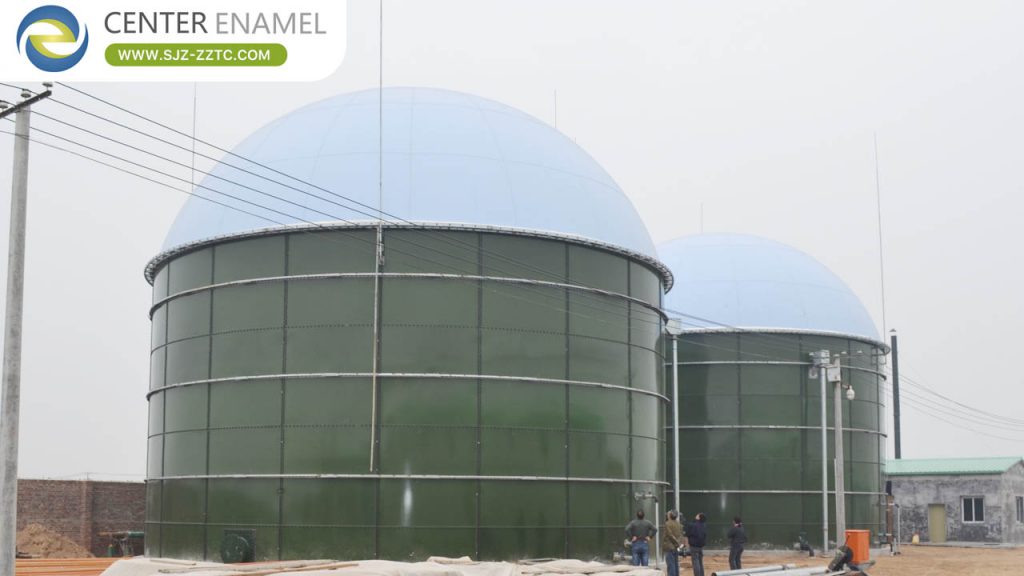
A large-scale biogas project in Malaysia featuring 5 Glass-Fused-to-Steel (GFS) tanks. The project achieves approximately 80% digestibility, with each single tank producing about 4,400 m³ of biogas daily, totaling 22,000 m³ per day across all 5 tanks.
Technical Specifications
Single Tank Volume: 5,400 m³ (Ø24.46 × 12 m)
Total Effective Volume: 27,000 m³ (5 tanks)
Daily Biogas Production: 22,000 m³ total
Digestibility: ≈ 80%
Gas Production Rate: 0.45 m³ / kg COD removed
Tank Type: Glass-Fused-to-Steel (GFS)
Water Quality Data
| Parameter | Inlet Water | Effluent |
| COD | ≥ 60,000 mg/L | ≥ 12,000 mg/L |
| BOD | ≤ 25,000 mg/L | ≤ 5,000 mg/L |