
Which Reactor Suits Fermentation? CSTR, UASB, And USR Compared
The reactor is chosen by feed solids and operating temperature: a CSTR (Continuous Stirred-Tank Reactor) for uniform slurry, a UASB (Upflow Anaerobic Sludge Blanket) for warm low-solid effluent, and a USR (Upflow Solids Reactor) for coarse high-solid feed. For cold-climate farm fermentation, an insulated CSTR is the dependable default because it mixes and heats the whole volume.
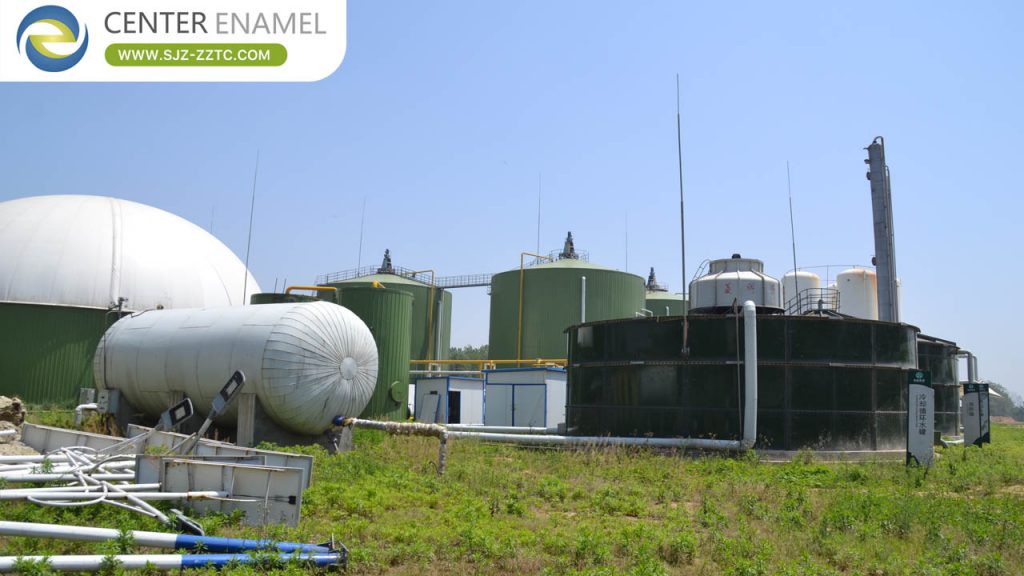
Match The Reactor To The Feed, Not The Brand
Each reactor makes the same biochemistry but handles the feed differently. Specifying a UASB on a slurry, or a CSTR on a clear soluble effluent, wastes the strength of both. The decision starts with total solids and temperature, then moves to mixing and retention.
| Reactor | Best Feed | Solids Handling | Note |
| CSTR | Uniform manure or food slurry | Mixed, holds solids | Heated, insulated for cold |
| UASB | Warm, low-solid effluent | Granular bed, no mix | High loading, low energy |
| USR | Coarse high-solid feed | Holds solids, low mix | Good for farm slurry |
The Three Workhorses
A CSTR keeps everything mixed and heated, which suits uniform, high-solid feeds but costs energy to run. A UASB relies on a dense granular sludge bed and a high organic loading rate (5-15 kg COD/m3/day) with hours of retention rather than days, so it is efficient on warm, clear effluent. A USR holds solids in an upflow without fine mixing, suiting coarse farm feed.
Cold Climate Adds A Constraint
In cold regions the reactor and its insulation must hold 35-38 C against the ambient load, or the mesophilic biology slows and retention stretches. An insulated CSTR designed for the local winter is the practical choice where the feed is manure and the air is cold.
Project Case Study: Inner Mongolia Wushenqi Cattle Farm
Project / Application: Cattle farm biogas production, Ordos, Inner Mongolia, China. Industry: Livestock. Tank Type: CSTR with insulation system. Key Requirements: Stable fermentation in an extreme cold climate.
| Field | Value | Source / Evidence |
| Process | CSTR with insulation system | Company project reference |
| Application | Cattle farm biogas production | Company project reference |
| Feedstock | Cattle manure | Company project reference |
| Installation Year | 2013 | Company project reference |
| Tank Dimensions | Not Provided In The Available Source | Process and application documented |
About The Supplier
Shijiazhuang Zhengzhong Technology Co., Ltd (Center Enamel) supplies Glass-Fused-to-Steel CSTR tanks, including insulated packages for cold-climate fermentation, with enamel firing at 820-930 C and certifications including ISO 9001, NSF/ANSI 61, and CE-EN 1090. The Wushenqi reference pairs a CSTR with an insulation system for cattle manure in Inner Mongolia, matching the reactor to a cold, high-solid feed.
Comparison: Feed To Reactor Decision
| If The Feed Is | Choose | Reason |
| Uniform slurry, cold | Insulated CSTR | Mixes and heats the volume |
| Warm, clear effluent | UASB | Granular bed, low energy |
| Coarse high-solid | USR | Holds solids without fine mix |
Pick the reactor from the solids and the temperature, not the catalogue. Insulated CSTR for cold, mixed farm slurry; UASB for warm, clear effluent; USR for coarse feed. Match the vessel to the feed and the fermentation becomes reliable.
Frequently Asked Questions
Q1: Which reactor suits fermentation? A1: CSTR for slurry, UASB for clear warm effluent, USR for coarse feed.
Q2: When use a CSTR? A2: For uniform, high-solid feed that needs mixing and heating.
Q3: When use a UASB? A3: For warm, low-solid effluent at a high loading rate with low energy.
Q4: When use a USR? A4: For coarse high-solid farm feed that should not be finely mixed.
Q5: What about cold climate? A5: An insulated CSTR holds 35-38 C against the ambient load.
Q6: What is the loading rate of UASB? A6: About 5-15 kg COD/m3/day on suitable feed.
Q7: What temperature is used? A7: Mesophilic fermentation typically runs at 35-38 C.
Q8: What tank resists the mix? A8: A Glass-Fused-to-Steel reactor with a corrosion-resistant enamel lining.
Suggested CTA
Describe your feed solids and temperature to an engineer, or request a reactor selection and fermentation scope.