
Which Rural Household Waste Product Is Commonly Used in Biogas?
Across rural communities in Asia, Africa, and Latin America, biogas has become one of the most practical and affordable renewable energy solutions. It turns locally generated waste into clean fuel for cooking, lighting, heating, and even small-scale power generation. A question frequently asked by farmers, households, project developers, and local authorities is: Which rural household waste product is commonly used in biogas? Understanding this key feedstock is essential for building stable, low-cost, and sustainable household biogas systems.
In short, the most widely used rural household waste for biogas production is animal manure (especially cattle dung), followed closely by kitchen and food waste and agricultural residues from rural households. These organic materials are abundant, easy to collect, highly biodegradable, and perfectly suited for anaerobic digestion. Unlike industrial waste or dedicated energy crops, they require no extra cost or land use, making them ideal for small-scale rural biogas projects.
This article explains in detail which rural household waste is most commonly used in biogas, how these materials produce biogas, the benefits of household waste biogas projects, four core anaerobic technologies, the advantages of GFS Tanks, and why Center Enamel is the leading EPC contractor for reliable, long-running biogas projects worldwide.
Which Rural Household Waste Product Is Commonly Used in Biogas?
The short, clear answer: animal manure (cattle dung, pig manure, poultry manure) is the most common rural household waste used in biogas systems, especially in small-scale household digesters. It is widely available in farming regions, has a balanced carbon-to-nitrogen ratio, contains natural microbial communities, and performs reliably under simple operating conditions.
Below are the most typical rural household waste materials used for biogas:
1. Animal Manure (The Most Common Feedstock)
- Cattle dung (cow dung): The absolute top choice for rural household biogas. It is stable, easy to handle, and widely available in agricultural areas.
- Pig manure: Common in smallholder farming areas, decomposes well and produces steady biogas.
- Poultry manure: High gas yield but requires mixing with other materials to avoid ammonia inhibition.
In countries like India, Nepal, Pakistan, and Bangladesh, cow dung–based household biogas (often called gobar gas) has been used for decades, with millions of small digesters in operation.
2. Kitchen and Food Waste from Rural Households
- Vegetable peels, fruit scraps, leftover rice, flour, and cooking residues
- Easy to collect daily, high organic content, fast gas production
- Often mixed with manure to improve digestion stability
3. Rural Agricultural and Household Residues
- Straw, dry leaves, grass clippings, and crop stalks
- Human waste (connected toilet systems, widely used in rural household biogas setups)
These organic wastes are all ideal because they can be naturally decomposed by anaerobic bacteria to produce methane-rich biogas. In contrast, plastics, glass, metal, ceramics, and highly lignified materials like wood cannot be used and must be removed before digestion.
Why These Household Wastes Are Perfect for Biogas Production
Biogas forms when organic matter breaks down in a closed, oxygen-free environment through anaerobic digestion. Rural household wastes like animal manure and food waste are ideal because:
- High organic content: Rich in carbohydrates, proteins, and fats that microbes consume
- Balanced nutrients: Proper C/N ratio supports healthy microbial activity
- Natural microbial inoculum: Manure already contains methanogenic bacteria
- High moisture content: Supports smooth digestion without excessive dilution
- Abundant and free: Readily available in rural areas with no extra cost
These features make them far more practical than other materials for household-scale biogas projects.
How Rural Household Waste Converts to Biogas
The process is simple, natural, and repeatable in properly built digesters:
- Collection: Gather manure, food waste, and other organic household waste
- Mixing: Blend with water to form a pumpable slurry
- Anaerobic digestion: Microbes decompose organic matter without oxygen
- Biogas generation: Produce a mixture of about 55–70% methane and 30–45% CO₂
- Biogas use: Burn for cooking, lighting, heating, or generate small-scale electricity
- Digestate: The leftover slurry becomes high-quality organic fertilizer
This closed-loop system turns waste into energy and fertilizer, supporting a true circular economy in rural areas.
Benefits of Household Waste Biogas Projects for Rural Communities
Using common rural household waste for biogas brings multiple advantages:
- Provides clean cooking fuel, reduces smoke and respiratory illness
- Lowers reliance on firewood, charcoal, and LPG
- Reduces waste accumulation and improves rural sanitation
- Cuts methane emissions from open dumping
- Produces organic fertilizer to improve soil health
- Lowers household energy expenses
- Supports climate goals and environmental protection
For millions of rural families, biogas is a life-changing technology.
Four Core Anaerobic Technologies for Household & Rural Biogas Projects
To turn household waste into biogas efficiently, four mature anaerobic technologies are widely used:
1. CSTR (Continuous Stirred-Tank Reactor)
Uses mechanical stirring for complete mixing. Strong shock resistance, ideal for high-solid household waste and manure mixtures.
2. UASB (Upflow Anaerobic Sludge Blanket)
Relies on high-activity granular sludge. High efficiency, low energy use, suitable for soluble organic waste like food waste.
3. USR (Upflow Solid Reactor)
Simple structure, low investment, anti-clogging design. Perfect for high-SS rural waste and small household systems.
4. IC (Internal Circulation)
High-rate reactor with 3–5 times higher loading than traditional designs. Small footprint, ideal for community-scale biogas projects.
These technologies ensure stable biogas production from household waste under various conditions.
Key Advantages of GFS Tanks for Household Waste Biogas Projects
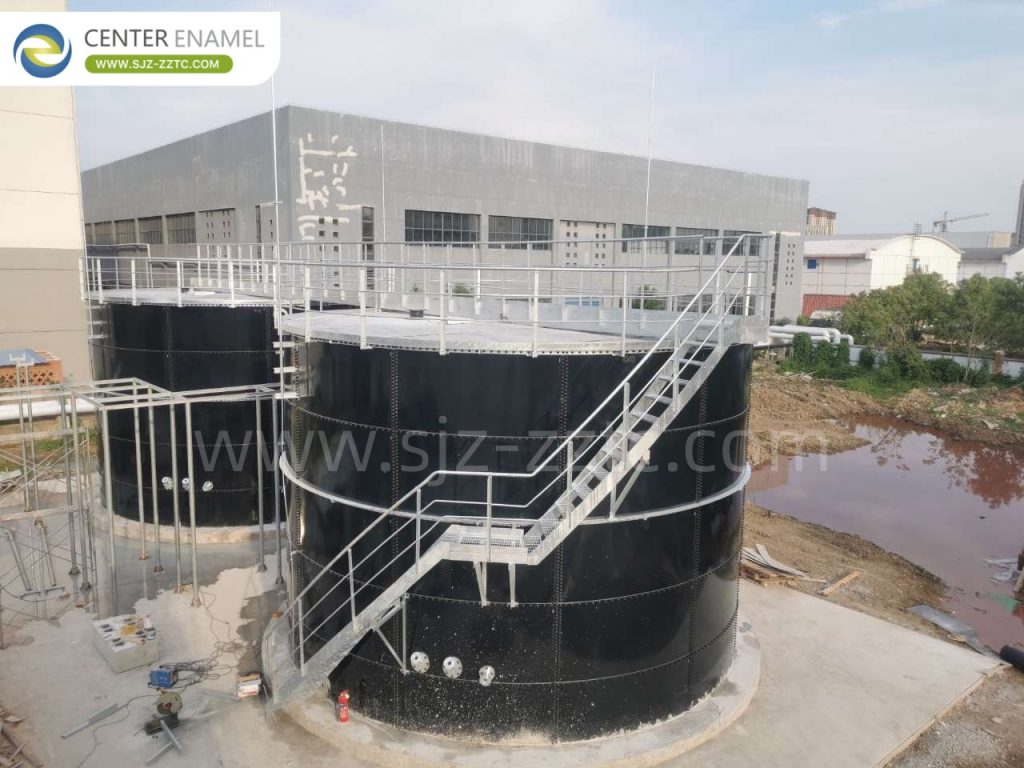
GFS (Glass-Fused-to-Steel) Tanks are the best reactor choice for household and rural biogas projects:
- Superior corrosion resistance: Withstands pH 1–14, manure, acids, and humidity
- Long service life: Over 30 years, minimal maintenance
- Fast installation: Factory-prefabricated, bolted assembly, no welding
- Compact design: Saves space in rural yards and small farms
- Excellent tightness: Safe biogas storage with no leakage
- Weather resistance: Stands up to heat, rain, UV, and coastal conditions
- Flexible capacity: Easy to expand for growing household or community needs
GFS Tanks provide reliable, long-term performance for household waste biogas projects.
Why Choose Center Enamel as Your Biogas Project EPC Contractor
Center Enamel is a globally trusted EPC provider for household waste and rural biogas projects. Our key strengths:
- Customized design: Tailored for household waste composition, climate, and site conditions
- Advanced GFS Tanks: Asia’s largest manufacturing base, strict quality control
- Patented enamel technology: 200+ formulas for extreme corrosion resistance
- Full turnkey service: Design, production, transport, installation, commissioning, training, after-sales
- Proven anaerobic technologies: CSTR, UASB, USR, IC for stable biogas yield
- Global project experience: Successfully implemented in Asia, Africa, Europe, and the Americas
- Compliance with international standards: ISO, AWWA, NSF/ANSI 61, 1500V spark test
We deliver reliable, low-operation, long-life biogas projects that convert household waste into continuous clean energy.
To answer the question Which rural household waste product is commonly used in biogas? — animal manure (especially cattle dung) is the most widely used feedstock, supported by food waste and agricultural residues from rural households. These materials are abundant, low-cost, and highly suitable for anaerobic digestion. With advanced technologies like CSTR, UASB, USR, IC and high-performance GFS Tanks, household waste biogas projects provide clean energy, better sanitation, and environmental benefits. Center Enamel offers full EPC solutions to build stable, efficient, and durable biogas systems for households and communities worldwide.