
SBR vs. MBBR: Which Wastewater Treatment Technology Is Better for Your Plant?
When selecting a biological wastewater treatment system, two popular advanced technologies often compete: the Sequencing Batch Reactor (SBR) and the Moving Bed Biofilm Reactor (MBBR). Both are highly effective at removing organic pollutants and nutrients, but they operate on fundamentally different principles.
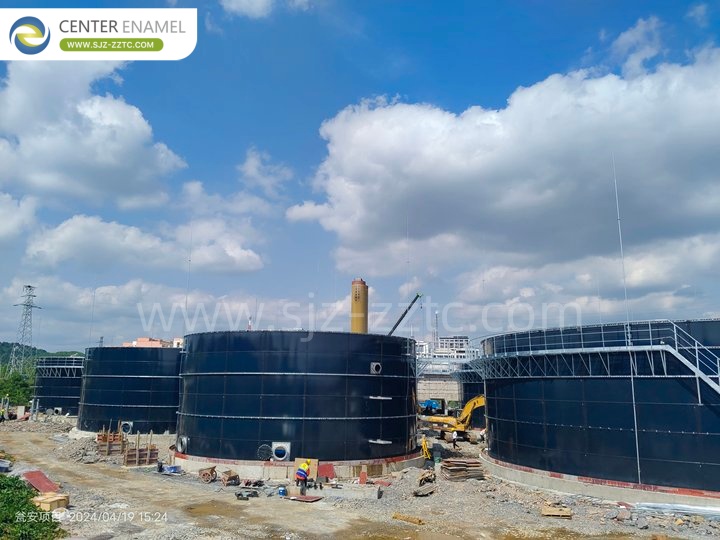
The SBR is a time-based, batch system where all treatment stages-fill, react, settle, and decant-occur sequentially in a single tank. The MBBR, conversely, uses free-floating plastic carriers to support a continuous biofilm process that treats wastewater as it flows through the reactor. Neither technology is universally "better." The optimal choice depends on your specific wastewater characteristics, site constraints, budget, and operational capacity. This comprehensive comparison will help you make an informed decision.
Understanding SBR: Sequencing Batch Reactor Technology
A Sequencing Batch Reactor (SBR) is a fill-and-draw activated sludge system operated in batch mode. Unlike conventional continuous-flow systems, all treatment steps occur in the same tank but at different times.
The SBR follows a cyclical sequence: Fill (wastewater enters the tank), React (aeration and biological treatment occur), Settle (biomass settles to the bottom), Decant (treated effluent is removed), and Idle (the tank rests before the next cycle). This eliminates the need for a separate secondary clarifier, as settling and decanting happen within the same vessel.
SBR systems typically operate with mixed liquor suspended solids (MLSS) concentrations of 3,000–5,000 mg/L. Their batch nature makes them ideal for applications with variable flow rates or seasonal discharges. However, they rely heavily on sophisticated controls and timing units, requiring careful automation and operator attention.
Understanding MBBR: Moving Bed Biofilm Reactor Technology
The Moving Bed Biofilm Reactor (MBBR) was developed in the late 1980s and uses thousands of small plastic carriers-typically made of high-density polyethylene-that move freely within an aerated tank.
Microorganisms grow on the protected surfaces of these carriers, forming a dense biofilm. As wastewater flows continuously through the reactor, the biofilm degrades organic pollutants and performs nitrification. Aeration supplies oxygen for the microbes and keeps the carriers suspended and uniformly mixed. A retention sieve at the outlet keeps the carriers inside the tank while allowing treated water to pass.
Unlike SBR, MBBR does not require sludge recirculation, simplifying operation significantly. The system is exceptionally efficient, with hydraulic retention times (HRT) of around three to four hours for BOD and nitrogen removal. MBBR is also highly resilient to shock loads and can respond naturally to fluctuations in influent quality.
Technical Comparison: SBR vs. MBBR Side-by-Side
The following table provides a direct technical comparison of SBR and MBBR systems across critical performance parameters.
| Parameter | SBR | MBBR |
| Operation Mode | Batch (fill-react-settle-decant-idle) | Continuous flow |
| Biomass Type | Suspended growth (MLSS 3,000–5,000 mg/L) | Attached biofilm on carriers |
| Secondary Clarifier | Not required (settling in tank) | Required (or DAF unit) |
| Effluent TSS | 5–20 mg/L | 10–30 mg/L (with clarifier) |
| Effluent BOD | <10 mg/L | <15 mg/L |
| Nitrification | Excellent (achieved in cycle) | Excellent |
| Denitrification | Inherent in cycle (anoxic phase) | Requires separate anoxic stage |
| Phosphorus Removal | Bio-P possible | Chemical dosing typically needed |
| Shock Load Resistance | Moderate | High |
| Space Requirement | Medium (single tank) | Small–medium (plus clarifier) |
| Automation Required | High (sensors and timing) | Low–medium |
| Operator Skill | Medium–high | Low–medium |
| Retrofit to Existing Plant | Difficult | Straightforward |
| Capital Cost | Medium (approx. 60% of MBBR) | Medium–high |
Advantages and Disadvantages of SBR
Advantages
Single-Tank Design: SBR eliminates the need for separate clarifiers, reducing overall footprint and simplifying layout.
Operational Flexibility: The cycle timing can be adjusted to accommodate variable influent volumes, making SBR ideal for batch-discharge industrial sites and seasonal flows.
Inherent Nutrient Removal: The fill-react-settle-decant cycle allows for nitrification and denitrification within the same vessel, often without external carbon sources.
Cost-Effective for Small-to-Medium Scale: For plants treating up to moderate flows, SBR can be more economical than continuous-flow alternatives.
Disadvantages
Complex Automation Required: SBR operation depends on sophisticated sensors, timers, and control systems to manage the cyclic sequence precisely. Malfunctions can lead to issues like sludge carryover or clogged aeration devices.
Sensitive to Hydraulic and Load Fluctuations: The batch nature means the system must be carefully sized to handle peak flows. Sudden changes in influent quality or volume can disrupt settling and effluent quality.
Higher Sludge Production: SBR typically produces more waste sludge than biofilm-based systems.
Maintenance Intensity: Compared to MBBR, SBR requires more frequent monitoring and intervention.
Advantages and Disadvantages of MBBR
Advantages
Operational Simplicity: MBBR is a low-maintenance process. Carriers are added once, with no sludge recirculation, backwashing, or membrane cleaning required.
Robustness and Resilience: The biofilm on carriers is significantly more resistant to shock loads, toxic spikes, and temperature variations than suspended biomass. This makes MBBR ideal for challenging industrial wastewaters.
Compact Footprint: The high biomass concentration on carriers enables efficient treatment in a relatively small reactor volume.
Easy Retrofit and Scalability: MBBR carriers can be added to existing activated sludge tanks to increase treatment capacity by 2–3 times without constructing new basins.
Excellent for Cold-Climate and Remote Sites: Biofilm maintains activity at lower temperatures, making MBBR well-suited for cold regions where suspended growth systems may struggle to start up.
Disadvantages
Requires Secondary Clarification: Unlike SBR, MBBR effluent typically requires a clarifier or Dissolved Air Flotation (DAF) unit to remove solids, adding footprint and cost.
Media Cost and Loss Risk: The plastic carriers can be expensive, and some may be lost over time due to wear or screen failure.
Lower Pathogen Removal: Without a membrane barrier, pathogen removal is limited to 2–3 log, compared to the higher removal in membrane-based systems.
Continuous Aeration Demand: Unlike SBR's cyclic aeration, MBBR typically requires continuous aeration to keep carriers moving and supply oxygen, which increases energy consumption.
Application Scenarios: When to Choose Each Technology
Choose SBR when:
Flow is Variable or Seasonal: Food processing, slaughterhouses, and seasonal industrial operations benefit from SBR's ability to adjust cycle timing to match batch discharge schedules.
Nutrient Removal is a Priority: For discharge zones with strict total nitrogen and phosphorus limits, SBR's inherent anoxic and aerobic phases can achieve nutrient removal without chemical dosing.
Space is Limited but a Clarifier is Unwanted: The single-tank design eliminates the need for a separate clarifier, saving space.
Budget is a Key Constraint at Small Scale: Studies show that for packaged units treating 100 m³/day, SBR capital costs are roughly 60% of MBBR.
Choose MBBR when:
Upgrading an Existing Activated Sludge Plant: Adding MBBR carriers to existing tanks is the most cost-effective way to increase capacity when consent limits tighten.
Industrial Wastewater with Variable Quality: Industries generating fluctuating flows or toxic loads benefit from MBBR's resilience to shock loads.
Cold-Climate or Remote Sites: MBBR's biofilm maintains activity at lower temperatures and requires less operator skill than SBR, making it ideal for remote containerized systems.
Operational Simplicity is a Priority: With low maintenance and minimal automation requirements, MBBR is preferred where skilled operators are unavailable.
Cost Considerations and Emerging Hybrid Solutions
Capital Costs: For small-to-medium scale packaged systems, SBR generally offers lower capital investment-approximately 60% of MBBR cost for a 100 m³/day plant. However, MBBR's retrofit capability can make it more economical when upgrading existing infrastructure, as new tank construction is avoided.
Operating Costs: MBBR typically requires continuous aeration to keep carriers suspended, while SBR's cyclic aeration can reduce energy demand. However, SBR's automation requirements and higher sludge production may offset these savings.
Emerging Hybrid Systems: Recent innovations such as the Modified Sequencing Batch Reactor (MSBR) combine MBBR carriers in an upstream equalization tank with a downstream SBR basin, capturing the advantages of both technologies while preserving SBR's operational simplicity. This hybrid approach offers a balanced cost profile, with electrical control costs approximately 65% of MBBR systems.
Conclusion
The choice between SBR and MBBR is not about which technology is universally superior, but about which best fits your specific application.
Choose SBR if you need flexibility for variable flows, inherent nutrient removal capability in a single tank, and are operating at small-to-medium scale with access to skilled operators and automation systems.
Choose MBBR if you prioritize operational simplicity, robustness against shock loads, need to upgrade an existing plant, or are operating in challenging conditions like cold climates or remote sites.
For many modern applications, hybrid configurations that combine the strengths of both systems are emerging as optimal solutions. By carefully evaluating your site-specific conditions, treatment goals, and budget constraints, you can select the technology that delivers reliable performance and long-term value.
Frequently Asked Questions (FAQs)
1. Which system has better effluent quality, SBR or MBBR?
SBR typically produces slightly lower effluent TSS (5–20 mg/L) compared to MBBR with clarifier (10–30 mg/L). However, both require tertiary treatment for direct water reuse applications.
2. Which technology is more resistant to shock loads?
MBBR is significantly more resistant to shock loads and toxic spikes due to the protective biofilm on carriers, making it preferable for industrial applications with variable influent quality.
3. Is SBR or MBBR cheaper to install?
For small-to-medium scale packaged systems, SBR capital costs are approximately 60% of MBBR costs. However, when upgrading existing plants, MBBR retrofit can be more economical as it avoids new tank construction.
4. Which system is easier to operate?
MBBR requires less operator skill and automation than SBR. SBR depends on sophisticated timing and sensor controls, while MBBR is largely self-moderating and requires minimal intervention.
5. Can I add MBBR to an existing SBR system?
Yes, hybrid configurations like SBR–MBBR and MSBR combine biofilm carriers with SBR operation, enhancing biomass retention and treatment efficiency while preserving SBR's flexibility.