
Why Are Slaughterhouses Bad for the Environment?
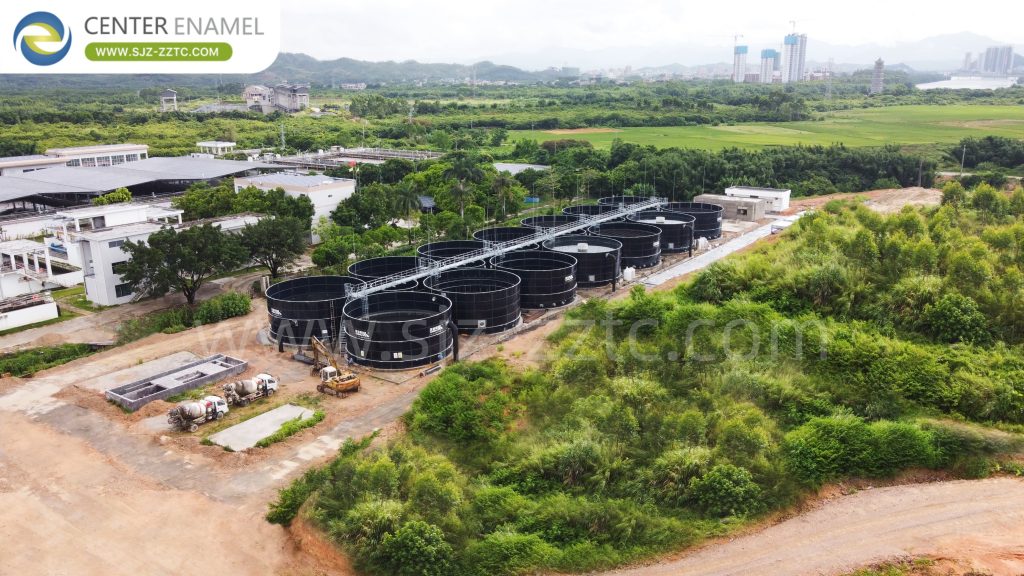
Slaughterhouses serve essential roles in global meat supply chains, yet poorly managed abattoirs rank among major industrial pollution sources worldwide, triggering widespread water contamination, air odor issues, soil degradation and public health threats, which answers the core question: Why are slaughterhouses bad for the environment? The dominant pollution contributor is high-concentration slaughterhouse wastewater loaded with blood residues, animal fat, manure, visceral scraps, detergents and pathogens; untreated direct discharge into rivers, lakes and underground aquifers creates irreversible ecological damage across rural and suburban regions.
Effective wastewater treatment combined with anaerobic digestion to produce renewable biogas turns slaughter pollution into recyclable resources, while mature GFS Tanks become critical core equipment for treatment facilities and Center Enamel delivers full-turnkey EPC solutions for global slaughterhouse and agricultural wastewater projects.
Core Environmental Harms from Improper Slaughterhouse Operation
Slaughterhouses damage the ecosystem mainly via four severe pollution routes dominated by untreated wastewater:
Severe Aquatic Eutrophication & Dead Water Zones
Slaughter effluent carries ultra-high COD, BOD, nitrogen and phosphorus values, with COD concentration often exceeding 9,000mg/L in raw wastewater. After direct discharge, organic matter decomposes rapidly and consumes massive dissolved oxygen in water bodies, forming oxygen-depleted dead zones where fish, shrimp and aquatic organisms die in large numbers.
Excess nutrients trigger frequent harmful algal blooms, blocking sunlight penetration and further collapsing aquatic food chains. Multiple US environmental investigations confirm thousands of kilometers of regional creeks are stained red from leaked slaughter blood every year due to illegal wastewater dumping.
Groundwater & Drinking Water Contamination
Unlined waste runoff and leaked effluent infiltrate shallow groundwater, introducing E.coli, Salmonella and various antibiotic-resistant pathogenic bacteria from animal waste into rural drinking water sources. Long-term nitrate accumulation in underground water endangers nearby residents’ digestive and urinary health, a prevalent hidden risk across Southeast Asia, Africa and rural North America’s scattered small-scale abattoirs.
Persistent Odor & Air Pollution
Undeposited visceral waste and stored wastewater generate hydrogen sulfide, ammonia and volatile organic compounds during natural decomposition, creating pungent foul odor spreading several kilometers outward, lowering surrounding living quality and triggering respiratory diseases for nearby residents. Open stacking of solid slaughter waste also attracts pests and accelerates secondary pollution.
Wasted Renewable Biomass Resources
Slaughter wastewater and solid residues contain abundant biodegradable organics ideal for anaerobic biogas generation, yet random abandonment wastes huge potential clean energy and forces meat manufacturers to rely on expensive fossil fuels for factory heating and power supply, raising overall industrial carbon emissions.
The Critical Importance of Standardized Slaughterhouse Wastewater Treatment
Building professional wastewater treatment facilities is no longer optional compliance but mandatory environmental and economic investment for modern slaughterhouses, with three core values:
First, meet local environmental discharge laws and avoid heavy fines or production shutdown penalties enforced by global environmental authorities including EPA and regional environmental bureaus.
Second, cut downstream ecological restoration costs for local governments and protect rural drinking water safety.
Third, realize circular economy gains: anaerobic digestion of treated wastewater produces methane-rich biogas to cover slaughterhouse self-consumption of electricity and heating, while post-digest organic residues can be processed into high-quality organic fertilizer for surrounding farmland.
Complete Standard Slaughterhouse Wastewater Treatment Workflow
Modern slaughter effluent disposal follows five sequential steps combining pre-processing and anaerobic-aerobic combination, fully compatible with four core anaerobic technologies and GFS Tanks configuration:
- Pretreatment Stage: Bar screens and grit chambers filter hair, bone fragments, large visceral solids; grease traps remove floating animal oil and fat to prevent subsequent reactor blockage; regulating GFS Tanks balance fluctuating wastewater inflow concentration and stabilize water quality for follow-up biochemical treatment.
- Primary Hydrolysis Acidification: Wastewater enters hydrolysis tanks to break down macromolecule protein and fat into small-molecule organic acid, improving wastewater biodegradability and reducing anaerobic reactor organic loading.
- Core Anaerobic Digestion Stage: The key resource recovery step, wastewater flows into customized CSTR/UASB/USR/IC anaerobic reactors assembled with supporting GFS Tanks. Under fully oxygen-free microbial action, organics convert into raw biogas (55%–70% methane), which is temporarily stored inside airtight biogas GFS Tanks after collection.
- Advanced Aerobic Deep Treatment: Post-anaerobic effluent goes through A2O or activated sludge aerobic process to remove residual nitrogen, phosphorus and leftover organic pollutants to meet national emission standards.
- Sludge & Digestate Disposal: Anaerobic digestate and excess sludge from treatment are concentrated inside dedicated storage GFS Tanks, then processed into commercial organic fertilizer for crop planting. Purified biogas after desulfurization and dehydration is used for on-site power generation or boiler heating.
4 Four Mainstream Anaerobic Technologies for Slaughter & Agricultural Wastewater Treatment
Center Enamel customizes four mature anaerobic reactor solutions tailored for high-oil, high-solids slaughter wastewater and varied agricultural sewage, all perfectly matched with modular GFS Tanks as reactor body or auxiliary storage containers:
CSTR (Continuous Stirred-Tank Reactor)
Equipped with full internal mechanical stirring to eliminate feed stratification and grease crusting, perfectly suited for high-solid mixed slaughter wastewater blended with livestock manure and visceral scraps. Stable mixing ensures consistent biogas yield, widely adopted for large-scale centralized medium & giant slaughterhouse projects; reactor main bodies can be fully assembled with bolt-type GFS Tanks.
UASB (Upflow Anaerobic Sludge Blanket)
Depends on self-generated high-activity granular sludge bed to degrade pre-treated low-solid diluted slaughter effluent and agricultural wastewater, featuring compact footprint and low auxiliary power cost. Ideal for medium-sized regional abattoirs and nearby food processing factories paired with regulating and biogas storage GFS Tanks.
USR (Upflow Solid Reactor)
Simplified low-investment structure with no internal stirring equipment and outstanding anti-clogging performance, fits high-fiber mixed waste including orchard branches plus partial slaughter solid residue wastewater. The optimal option for small rural scattered slaughter workshops and decentralized agricultural wastewater treatment projects to slash initial construction investment.
IC (Internal Circulation Anaerobic Reactor)
High-efficiency internal-circulation reactor with organic removal efficiency 3–5 times higher than conventional anaerobic equipment, occupying far less construction land. Designed for oversized large-scale slaughter industrial park centralized wastewater hubs equipped with bulk large-volume GFS Tanks for massive biogas stockpiling.
5 Unique Advantages of GFS Tanks in Slaughter & Agricultural Wastewater Projects
As universal core tank equipment covering regulating tank, anaerobic reactor tank, biogas storage tank and digestate storage tank across full treatment flow, GFS Tanks outperform traditional concrete and carbon steel tanks with six prominent strengths adapted to high-fat, corrosive slaughter wastewater and tropical/humid global construction environments:
- Superior anti-corrosion performance: High-temperature sintered double enamel coating resists erosion from acidic fermented slaughter wastewater, sulfur-containing biogas and oily sludge, solving rust leakage issues of ordinary steel tanks under long-term corrosive working conditions.
- Excellent full airtightness: Professional bolt-sealing structure prevents biogas escape during fermentation and storage, maximizing methane recovery rate and eliminating on-site gas explosion safety risks for slaughter biogas plants.
- Modular field bolt assembly: All enamel panels are prefabricated in factory without on-site welding, shortening construction period and avoiding defective welding caused by rainy, high-humidity construction environments common in Southeast Asia and South Asia.
- 30+ years service life: Smooth inner enamel surface prevents grease, protein sludge scaling and adhesion, drastically cutting long-term routine cleaning and maintenance cost for slaughter plant operators.
- Stable thermal insulation property: Consistent physical performance amid drastic seasonal temperature changes, stabilizing anaerobic fermentation temperature to sustain steady biogas production throughout the year.
- Multi-scenario flexible compatibility: Single set of GFS Tanks can switch freely between wastewater regulation, anaerobic fermentation and biogas storage to match all four CSTR/UASB/USR/IC anaerobic processes flexibly.
Center Enamel’s Global EPC Experience in Slaughterhouse & Biogas Projects
As world’s leading full-turnkey EPC contractor specializing in anaerobic technology R&D and GFS Tanks manufacturing with over 200 independent enamel patents and ISO/AWWA certified products, Center Enamel has completed hundreds of slaughter and agricultural wastewater biogas projects across more than 100 countries over three decades:
- Full one-stop EPC service coverage: From early-site survey, personalized anaerobic process design, GFS Tanks production, cross-border logistics, on-site installation, system commissioning to local staff technical training and lifelong after-sales maintenance, providing single-point responsibility for all project links. Engineers adjust four anaerobic process parameters and tank layout per local slaughter waste composition, regional climate and emission standards.
- Global localized after-sales network: Regional technical teams deployed in Southeast Asia, South Asia and Europe provide timely on-site troubleshooting, equipment overhaul and process optimization for running slaughter wastewater facilities, helping investors shorten capital payback cycle via improved biogas output.
Uncontrolled slaughterhouse wastewater discharge is the primary reason abattoirs damage surrounding water, soil and air ecosystems globally, making standardized wastewater treatment and anaerobic resource recovery an essential sustainable development choice for meat manufacturers. Supported by four mature anaerobic technologies and high-performance versatile GFS Tanks, slaughter pollution is transformed into valuable clean biogas and organic fertilizer to build closed circular economy.
With decades of cross-border EPC track record and tailor-made localized design capacity, Center Enamel keeps delivering cost-effective turnkey wastewater & biogas solutions for global slaughterhouses and agricultural processing enterprises to balance environmental compliance and long-term economic gains.