
Why Can Distillers' Grains Produce Biogas? The Science Behind Converting Brewery Waste into Renewable Energy
Distillers' grains are the solid residue left behind after grains are fermented and distilled for alcohol production. Whether from whiskey, baijiu, bioethanol, or beer, these residues represent a massive and growing waste stream. Globally, distillers' grains are generated in enormous quantities, and while they are sometimes used as animal feed, improper storage and excess volume frequently lead to resource waste and environmental problems .
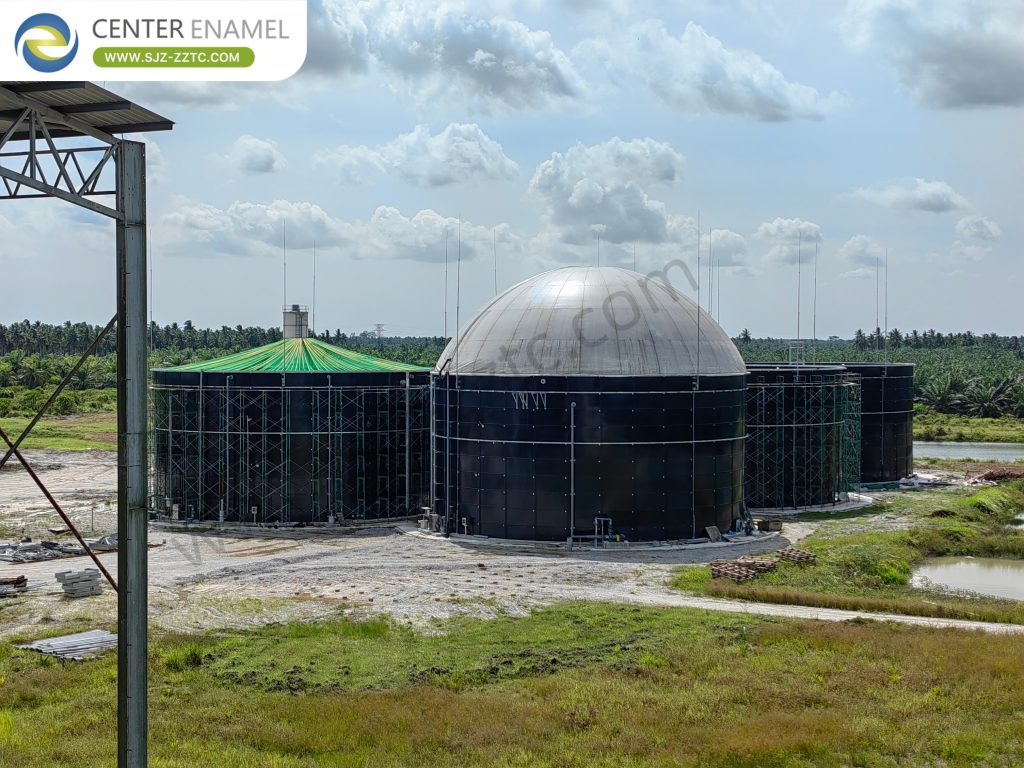
What many overlook is that this same material is a rich reservoir of chemical energy waiting to be unlocked. Anaerobic digestion offers a proven pathway to convert distillers' grains into biogas-a renewable fuel that can power distilleries, generate electricity, or provide clean cooking energy. This article explains the fundamental reasons why distillers' grains produce biogas, the challenges that must be managed, and the strategies that make the process efficient.
The Composition of Distillers' Grains: A Biogas Feedstock in Disguise
The first reason distillers' grains can produce biogas lies in their composition. After fermentation and distillation, the original grain's starch has been largely consumed by yeast, but significant fractions of protein, fiber, fat, and residual soluble compounds remain. For corn-based distillers' dried grains with solubles (DDGS), typical composition includes 27–35% crude protein, 10–15% fat, and 30–40% fiber . For baijiu distillers' grains, the volatile solids to total solids ratio reaches approximately 0.93, indicating a very high organic content that is almost entirely convertible to biogas .
This organic matter is the fuel for anaerobic digestion. When introduced into an oxygen-free environment, a cascade of microorganisms breaks down proteins, carbohydrates, and lipids into intermediate compounds, ultimately producing methane and carbon dioxide. The high biodegradability of distillers' grains is well documented: in solid-state anaerobic digestion tests, the material began producing methane almost immediately after loading, reflecting its readily available organic fraction . The presence of residual soluble substances-sugars, organic acids, and alcohols-further accelerates the initial phase of digestion.
The Microbiology: How Microbes Convert Grains into Methane
Anaerobic digestion is a microbial process, and distillers' grains support a diverse community of bacteria and archaea capable of converting organic matter into methane. Research on cereal distillers' grains has shown that the bacterial communities in digesters are highly diverse, dominated by phylotypes affiliated with Bacteroidetes, while the archaeal communities-the methane producers-are less diverse but directly correlated with reactor performance .
Two primary pathways govern methane formation. Aceticlastic methanogens, such as Methanosaeta and Methanosarcina, cleave acetate to produce methane. Hydrogenotrophic methanogens, such as Methanoculleus, consume hydrogen and carbon dioxide to generate methane. In well-performing digesters treating distillers' grains, aceticlastic methanogens tend to dominate under stable, lower-loading conditions, while hydrogenotrophic methanogens become more prominent when hydrogen accumulates or when specific additives are present . The choice of inoculum and operational conditions therefore shapes which microbial pathway prevails, with direct consequences for methane yield and process stability.
Whiskey by-products offer a useful comparison. Fresh draff, thin stillage, and thick stillage have all demonstrated substantial methane potential, with specific yields of 330, 495, and 503 mL CH₄ per gram of volatile solids respectively . Processed by-products such as wet distillers' grains with solubles have yielded 382 mL/g VS, confirming that distillery residues consistently provide a microbiologically accessible substrate .
The Double-Edged Sword: High Biodegradability and Acidification Risk
The very property that makes distillers' grains attractive-their high biodegradability-also creates the process's central challenge. Because the organic matter in distillers' grains breaks down rapidly, volatile fatty acids (VFAs) accumulate faster than methanogens can consume them. When VFA concentrations rise beyond the methanogens' tolerance, the digester acidifies, methane production stalls, and the system can fail entirely.
This problem is particularly acute in solid-state anaerobic digestion (SSAD), a configuration often used for distillers' grains because of its high solids content. SSAD systems contain less free water, which limits mass transfer and makes it harder for intermediate metabolites to disperse and be consumed . As a result, hydrogen-an unavoidable byproduct of VFA degradation-builds up, suppressing further VFA oxidation and accelerating acid accumulation . Distillers' grains are noted for accumulating VFAs rapidly in anaerobic digestion given their fast biodegradation and fragile buffer capacity . Managing this acidification risk is the primary engineering hurdle in distillers' grains biogas production.
The table below summarizes the key compositional and process challenges associated with distillers' grains.
| Challenge | Mechanism | Consequence |
| Rapid VFA accumulation | High biodegradability outpaces methanogenic consumption | pH drop, methanogen inhibition |
| Hydrogen buildup | VFA catabolism releases H₂; high partial pressure inhibits further oxidation | Stalled digestion, reduced methane |
| Ammonia release | High protein content degrades to ammonia | Potential toxicity at high concentrations |
| Low free water (SSAD) | Slower mass transfer of substrates and metabolites | Localized acidification, uneven digestion |
Proven Strategies to Stabilize and Enhance Biogas Production
Because distillers' grains are a high-value but temperamental feedstock, several strategies have been developed to stabilize digestion and maximize methane output. These approaches address the acidification bottleneck directly.
Co-digestion with cattle manure is one of the most practical solutions. Cattle manure introduces alkalinity that buffers against pH swings, dilutes inhibitory compounds, and provides a more balanced nutrient profile. Studies have demonstrated that co-digesting distillers' grains with cattle manure in solid-state anaerobic digestion improves methane production by stabilizing the digestion environment and supporting a healthier microbial community . The manure's indigenous microorganisms may also contribute to the synergistic effect.
Granular activated carbon (GAC) supplementation represents a more advanced intervention. GAC's porous structure retains microbial biomass and enriches syntrophic bacteria and hydrogenotrophic methanogens. More importantly, as a conductive material, GAC facilitates direct interspecies electron transfer (DIET) between electroactive bacteria and methanogens, allowing electrons released from VFA oxidation to be delivered directly to methane producers with higher efficiency than hydrogen-mediated transfer . However, GAC exhibits dose-dependent dual effects: while moderate dosages enhance VFA degradation, excessive loading adsorbs soluble sugars and proteins, sequestering bioavailable organics and suppressing methanogenesis . Optimal dosing must be determined empirically for each system.
Co-ensiling with lignocellulosic biomass offers a storage and pretreatment strategy. Mixing distillers' grains with rice straw at a carbon-to-nitrogen ratio of 25:1 before ensiling resulted in an 8.6% increase in methane yield and a 7.9% increase in energy output, while preserving organic dry matter during storage . The distillers' grains contribute lactic acid bacteria and acidity that suppress undesirable microorganisms, while the straw provides structural fiber and a favorable C/N ratio.
Thermal pretreatment has also shown promise. For distilled grain waste from Chinese liquor production, a 90°C thermal pretreatment increased methane production by 36.7% compared with untreated material in thermophilic dry anaerobic digestion . The pretreatment likely enhances the accessibility of the organic matter to microbial attack.
The table below compares these enhancement strategies.
| Strategy | Primary Mechanism | Reported Effect |
| Co-digestion with cattle manure | Buffering, nutrient balance, microbial diversity | Stabilized digestion, improved methane |
| Granular activated carbon | DIET promotion, microbial retention | Enhanced VFA conversion (dose-dependent) |
| Co-ensiling with rice straw | Organic matter preservation, C/N balancing | +8.6% methane yield |
| Thermal pretreatment (90°C) | Increased substrate accessibility | +36.7% methane production |
Effects vary by feedstock source, digester configuration, and operating conditions.
From Waste Treatment to Energy Recovery: The Circular Economy Case
The biogas produced from distillers' grains is not merely a waste management byproduct-it is a renewable energy resource with direct applications within the distillery itself. For whiskey production, researchers calculated that methane generated from 100 tonnes of mixed unprocessed by-products contained 24.4 MWh of thermal energy, equivalent to 60.6% of the thermal energy consumed in whiskey production. Using this biogas as an in-plant fuel would achieve the same percentage reduction in CO₂ emissions .
This circular model transforms a disposal cost into an energy asset. Distilleries that currently pay to transport or dispose of spent grains could instead invest in anaerobic digestion infrastructure and offset their fossil fuel consumption. The digestate remaining after digestion retains nutrients and can be used as fertilizer or soil amendment, closing the nutrient loop as well.
For bioethanol plants producing DDGS, the calculus is similar. DDGS is widely sold as animal feed, but its biogas potential offers an alternative or complementary valorization pathway, particularly for fractions that are less suitable for feed or when feed markets are oversupplied. Co-digestion with abundant agricultural residues such as rice husk can further improve the economics and process stability of DDGS digestion .
Practical Considerations for Implementing Distillers' Grains Digestion
Successfully converting distillers' grains to biogas requires attention to several operational factors. The high solids content of distillers' grains (typically 35% total solids for baijiu grains) makes them well-suited to solid-state or high-solids anaerobic digestion, which reduces reactor volume and water demand compared with liquid digestion . However, SSAD's mass transfer limitations mean that mixing strategy, inoculum selection, and additive dosing become critical variables.
Inoculum choice matters significantly. Digested sludge from an operating biogas plant provides a robust starting microbial community, while co-substrates like cattle manure can introduce complementary microorganisms that enhance digestion . Process monitoring should focus on VFA concentrations and pH, as these are the earliest indicators of impending acidification. Temperature control-mesophilic (35–40°C) or thermophilic (50–55°C)-must remain stable, as fluctuations disrupt the microbial community.
The biogas produced can be used directly for heat and power generation or upgraded to biomethane for grid injection or vehicle fuel. For distilleries, the most immediate and cost-effective use is often on-site thermal energy, displacing fossil fuels in the distillation process.
Frequently Asked Questions
Can all types of distillers' grains be used for biogas production?
Yes, distillers' grains from various sources-including corn, wheat, sorghum, and barley-have all demonstrated biogas potential. Whiskey by-products, baijiu grains, and bioethanol DDGS have been successfully digested in laboratory and pilot studies . The specific methane yield varies by grain type and processing method, but the fundamental suitability is consistent.
What is the biggest obstacle to biogas production from distillers' grains?
Rapid acidification is the primary challenge. Distillers' grains degrade so quickly that volatile fatty acids accumulate faster than methanogens can convert them, leading to pH drop and process inhibition . Co-digestion with a buffering substrate like cattle manure or supplementation with conductive materials like granular activated carbon are effective countermeasures.
Is biogas production from distillers' grains economically viable?
For distilleries, on-site biogas production can offset a substantial portion of thermal energy consumption-up to 60% in the case of whiskey production . While capital investment is required for digesters and gas handling equipment, the combination of waste disposal cost savings, energy cost reduction, and potential revenue from surplus gas or digestate makes the economics increasingly favorable, particularly as fossil fuel prices rise and carbon reduction incentives expand.
Ready to explore how your distillery or beverage production operation can turn spent grains into clean energy? Our team specializes in anaerobic digestion system design for high-strength organic feedstocks, from feasibility assessment to full-scale implementation. Contact us today to discuss a biogas solution tailored to your distillers' grains and your energy goals. Reach out for a no-obligation consultation and discover how your waste stream can become a valuable renewable resource.