
Why Choose a Brewing Wastewater Treatment Project EPC Contractor with Proven GFS Tanks Expertise?
The competitive landscape of industrial wastewater treatment is diverging sharply. Leading companies are building integrated service capabilities through technical integration and capital operations, and industry concentration is gradually increasing. Chinese companies continue to consolidate their advantages in mid-tier equipment exports, international giants target high-end customers and complex industrial wastewater markets, and local players hold the mid- to low-end and industrial park centralized treatment markets through service responsiveness and cost advantages.
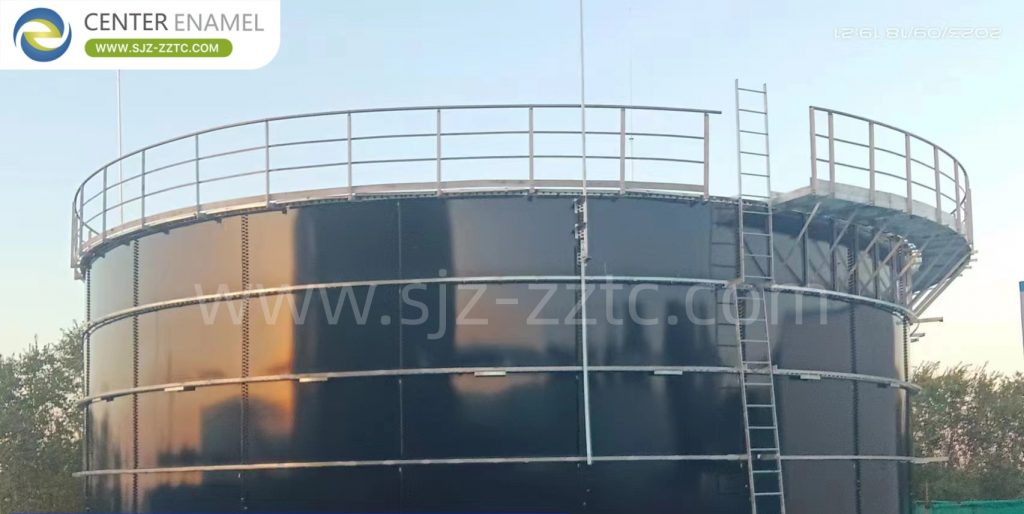
Within the anaerobic process segment, UASB, EGSB, and IC anaerobic reactors are widely used for high-concentration organic wastewater pretreatment in food processing, pharmaceutical fermentation, alcohol brewing, and chemical industries, valued for their high loading rates, small footprints, and stable operation. Because these reactors rely on steel tank shells, corrosion resistance and gas-tightness directly determine long-term operational stability-which is why the application value of GFS Tanks in such scenarios is increasingly prominent, and why selecting the right Brewing Wastewater Treatment Project EPC Contractor matters so much.
Market Landscape and the Rise of Steel-Tank Anaerobic Systems
The shift toward steel-tank anaerobic systems is not incidental. As discharge standards tighten and land becomes scarcer in industrial parks, operators need reactors that deliver high organic loading in a compact footprint while remaining gas-tight enough to capture biogas for reuse. UASB, EGSB, and IC configurations all meet the process requirement, but their useful life is ultimately bounded by the containment structure. A reactor shell that corrodes or leaks will lose gas-tightness, compromise anaerobic conditions, and force costly rehabilitation. This is the technical reason GFS Tanks have moved from a niche option to a mainstream specification in brewing and fermentation wastewater projects, and it explains why an experienced Brewing Wastewater Treatment Project EPC Contractor specifies them from the outset rather than as an afterthought.
GFS Tanks Engineered for Extreme Climates and Seismic Zones
Structural resilience is where GFS Tanks separate themselves from conventional alternatives. GFS Tanks can undergo customized wind and seismic design based on project site climate and geological conditions, giving them environmental adaptability far superior to concrete tanks. Concrete tanks are cast-in-place monolithic structures whose seismic and wind resistance depends entirely on on-site construction quality-a serious weakness in remote areas, typhoon-prone zones, and earthquake belts where quality control is difficult. Under strong earthquakes or typhoons, concrete tanks are prone to cracking and base settlement damage, and subsequent reinforcement costs can equal rebuilding.
GFS Tanks take a controlled, factory-driven approach instead. Before construction, local seismic intensity, maximum wind pressure, and foundation bearing capacity data are collected, and thickened steel panels, stiffening ribs, and anchored base components are factory-prefabricated to standardized specifications. The bolted panel structure distributes stress exceptionally well, making it less prone to overall fracture under seismic and typhoon impact, while minor foundation settlement will not cause through-cracking. Structural parameters can be flexibly adjusted for mountainous, coastal typhoon-zone, and high-seismic-zone projects, providing long-term protection against extreme natural climate damage-an essential attribute for any Brewing Wastewater Treatment Project EPC Contractor working across diverse geographies.
Inside the IC Reaction Process
Process design determines how efficiently that structure is used. In the IC reaction process, pretreated high-strength organic wastewater enters the lower main reaction zone from the bottom, mixing with recirculated sludge-water mixture and rising rapidly. Anaerobic microorganisms efficiently degrade organic matter, producing large volumes of biogas. The gas-lift action of biogas carries the mixed liquor upward to the top gas-liquid separator, where biogas is collected. The degassed sludge-water mixture then returns by gravity through downcomers to the reactor bottom, creating autonomous internal circulation that repeatedly enhances pollutant degradation. After multiple circulation cycles, the wastewater enters the upper polishing zone for further reaction and sludge-water separation. Remaining trace organics are fully degraded, sludge settles back to the lower reaction zone, treated effluent overflows from the top, and aged sludge is periodically discharged-fully autonomous circulation and efficient continuous operation, with no external recirculation pumps required.
Brewery Wastewater Quality: High Strength, Highly Biodegradable
Brewery effluent is an ideal match for this process architecture. Brewery wastewater is characterized by high concentration, high suspended solids, high color, slight acidity, and excellent biodegradability-with significant fluctuations. COD typically ranges from 5,000 to 25,000 mg/L, with high-strength spent mash and still bottoms peaking at hundreds of thousands of mg/L. Suspended solids can reach 40,000 mg/L, producing a thick, turbid liquor, and pH remains stably slightly acidic at 3–5. Crucially, the pollutants are primarily natural organics from grain fermentation-starches, reducing sugars, proteins, and alcohols-with no synthetic toxic substances. BOD/COD can reach 0.5–0.6, an industry-leading biodegradability ratio. Discharge fluctuates significantly with production batches and seasonal capacity, and the liquor is susceptible to secondary fermentation and odor if left standing, which reinforces the value of rapid, continuous anaerobic treatment.
Reference Project Data
The following table summarizes performance data from representative projects delivered by Center Enamel as a Brewing Wastewater Treatment Project EPC Contractor and anaerobic technology provider.
| Project | Location | Technology/Scope | Capacity/Performance | Status |
| Food Waste + Napier Grass Biogas Demonstration | Pakistan | CSTR anaerobic process with mechanical mixing; co-digestion of food waste and Napier grass | Stable daily biogas production of 100 m³ | Local official demonstration project validating gas production efficiency and long-term operational stability |
| Brewery IC Reactor Installation | Chongqing, China | IC reactor × 6 sets | 6,000 tons/day | Stable operation treating full brewery effluent |
| High-Rise IC Reactor | Xinjiang Aksu, China | IC reactor (6.88 × 21 m) | 780 m³ total capacity | COD removal exceeding 70%, operational since 2024 |
The Pakistan demonstration project confirms anaerobic process stability under mixed-feedstock conditions, and following successful pilot operation, multiple large-scale Napier grass biogas projects are planned locally to promote biomass clean energy and regional low-carbon development. Together with the brewery installations, these references demonstrate that Center Enamel's process integration performs reliably across feedstock types and scales.
Manufacturing Scale and Quality Systems
Delivering projects at this scale requires manufacturing depth. Center Enamel's core intelligent manufacturing base is located in Hebei Province, China, covering a total area of over 150,000 m², with a mature Phase I manufacturing facility and a Phase II high-end environmental equipment industrial park-dual-base synergy ensuring stable production capacity. The base includes dedicated R&D office buildings, proprietary material laboratories, and finished product testing centers, with full-process quality control systems meeting ISO, NSF, CE, and other international standards. The facility operates to green manufacturing standards and is certified as a Provincial Green Factory, balancing efficient production with energy conservation and emission reduction.
The company maintains six marketing service centers across China, establishing a nationwide production-sales network that ensures stable global order delivery. The base is adjacent to expressway networks and major logistics hubs, with complete container shipping capabilities supporting simultaneous large-scale tank projects worldwide. With over 500 staff and multiple parallel automated production lines, the facility's scale and capacity place it firmly among the global top tier of GFS Tanks equipment manufacturers.
Design Team Capability and Pre-Design Investigation
Engineering judgment at the design stage prevents most field problems. Center Enamel's design team includes senior engineers registered in the Hebei Provincial Science and Technology Expert Database, with design standards aligned to strict European and American high-end equipment safety standards. The team provides complete integrated design for differentiated overseas projects in livestock biogas, POME, municipal wastewater, hazardous waste storage, and seawater desalination-covering tank structure, anti-corrosion and sealing systems, biogas piping, and anaerobic process integration.
Pre-design work thoroughly investigates local seismic zone, wind pressure, soil bearing capacity, water quality corrosivity, and local environmental discharge standards, applying thickened panels, reinforced anchored bases, and optimized sealing and corrosion structures as needed. Complete customized equipment solutions can be tailored to customer plant area, wastewater load, treatment targets, and budget-balancing safety, economics, and local adaptation while providing compliant, stable, and highly adaptable structural design support for global environmental projects.
Aluminum Alloy Trough Deck Roof for Water Storage
Not every tank in a brewery complex requires gas-tight anaerobic containment. For clean water and wastewater storage, the Aluminum Alloy Trough Deck Roof offers a cost-effective economical cover solution, primarily designed for drinking water, production wastewater, and firewater reserve tanks. The main body is integrally formed from anti-corrosion aluminum alloy plates paired with aluminum support trusses, and its lightweight design imposes less load on the tank foundation, reducing civil construction investment. A naturally formed dense oxide protective layer resists rain and mild wastewater corrosion, withstands outdoor sun and rain exposure, and effectively blocks wind, rain, insects, fallen leaves, and odor volatilization, protecting water quality by preventing dust and debris from causing secondary contamination.
The flat roof structure is neat and orderly, allowing installation of maintenance walkways, guardrails, vents, and level monitoring ports on top for convenient daily inspection and equipment maintenance. The simple sealing structure enables straightforward installation with short construction timelines and virtually eliminates anti-corrosion painting maintenance, resulting in extremely low operational costs. It suits small, medium, and large atmospheric pressure water storage tanks and has been widely implemented in waterworks clear water tanks, industrial circulating water tanks, park firewater tanks, and domestic wastewater temporary storage facilities-highly compatible with water storage applications that do not require biogas collection or high-pressure sealing.
Frequently Asked Questions
Why do brewing projects need an EPC contractor rather than separate suppliers?
Brewing wastewater projects combine anaerobic process design, tank structural engineering, gas-tight sealing, and biogas handling. A single Brewing Wastewater Treatment Project EPC Contractor coordinates these interfaces, avoiding gaps in responsibility that cause leaks, poor gas capture, and commissioning delays.
What makes GFS Tanks suitable for anaerobic reactors?
GFS Tanks combine factory-applied enamel coating with bolted steel panels, delivering over 30 years of corrosion resistance and reliable gas-tightness. They also accommodate customized seismic and wind design, which concrete tanks cannot guarantee in remote or typhoon-prone sites.
Can this configuration handle seasonal brewery load fluctuations?
Yes. The IC process maintains stable granular sludge and withstands shock loads, while the dual-zone configuration polishes effluent during peak-season surges. Capacity is sized during design based on your production calendar and COD profile.
Send your brewery's wastewater volume, COD range, and site conditions to Center Enamel, and our engineers will return a tailored EPC configuration with tank specifications and process sizing.
Whether you are upgrading an existing plant or building a new facility, our team is ready to walk you through reference projects and delivery timelines-get in touch to begin.