
Papermaking Wastewater Treatment & Global Compliance: Why Choose a Proven EPC Contractor
Industrial wastewater regulation has shifted decisively from "treat and discharge" to "recover and reuse." The EU's Circular Economy Action Plan pushes member states to raise industrial wastewater reuse rates and now extends carbon footprint accounting across the full treatment life cycle. China continues tightening discharge standards, with increasingly strict limits on total nitrogen, total phosphorus, and characteristic pollutants for chemicals, pharmaceuticals, and printing and dyeing-while mandating zero or near-zero liquid discharge in water-scarce regions and high-pollution sectors.
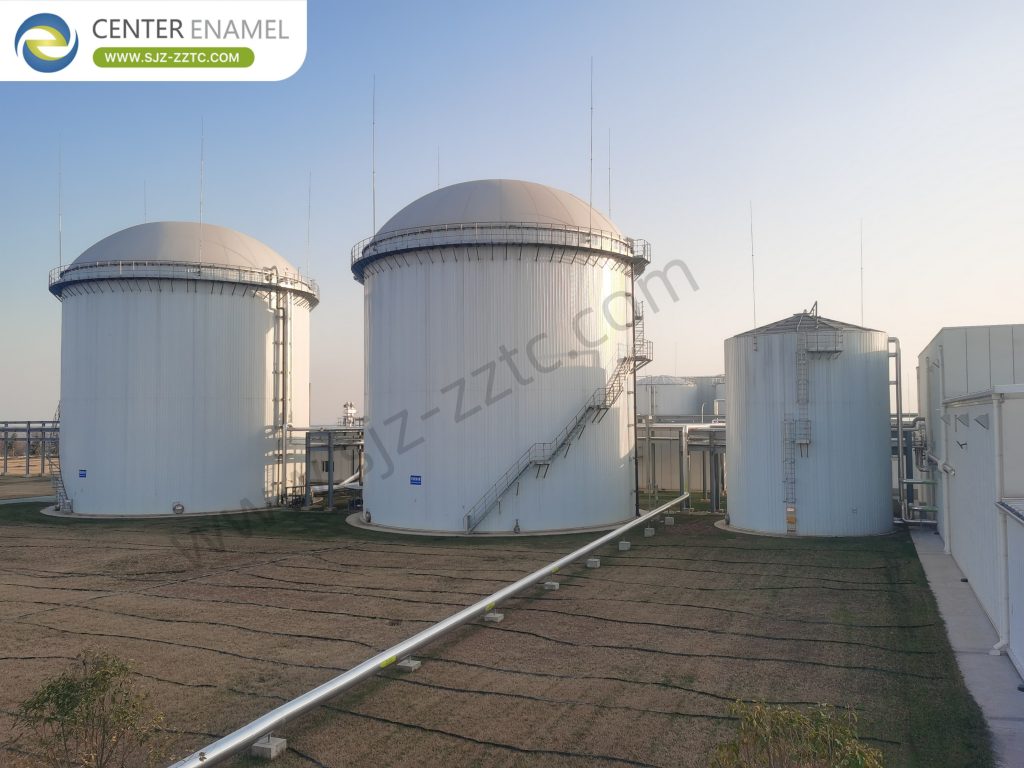
Germany has built a differentiated pretreatment standard system by industry, requiring wastewater to meet specific quality thresholds before entering municipal plants. For papermaking facilities, these converging pressures mean treatment design can no longer be an afterthought. It requires an EPC contractor who understands both regulatory trajectories and the operational realities of high-strength organic effluent-and who can deliver infrastructure that performs for decades.
Regulation Is Reshaping Industrial Wastewater Strategy
The direction of policy is consistent across major markets: source control, resource recovery, and full-lifecycle accountability. Germany's industry-specific pretreatment requirements illustrate how source control works in practice-facilities must meet defined quality parameters before discharge, shifting responsibility upstream. China's tightening limits on characteristic pollutants mean papermaking operations must address not just conventional COD and BOD but also the specific compounds that regulators now track. The EU's lifecycle carbon accounting adds another layer: treatment choices carry carbon consequences that must be measured and managed. For facility owners and engineering teams, the practical implication is clear. Treatment systems must be designed for compliance today and adaptability tomorrow-and the equipment selected must support both goals without excessive maintenance burden.
Where IC Process Fits: High-Strength, High-Flow, Land-Constrained
Amid these regulatory demands, the IC process has emerged as a preferred anaerobic solution for high-concentration, high-flow soluble industrial organic wastewater. Its applicability spans brewery, beverage, starch, pharmaceutical, chemical, and papermaking high-strength streams-sectors where organic loads are substantial and discharge limits are tightening. The IC process is particularly suited to land-constrained projects that demand high treatment efficiency in large industrial facilities. It can serve as the primary process for rapid COD/BOD removal and is well-matched to centralized industrial park wastewater treatment plants and large enterprise proprietary systems, especially where wastewater quality fluctuates significantly and pollutant concentrations run extremely high. One important boundary condition: the IC process is not suitable for high-solids, high-viscosity wastewater, so upstream solids management remains essential. Where conditions fit, however, it stands as the preferred anaerobic process for modern high-efficiency industrial wastewater treatment.
Papermaking Wastewater Treatment: Economics That Work
For papermaking specifically, the economics of well-designed treatment are more favorable than many operators expect. White water recirculation greatly reduces external treatment volume, and although recirculation systems carry moderate capital investment, they recover large quantities of fiber and water-delivering significant economic benefit. Pretreatment fiber recovery can be sold, further reducing net treatment costs. Alkali recovery systems recover alkali and generate steam from lignin combustion, adding substantial resource recovery value. The anaerobic-plus-aerobic process combination is mature and stable, with low chemical consumption and moderate energy use. Equipment consists primarily of conventional pumps and aerators-simple in structure, low in failure rates, and controllable in maintenance cost. Fiber sludge can be recovered or sold, keeping disposal costs low. And because papermaking wastewater volumes are large but pollutant concentrations moderate, economies of scale reduce unit treatment costs. Taken together, resource recovery revenues from fiber recovery, alkali recovery, and steam generation generally cover O&M costs-making papermaking wastewater treatment an economically sound investment rather than a pure cost center.
| Cost & Recovery Factor | Impact on Papermaking Wastewater Treatment |
| White water recirculation | Reduces external treatment volume; recovers fiber and water |
| Fiber recovery (pretreatment) | Recovered fiber can be sold; lowers net treatment cost |
| Alkali recovery + lignin combustion | Recovers alkali and generates steam |
| Anaerobic + aerobic process | Mature, stable, low chemical and energy consumption |
| Equipment profile | Conventional pumps and aerators; low failure, controllable maintenance |
| Fiber sludge | Recoverable or saleable; low disposal cost |
| Overall economics | Resource recovery revenues generally cover O&M costs |
Proven Delivery: South Africa Brewery High-Strength Wastewater Project
The combination of anaerobic treatment and durable tank infrastructure is validated in real projects. In South Africa's brewing industry, a high-concentration organic wastewater treatment project featured both Center Enamel GFS tanks and stainless steel tanks as core equipment. GFS tanks served as the primary anaerobic digestion system, suited to brewery wastewater's high-COD, high-sugar, readily decomposable characteristics for efficient organic pollutant degradation. Stainless steel tanks handled wastewater transfer and chemical storage supporting processes. The complete equipment package delivered excellent corrosion resistance and flexible assembly, providing long-term stable treatment of brewery production and cleaning wastewater while solving local brewing industry pollution challenges. This mature African brewery case demonstrates how the right equipment partnership translates process design into reliable operation.
| Project Parameter | Specification |
| Location | South Africa |
| Industry | Brewery |
| Application | High-strength organic wastewater treatment |
| Core Equipment | GFS tanks (anaerobic digestion), stainless steel tanks (transfer/storage) |
| Key Challenge | High-COD, high-sugar, readily decomposable wastewater |
| Outcome | Long-term stable treatment, corrosion-resistant, flexible assembly |
Global Reach Backed by Local Execution
Delivering wastewater infrastructure across regulatory regimes requires more than equipment manufacturing-it requires on-the-ground execution capability. Center Enamel is the pioneer of Chinese GFS equipment exports, with installation service coverage across more than 100 countries and regions and full delivery capability across climates, regulations, and geographies. Overseas coverage spans Southeast Asia (Vietnam, Thailand, Malaysia, Indonesia, Cambodia, Bangladesh, Nepal), Africa (Ghana, South Africa, Mali, Guinea, Zambia, Kenya, Pakistan), Europe and the Americas (Sweden, USA, Russia), the Middle East, and Latin America-adaptable to tropical rainy high-salt-spray conditions, high-altitude mountainous sites, Nordic severe cold, and high-standard European and American facility requirements. The company operates a dual-service model of own cross-border construction teams plus overseas local agent coordination. Whether clients are in developed countries or remote developing regions, this provides one-stop services including on-site survey, on-site installation, process commissioning, and operator training. Coverage extends across biogas engineering, municipal wastewater, industrial wastewater, livestock manure, drinking water storage, and other global mainstream environmental projects-full delivery capability for large-scale tank farm projects in any country worldwide.
| Region | Representative Countries | Climate/Regulatory Adaptation |
| Southeast Asia | Vietnam, Thailand, Malaysia, Indonesia, Cambodia, Bangladesh, Nepal | Tropical rainy, high salt spray |
| Africa | Ghana, South Africa, Mali, Guinea, Zambia, Kenya, Pakistan | Varied climates, remote sites |
| Europe & Americas | Sweden, USA, Russia | Nordic cold, high-standard EU/US facilities |
| Middle East & Latin America | Multiple markets | Arid, high-altitude, diverse regulations |
Support That Extends Across the Lifecycle
Equipment performance over time depends on what happens after commissioning. The after-sales team adheres to service principles of rapid response, professional efficiency, and full-cycle support-providing 24/7 full-lifecycle O&M support to global clients. Standard remote services include fault diagnosis, process parameter adjustment, and tank anti-corrosion maintenance guidance. For domestic and long-distance overseas clients, technical service personnel can be dispatched for on-site inspection, annual inspection, and equipment refurbishment as needed. The team maintains long-term client feedback tracking, regularly collecting tank and anaerobic equipment operational data to continuously optimize product structure and support processes. Supporting external technical expert teams provide specialized support for anaerobic process commissioning, biogas upgrading O&M, and wastewater upgrade/retrofit projects-ensuring long-term stable operation and continuously improving global client satisfaction and repurchase rates.
Roofing Solutions for Every Containment Requirement
Tank performance depends as much on what covers it as on what contains it. Center Enamel's independently developed Aluminum Geodesic Dome Roof is manufactured from high-strength aluminum alloy plates through integral stamping, featuring a triangular grid spherical self-supporting structure that enables large-span full coverage without internal support columns. The aluminum alloy construction offers excellent weather and corrosion resistance against acid rain, salt spray, and UV radiation, suitable for extreme outdoor climates.
The structural design complies with international AWWA D108 standards, with plate thickness, rib cross-sections, and joint connections verified by finite element stress analysis to ensure wind and snow load resistance meeting building codes across global regions. Weighing only one-third to one-half of a steel roof with the same span, it significantly reduces tank-top load and allows direct installation without tank wall reinforcement. Double sealing between panels using specialized sealant strips and mechanical interlocking enables both airtight gas storage and enclosed odor control-suitable for biogas collection and storage, wastewater tank odor control, and drinking water contamination prevention. The support-column-free design does not interfere with internal equipment such as mixers and water distributors, and the aluminum material does not support microbial growth, requiring no anticorrosion maintenance over long-term use and yielding low total life-cycle costs.
Frequently Asked Questions
Q: Can an EPC contractor deliver papermaking wastewater treatment across multiple countries?
Yes. Center Enamel combines equipment manufacturing with cross-border construction teams and local agent coordination, covering on-site survey, installation, commissioning, and operator training in over 100 countries.
Q: Is the IC process suitable for all papermaking wastewater streams?
IC excels at high-concentration, high-flow soluble organic wastewater but is not suited to high-solids, high-viscosity streams. Upstream fiber and filler removal is typically required for best performance.
Q: How do resource recovery revenues affect papermaking treatment costs?
Fiber recovery, alkali recovery, and steam generation from lignin combustion often generate revenues that cover O&M costs, improving overall project economics.
Looking to align your papermaking wastewater treatment project with evolving global discharge and reuse standards? Our team can assess your effluent profile and recommend an integrated process and tank configuration tailored to your site. Reach out to Center Enamel to discuss your project with an experienced EPC contractor-from feasibility through commissioning and long-term support.