
Why Do GFS Tanks and the IC Process Outperform Conventional Options for Chemical Wastewater Treatment?
Chemical producers around the world face a double squeeze: effluent is getting harder to treat, while discharge limits are getting tighter. The winning formula is no longer a cast-in-place concrete tank with a generic biological stage-it is corrosion-resistant GFS tanks paired with a high-efficiency IC Process. This article explains why this combination is becoming the default choice for chemical wastewater treatment, even in the most extreme climates and the most toxic effluent profiles.
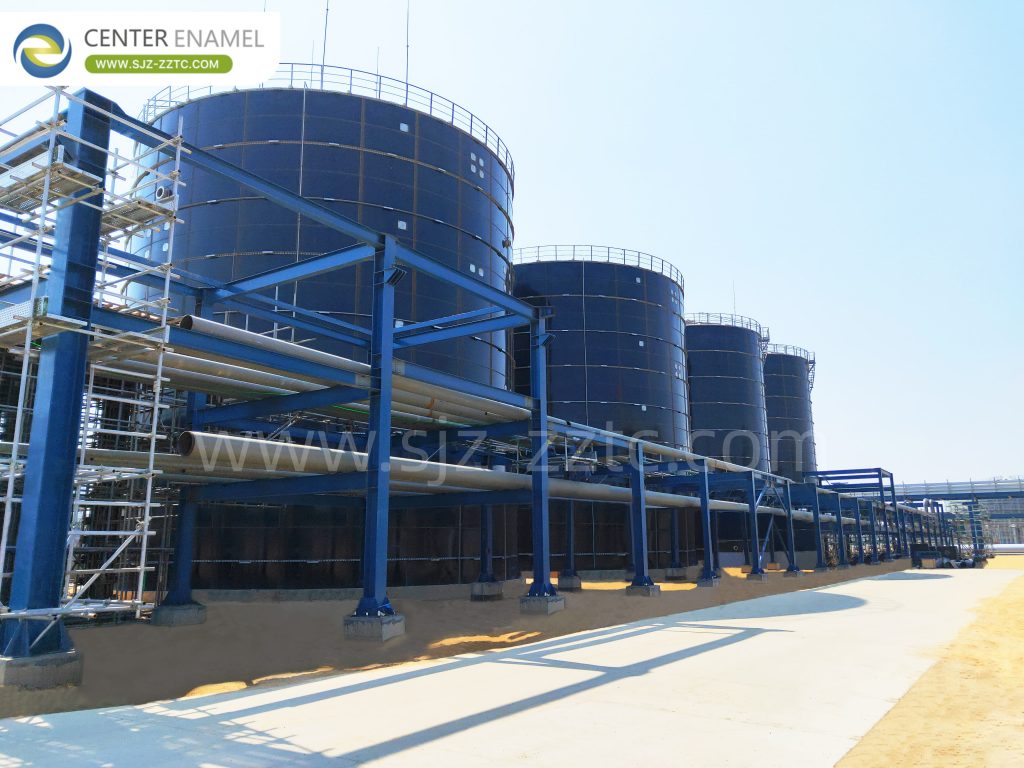
Global Regulations Are Forcing a Step Change
Global industrial wastewater policies are escalating from "compliance discharge" to mandatory "resource recovery" and "zero liquid discharge." The EU, through its Circular Economy Action Plan, requires member states to raise industrial wastewater reuse rates and extends carbon footprint accounting across the full lifecycle of wastewater treatment. China continuously tightens industrial water pollutant discharge standards, with stricter limits on total nitrogen, total phosphorus, and characteristic pollutants for chemicals, pharmaceuticals, and printing and dyeing; water-scarce regions and highly polluting industries are mandated to adopt zero or near-zero liquid discharge technologies. Germany has built a differentiated pretreatment standard system by industry, requiring industrial effluent to meet specific quality thresholds before entering municipal plants-strict source control that raises the bar for every modern chemical wastewater treatment design.
These rules bite hardest on plants whose effluent is inherently nasty-and chemical effluent is among the nastiest.
What Makes Chemical Wastewater So Hard to Treat
Chemical wastewater is characterized by extremely complex composition, severe fluctuations, high pollution load, and poor biodegradability-placing it among the highest treatment-difficulty categories in industry. COD ranges widely, typically 5,000–80,000 mg/L, with coal-chemical high-strength wastewater exceeding 100,000 mg/L. BOD/COD is generally below 0.25, reflecting large quantities of synthetic refractory macromolecules. Effluent is rich in benzene series, phenols, cyanides, sulfides, halogenated hydrocarbons, and other toxic characteristic pollutants. Inorganic salts can reach tens of thousands to over 100,000 mg/L-mainly sodium chloride and sodium sulfate. pH swings violently, with strong-acid and strong-alkali streams discharged alternately. Deep color, strong odor, and occasional heavy-metal ions complete the picture; water quality and quantity vary dramatically with production batches, producing frequent shock loads that make biochemical acclimation extremely difficult.
| Parameter | Typical Range | Treatment Implication |
| COD | 5,000–80,000 mg/L (coal chemical >100,000) | Requires high-load anaerobic pre-treatment |
| BOD/COD | < 0.25 | Poor biodegradability, needs hydrolysis/acidification |
| Salinity | 10,000–100,000+ mg/L (NaCl, Na₂SO₄) | Demands corrosion-resistant vessels |
| pH | Strong acid to strong alkali swings | Requires equalization and neutralization tanks |
| Toxic pollutants | Benzene, phenols, cyanides, sulfides, halocarbons | Inhibits biomass; needs acclimated granular sludge |
| Flow pattern | Batch-driven, frequent shock loads | Needs buffer/equalization capacity |
With effluent this corrosive and variable, the vessel itself becomes a critical design decision-one where concrete often fails.
Why GFS Tanks Outperform Concrete in Extreme Climates
GFS tanks can be customized for wind and seismic loads based on site climate and geology, with environmental adaptability far superior to concrete tanks. Concrete tanks are cast-in-place monolithic structures, with seismic and wind resistance entirely dependent on on-site construction quality; in remote areas, typhoon-prone zones, and earthquake belts, that quality is difficult to control. Under strong earthquakes or typhoons, concrete tanks are prone to cracking and base settlement, with repair costs close to rebuilding.
Before construction, GFS tanks projects collect local seismic intensity, maximum wind pressure, and foundation bearing-capacity data, then deploy customized thickened steel panels, stiffening ribs, and anchored base components-all factory-prefabricated to standardized specifications. The bolted panel structure distributes stress evenly, resists overall fracture under seismic and typhoon impacts, and tolerates minor foundation settlement without through-cracking. Structural parameters can be flexibly adjusted for mountainous, coastal typhoon, and high-seismic sites, providing long-term protection against extreme natural climate damage-exactly the corrosion and load profile that chemical effluent imposes.
Inside these durable vessels, the biological core of modern chemical wastewater treatment is the IC Process.
The IC Process: How It Actually Works
Pretreated high-strength organic wastewater enters the lower main reaction zone from the bottom, mixing with recirculated sludge-water and rising rapidly. Anaerobic microorganisms efficiently degrade organic matter, producing large volumes of biogas. The gas-lift action of biogas carries the mixed liquor upward to a top gas–liquid separator, where biogas is collected. Degassed sludge-water returns by gravity through downcomers to the reactor bottom, creating autonomous internal circulation that repeatedly intensifies pollutant degradation. After multiple circulation cycles, wastewater enters the upper polishing zone for further reaction and sludge–water separation; remaining trace organics are fully degraded, sludge settles back to the lower reaction zone, treated effluent overflows from the top, and aged sludge is periodically discharged-fully autonomous circulation, efficient continuous operation.
Pairing that self-recirculating reactor with corrosion-resistant GFS tanks is what makes the whole system survive chemical effluent.
Why GFS Tanks and the IC Process Are Built for Each Other
GFS tanks provide the equalization, acidification, and sludge-holding volume that the IC Process requires to absorb batch-driven shock loads, while their enamel surface resists the high-salinity, extreme-pH environment that would corrode ordinary steel or concrete within years. Inside the reactors, the IC process's gas-lift internal circulation concentrates granular sludge and tolerates the phenols, cyanides, and refractory organics typical of chemical wastewater treatment. The result is a compact, energy-positive system: high-rate degradation in roughly one-third of a conventional anaerobic footprint, biogas recovered for energy, and minimal excess sludge. This is why Center Enamel packages GFS tanks, IC reactors, aluminum dome covers, and biogas piping into one integrated train rather than selling vessels in isolation.
A representative African installation shows this combination in action.
Case Study: High-Strength Brewery Wastewater, South Africa
Focusing on high-concentration organic wastewater from South Africa's brewing sector, the project combines Center Enamel GFS tanks and stainless steel tanks as core equipment. GFS tanks act as the primary anaerobic digestion system, well suited to brewery wastewater's high-COD, high-sugar, readily biodegradable profile; stainless steel tanks handle wastewater transfer and chemical storage supporting processes. The package's corrosion resistance and flexible assembly enable long-term stable treatment of brewing and cleaning wastewater, resolving a persistent local pollution challenge and demonstrating a blueprint directly transferable to analogous high-strength chemical wastewater treatment trains.
| Item | Configuration |
| Primary treatment | GFS-tank-based anaerobic digestion system |
| Ancillary equipment | Stainless steel tanks for transfer & chemical storage |
| Wastewater profile | High-COD, high-sugar, readily biodegradable effluent |
| Equipment logic | GFS vessels host the anaerobic process; stainless steel supports utilities |
| Key benefits | Corrosion-resistant, modular assembly, long-term stable operation |
| Outcome | Mature African reference for high-strength organic wastewater |
Delivering this kind of integrated train in every climate requires design depth and full-chain delivery-two areas where Center Enamel stands out.
Design Engineering and Full-Chain Integrated Delivery
Center Enamel's design team includes senior engineers registered in the Hebei Provincial Science and Technology Expert Database, with design standards aligned to strict European and American high-end equipment safety standards. The team provides complete integrated design for differentiated overseas projects in livestock biogas, POME, municipal wastewater, hazardous waste storage, and seawater desalination-covering tank structure, anti-corrosion and sealing systems, biogas piping, and anaerobic process integration. Pre-design thoroughly investigates local seismic zones, wind pressure, soil bearing capacity, water-quality corrosivity, and local discharge standards, applying thickened panels, reinforced anchored bases, and optimized sealing structures as needed.
Behind the design stands Center Enamel's full-industry-chain capability: it is the only company globally integrating proprietary enamel frit R&D, self-manufactured tanks, and EPC general contracting-full-process self-control from solution design, equipment production, cross-border logistics, and overseas construction to post-construction O&M, significantly reducing client coordination and time costs. This is why GFS tanks paired with the IC Process arrive on site as a coherent, factory-engineered package rather than a pile of components.
Frequently Asked Questions
Q1. Why are GFS tanks preferred over concrete for chemical wastewater treatment? A1. GFS tanks are factory-prefabricated, bolted, and customizable for seismic, wind, and foundation conditions; their enamel surface resists high-salinity, extreme-pH effluent, and they avoid the cracking and settlement risks that plague cast-in-place concrete in remote or extreme-climate sites.
Q2. How does the IC Process handle high-COD chemical wastewater?
A2. The IC process uses biogas gas-lift to autonomously recirculate sludge-water in a dual-zone reactor, concentrating granular sludge and intensifying pollutant contact. It treats 5,000–100,000+ mg/L COD streams in roughly one-third of a conventional anaerobic footprint while recovering biogas as energy.
Q3. Can Center Enamel deliver this integrated solution globally?
A3. Yes. Center Enamel is the only company integrating enamel frit R&D, GFS tank manufacturing, and EPC contracting in one chain-delivering design, fabrication, cross-border logistics, installation, and O&M across over 100 countries.
Curious how GFS tanks and the IC Process would perform on your specific effluent? Share your COD, salinity, pH, and discharge targets-our engineering team will return a customized chemical wastewater treatment proposal within 48 hours.
From process design and GFS tank fabrication to cross-border installation and lifelong O&M support, Center Enamel's full-chain EPC team stands ready-contact us today to turn your toughest chemical effluent from a compliance burden into a stable, recoverable resource stream.