
Why Is High-Strength Wastewater So Hard to Treat? Finding the Right EPC Contractor
Global industrial wastewater treatment policies are escalating from "compliance discharge" to mandatory "resource recovery" and "zero liquid discharge."
The EU, through its Circular Economy Action Plan, requires member states to increase industrial wastewater reuse rates and extends carbon footprint accounting to the full life cycle of wastewater treatment. China continuously updates and tightens industrial water pollutant discharge standards, with increasingly stringent limits on total nitrogen, total phosphorus, and characteristic pollutants for industries such as chemicals, pharmaceuticals, and printing and dyeing.
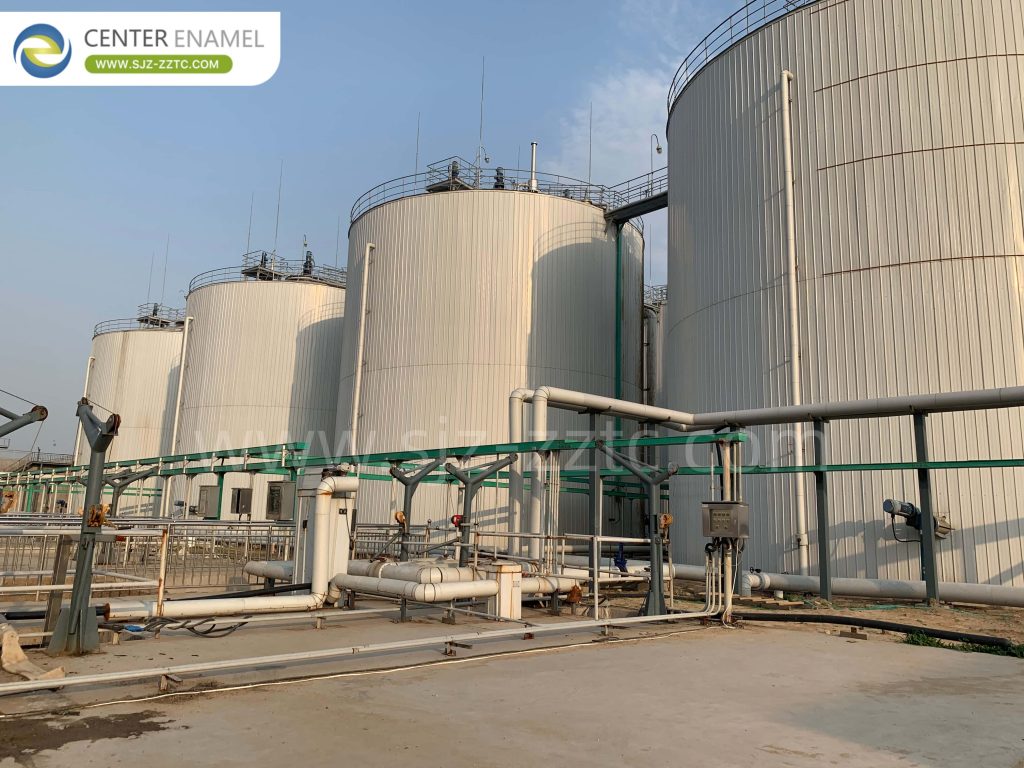
Some water-scarce regions and highly polluting industries are mandated to adopt zero or near-zero liquid discharge technologies. Germany has established a differentiated pretreatment technical standard system by industry, requiring industrial wastewater to meet specific quality requirements before discharge into municipal wastewater treatment plants, implementing strict source control. Against this backdrop, choosing the right Anaerobic Technologies and a capable EPC Contractor is no longer a technical detail-it is a compliance necessity.
GFS Tanks That Survive Extreme Conditions
GFS tanks can undergo customized wind and seismic design based on project site climate and geological conditions, with environmental adaptability far superior to concrete tanks.
Concrete tanks are cast-in-place monolithic structures, with seismic and wind resistance entirely dependent on on-site construction quality. In remote areas, typhoon-prone zones, and earthquake belts, construction quality is difficult to control. Under strong earthquakes or typhoons, concrete tanks are prone to cracking and base settlement damage, with subsequent reinforcement costs equivalent to rebuilding.
GFS tanks undergo collection of local seismic intensity, maximum wind pressure, and foundation bearing capacity data before construction, with customized thickened steel panels, stiffening ribs, and anchored base components-all factory-prefabricated to standardized specifications. The bolted panel structure has excellent stress distribution capability, making it less prone to overall fracture under seismic and typhoon impacts, and minor foundation settlement will not cause through-cracking. Structural parameters can be flexibly adjusted for mountainous, coastal typhoon-zone, and high-seismic-zone projects, providing long-term protection against extreme natural climate damage. When paired with Anaerobic Technologies, GFS Tanks ensure the reactor shell is never the weak link.
Where Anaerobic Technologies Fit Best
Primarily for high-concentration, high-flow soluble industrial organic wastewater, covering brewery, beverage, starch, pharmaceutical, chemical, and papermaking high-strength wastewater.
Suitable for land-constrained projects with high treatment efficiency requirements in large industrial wastewater treatment facilities. Can serve as the primary process for high-strength wastewater with rapid COD/BOD removal. Suitable for centralized industrial park WWTPs and large enterprise proprietary treatment systems, particularly for wastewater with significant quality fluctuations and extremely high pollutant concentrations.
Not suitable for high-solids, high-viscosity wastewater. It is the preferred anaerobic process for modern high-efficiency industrial wastewater treatment.
Why Pharmaceutical Wastewater Costs So Much to Run
O&M costs rank highest among the five wastewater types, with poor overall economic viability.
Strong toxicity and poor biodegradability require continuous addition of large quantities of oxidants, flocculants, and desalination agents during pretreatment-chemical costs far exceeding conventional wastewater. High-energy-consuming equipment such as advanced oxidation and reverse osmosis run continuously, with frequent corrosion damage and high repair/replacement costs.
Toxic sludge, spent activated carbon, and filter residues are all hazardous waste, with complex compliance disposal procedures and high unit costs-solid waste disposal costs are a significant proportion. Frequent water quality fluctuations require dedicated personnel for 24/7 monitoring and parameter adjustment-high labor costs. Resource recovery benefits are minimal, with overall investment far exceeding returns. This cost profile is exactly why durable GFS Tanks and efficient Anaerobic Technologies matter-they reduce the frequency and severity of these cost drivers over the system's life.
Cost and Technology at a Glance
Table 1: Pharmaceutical Wastewater O&M Cost Drivers
| Cost Category | Cause | Impact |
| Chemical agents | Toxicity, poor biodegradability | Oxidants, flocculants, desalination agents |
| Energy | Advanced oxidation, RO operation | Continuous high power draw |
| Repair & replacement | Corrosion damage | Frequent equipment failure |
| Hazardous waste disposal | Toxic sludge, spent carbon | Complex compliance, high unit cost |
| Labor | Water quality fluctuations | 24/7 monitoring and adjustment |
Table 2: Pakistan Food Waste + Napier Grass Biogas Demonstration Project
| Item | Detail |
| Location | Pakistan |
| Role | Center Enamel as general contractor |
| Core process | CSTR anaerobic digestion |
| Feedstock | Food waste + Napier grass |
| Mixing system | Mechanical mixing |
| Daily biogas output | 100 m³ |
| Project status | Official local demonstration project |
Proven Reference - Pakistan Biogas Demonstration
Center Enamel is the general contractor, with CSTR as the core anaerobic process using food waste and Napier grass as mixed fermentation feedstock. Equipped with mechanical mixing system ensuring thorough mixing of feedstock and anaerobic microorganisms-efficient organic degradation with stable daily biogas production of 100 m³.
This is the local official demonstration project for validating gas production efficiency and long-term continuous operational stability. After successful pilot operation, multiple large-scale Napier grass biogas projects are planned locally to promote biomass clean energy and support regional low-carbon development.
Support That Doesn't Stop at Handover
The after-sales team adheres to the service principles of rapid response, professional efficiency, and full-cycle support-providing 24/7 full-lifecycle O&M support to global clients.
Standard remote services include fault diagnosis, process parameter adjustment, and tank anti-corrosion maintenance guidance. For domestic and long-distance overseas clients, overseas technical service personnel can be dispatched for on-site inspection, annual inspection, and equipment refurbishment as needed. The team also maintains long-term client feedback tracking mechanisms-regularly collecting tank and anaerobic equipment operational data to continuously optimize product structure and support processes.
Supporting external technical expert teams provide specialized support for anaerobic process commissioning, biogas upgrading O&M, and wastewater upgrade/retrofit projects-ensuring long-term stable operation of domestic and overseas projects, continuously improving global client satisfaction and repurchase rates.
Flexible Delivery for Real-World Projects
Center Enamel's own cross-border construction teams plus a global localized agent network-modular GFS tank assembly with short construction periods and dismantlable/reusable capability-suitable for overseas short-term projects, phased expansions, and relocation needs-full-lifecycle after-sales O&M support ensuring long-term stable client operations.
This delivery model means that whether your project is a greenfield industrial park plant or a retrofit of an existing facility, Anaerobic Technologies and GFS Tanks can be deployed without the delays typical of conventional construction.
Frequently Asked Questions
1. What makes high-strength wastewater difficult to treat?
High COD, toxicity, salinity, and fluctuating loads inhibit biological treatment, requiring robust Anaerobic Technologies and corrosion-resistant GFS Tanks.
2. When should GFS Tanks be chosen over concrete?
In remote, typhoon-prone, or seismic zones, GFS Tanks offer factory-controlled quality and better structural resilience than cast-in-place concrete.
3. What support does Center Enamel provide after delivery?
24/7 remote diagnostics, on-site inspection, annual maintenance, and expert support for anaerobic commissioning and system retrofits.
Let's Solve Your Wastewater Challenge
Facing high-strength wastewater and unsure which Anaerobic Technologies fit your site? Contact Center Enamel for a project-specific assessment and honest technical guidance.
Tell us your water quality data and treatment targets-our team will respond with a practical, cost-aware solution built on proven GFS Tanks.