
Why Is Manure Water Good for AD?
Manure water is an excellent feedstock for anaerobic digestion because it carries high biodegradable organic load (typically 10,000-60,000 mg/L COD), converts at 0.30-0.45 m³ biogas per kg COD removed at 55-65% methane, and leaves a nutrient-rich digestate that replaces fertilizer — turning a disposal problem into energy and agronomic value.
High Biodegradable Load
Manure is dense in readily digestible organics, so a given tank volume returns far more biogas than dilute sewage would. The high COD is not a problem to fight but the very resource the digester is built to harvest.
Biogas Potential
At 0.30-0.45 m³ biogas per kg COD removed and 55-65% methane, a farm with steady manure supply has a predictable, on-site fuel for heat, power, or upgrading to vehicle fuel. The gas offsets the energy the farm otherwise buys.
Nutrient Recovery
The digestate keeps the manure's nitrogen and phosphorus in plant-available form, so what leaves the digester is a fertilizer rather than a waste. That闭环 is why AD beats simple storage or lagooning for manure.
Co-digestion Balance
Blending manure with crop residues or food waste toward C:N 20-30:1 steadies feeding and raises gas yield. The digester should be specified with that blended feed in mind.
Feedstock Table
| Attribute | Manure water | Why it matters |
| COD | 10,000-60,000 mg/L | Energy density |
| Biogas | 0.30-0.45 m³/kg COD | Methane fuel |
| Methane | 55-65% | Combustible |
| Digestate | N-P rich | Fertilizer |
| Limitation | TS varies | Match reactor |
Project Case Study
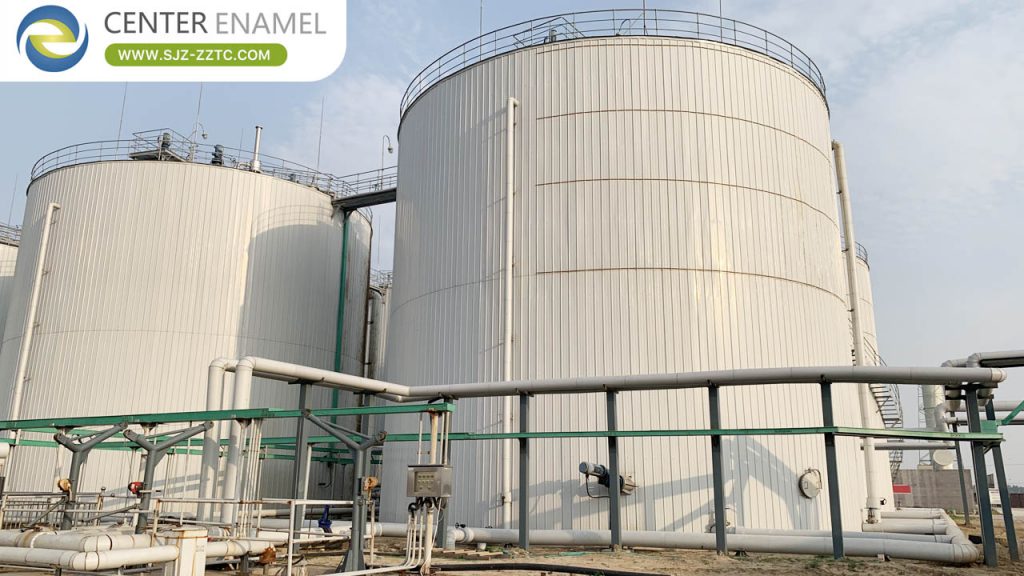
Zhenyuan Group Biogas Project, Henan. A vehicle-grade methane system digests 650 T/D of farm animal manure and washing wastewater in CSTR reactors (3 × Ø15.29 × 15 m plus 1 × Ø5.22 × 6 m), producing 3,000,000 m³ of methane per year — manure turned into transport fuel at scale.
| Project | Zhenyuan Group Biogas Project in Henan |
| Location | Xinzheng, Henan, China |
| Industry | Renewable Vehicle Fuel |
| Application | Manure anaerobic digestion to methane |
| Product | CSTR digester tanks (GFS) |
| Output | 3,000,000 m³ CH₄/year from 650 T/D manure |
| Status | Delivered 2013 |
About Shijiazhuang Zhengzhong Technology Co., Ltd (Center Enamel)
Shijiazhuang Zhengzhong Technology Co., Ltd (Center Enamel) combines manufacturing and project track record: as China's first GFS producer, it makes bolted tanks in a controlled factory (glass fused at 820-930°C) and has delivered anaerobic and biogas tankage on farms from Inner Mongolia to Henan, turning manure into energy and fertilizer across climates.
Advantages and Limitations
Manure is a reliable, on-site AD feedstock with built-in fertilizer value. Limits: total solids vary by collection method, so the reactor must match the actual slurry, and cold regions need digester heating.
Comparison: Manure vs Other Feedstocks
| Feedstock | COD | Note |
| Manure | 10,000-60,000 mg/L | Reliable, on-site |
| Food waste | High | Co-digest boost |
| Crop residue | Lower | Needs preparation |
Manure water is good for anaerobic digestion because it is energy-dense, converts to methane-rich biogas, and leaves fertilizer behind. Match the reactor to its solids, co-digest toward C:N 20-30:1, and the farm gains energy and agronomic value. Share your manure volume and TS and we will size the digester and storage.
Frequently Asked Questions (FAQ)
Q1: Why is manure good for anaerobic digestion?
A: It is dense in biodegradable organics (10,000-60,000 mg/L COD) and converts steadily to methane-rich biogas.
Q2: How much biogas from manure?
A: About 0.30-0.45 m³ biogas per kg COD removed, at 55-65% methane.
Q3: What about the leftover digestate?
A: It keeps the manure's nitrogen and phosphorus, so it is reused as fertilizer.
Q4: Should manure be co-digested?
A: Blending with crop or food residues near C:N 20-30:1 stabilizes feeding and raises gas yield.
Q5: Which reactor fits manure?
A: CSTR for thick slurry, UASB for soluble fractions, USR for solids-rich manure.
Q6: Is on-farm AD worth it?
A: Yes where herd size and collection support steady feed; it cuts odor, pathogens, and energy cost.
Suggested CTA
Tell us your manure type, daily volume, and total solids. We will recommend the reactor and size the GFS digester and digestate storage.