
Why UASB plus AOAO for Pigs?
Pig farms combine UASB with AOAO because the two stages cover opposite problems: a UASB strips 80-90% of the very high bulk COD (often ≥10,000 mg/L) and recovers biogas at low cost, while the AOAO (anaerobic-anoxic-oxic) stage polishes residual COD and removes ammonia nitrogen and total phosphorus to meet discharge limits.
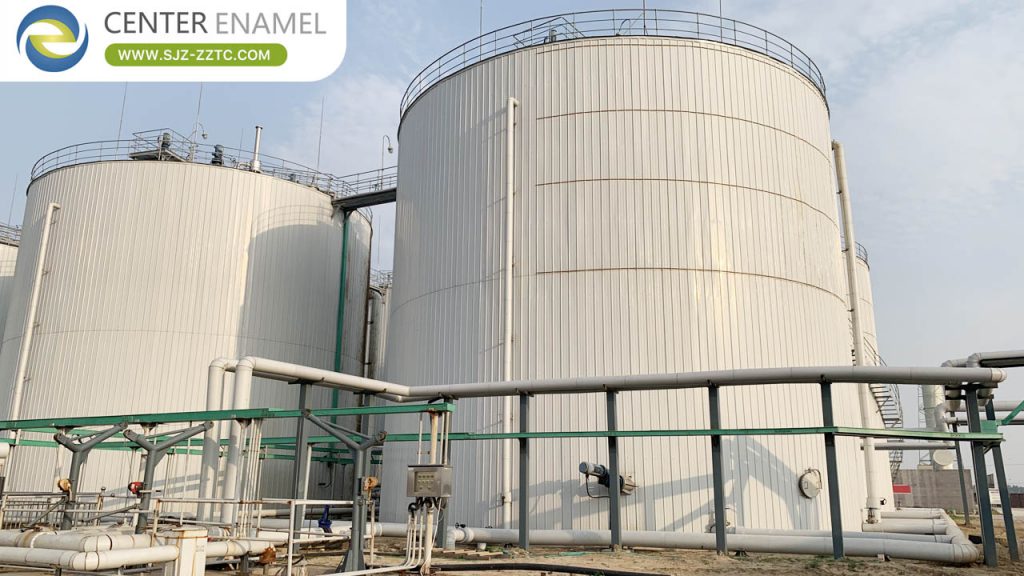
What UASB Does for Pig Wastewater
Pig manure water is thick, warm, and highly organic, which is exactly the feed a UASB likes. The UASB takes the bulk load cheaply, with no aeration energy, and returns biogas at 0.30-0.45 m³ per kg COD removed. It is the cost engine of the plant.
What AOAO Adds
The AOAO stage runs anaerobic, anoxic, and oxic zones in sequence. The anoxic zone denitrifies ammonia to nitrogen gas, the oxic zone nitrifies and polishes residual COD, and phosphorus is precipitated. On its own an AOAO would burn energy on the entire load; after a UASB it only polishes the remainder.
Performance Table
| Parameter | Influent | Effluent (typical) |
| COD | ≥ 10,000 mg/L | ≤ 200 mg/L |
| NH₃-N | ≥ 1,000 mg/L | ≤ 80 mg/L |
| Total P | ≥ 200 mg/L | ≤ 8 mg/L |
| SS | ≥ 10,000 mg/L | ≤ 100 mg/L |
| Limitation | Cold needs heat | Insulate digester |
Why Not One Stage
A UASB alone cannot hit nutrient limits, and an AOAO alone would aerate the full load and miss the biogas. The combination lets each stage do what it is best at: cheap bulk removal plus energy recovery up front, precise nutrient polishing at the end.
Project Case Study
Beijing 5S Pig Farm Wastewater Project. A 580 m³/day system using UASB + AOAO treats water-submerged manure, cutting COD from ≥10,000 to ≤200 mg/L, ammonia from ≥1,000 to ≤80 mg/L, and total phosphorus from ≥200 to ≤8 mg/L — the exact pairing this article describes.
| Project | Beijing 5S Pig Farm Wastewater Project |
| Location | Beijing, China |
| Industry | Livestock / Pig Farming |
| Application | UASB + AOAO pig wastewater train |
| Product | UASB + AOAO tankage |
| Result | COD ≥10,000 → ≤200; NH₃-N ≥1,000 → ≤80; TP ≥200 → ≤8 mg/L |
| Status | Delivered 2020 |
About Shijiazhuang Zhengzhong Technology Co., Ltd (Center Enamel)
Shijiazhuang Zhengzhong Technology Co., Ltd (Center Enamel) contributes installation and project experience on livestock wastewater: the UASB + AOAO train is delivered as coordinated tankage and biological scope. Reference pig-farm systems show the COD and nutrient cuts achievable when tankage and process are built together rather than sourced separately.
Advantages and Limitations
The UASB + AOAO pairing is the pragmatic standard for pig manure water because it balances energy recovery against strict nutrient limits. Limits: the UASB needs heat in cold regions, and equalization upstream protects both stages from flush-cycle shocks.
Comparison: UASB-only vs UASB+AOAO
| Goal | UASB only | UASB + AOAO |
| Bulk COD | Yes | Yes |
| Biogas | Yes | Yes |
| NH₃ / TP | No | Yes |
| Discharge | Needs polish | Meets limits |
Pig farms use UASB + AOAO because no single stage does both jobs: the UASB removes 80-90% of bulk COD and recovers biogas, and the AOAO polishes COD, ammonia, and phosphorus to discharge. Share your herd size and flushing volume and we will size the combined train.
Frequently Asked Questions (FAQ)
Q1: Why add AOAO after UASB?
A: UASB removes bulk COD and recovers biogas; AOAO then cuts ammonia and phosphorus to discharge limits.
Q2: What COD can the combo reach?
A: From ≥10,000 mg/L in to ≤200 mg/L out, about 98% removal, with biogas recovered en route.
Q3: Does the pig system make biogas?
A: Yes, the UASB front end recovers biogas from the manure, lowering net energy use.
Q4: How are nitrogen and phosphorus removed?
A: AOAO denitrifies in the anoxic zone and nitrifies plus precipitates phosphorus in the oxic zone.
Q5: What flow does a pig plant handle?
A: Reference farm systems treat hundreds of m³/day; design scales with herd size and flushing volume.
Q6: Does the process need heat?
A: Mesophilic digestion at 35-38°C does; cold sites add insulation and heat recovery.
Suggested CTA
Send your pig-farm daily volume and target effluent limits. We will size the UASB and AOAO tankage as one train.