
Zero-Discharge Treatment Technology of Palm Oil Mill Effluent (POME): Achieving Complete Environmental Sustainability
The global palm oil sector drives vital economic activity across Southeast Asia, Latin America, and Africa, but it faces intense ecological scrutiny over wastewater management. Processing fresh fruit bunches (FFB) generates massive volumes of Palm Oil Mill Effluent (POME)—a high-strength, acidic colloidal suspension containing high Chemical Oxygen Demand (COD), Biochemical Oxygen Demand (BOD), and suspended solids.
As regulatory frameworks mandate strict environmental compliance and eliminate traditional land-intensive open ponding, Zero Liquid Discharge (ZLD) treatment technology has emerged as the definitive solution for palm oil mills. ZLD systems completely eliminate wastewater discharge by reclaiming 95%+ of water for industrial reuse and converting waste solids into valuable byproducts.
The Imperative for ZLD in Palm Oil Processing
Traditional open lagoon systems require enormous land areas, involve long hydraulic retention times, and emit large quantities of fugitive greenhouse gases (methane). In contrast, Zero-Discharge Treatment Technology creates a closed-loop framework:
- Elimination of Surface Discharge: Completely stops wastewater runoff into local rivers and water bodies.
- Maximized Water Recovery: Recycles high-purity permeate for boiler feed, washing, and operational utilities.
- Resource Recovery: Converts concentrated sludge and organic solids into organic fertilizers, animal feed additives, or soil conditioners rich in Nitrogen, Phosphorus, and Potassium (NPK).
Core Engineering Stages of ZLD POME Treatment
A fully integrated ZLD treatment architecture utilizes a multi-barrier sequence to handle POME's extreme pollutant load:
- Pre-Treatment and Conditioning:
- Screening and Oil Recovery: Raw POME undergoes mechanical bar screening and oil skimming to remove coarse debris and recover residual palm oil.
- Cooling Towers: Lowers effluent temperatures from 80°C–90°C down to optimal operating ranges.
- High-Rate Biological Digestion & Biogas Recovery:
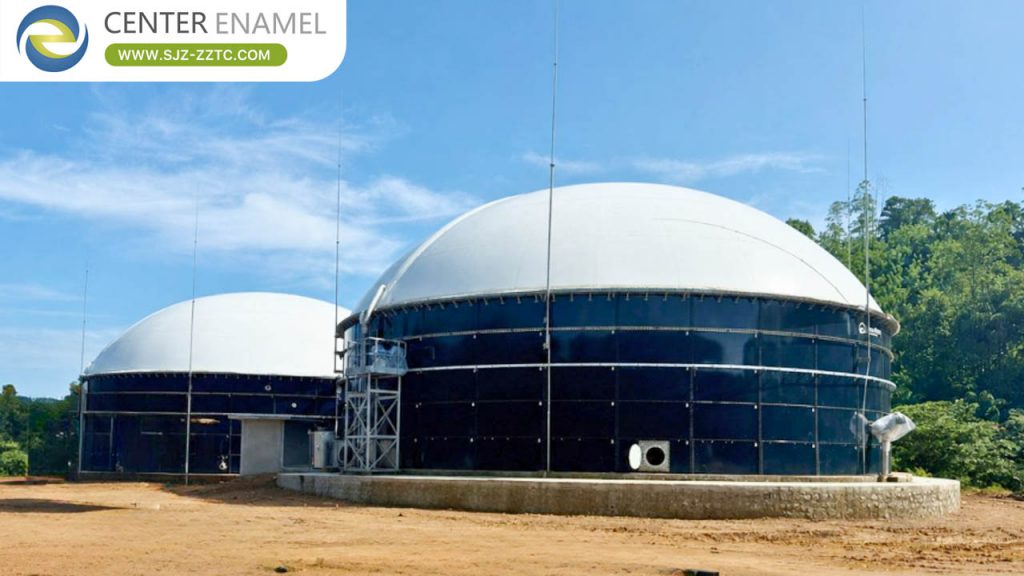
- Enclosed Anaerobic Bioreactors: Utilizes Continuously Stirred Tank Reactors (CSTR) or Upflow Anaerobic Sludge Blanket (UASB) systems to reduce COD by 85% to 95% while capturing clean methane-rich biogas for energy generation.
- Advanced Membrane Separation & Polishing:
- Vibratory Shear Enhanced Processing (VSEP) or Ultrafiltration/Reverse Osmosis (UF/RO): Specialized high-shear membrane systems filter treated effluent to prevent fouling, producing pristine water suitable for steam generation.
- Thermal Evaporation and Crystallization:
- Mechanical Vapor Recompression (MVR) / Evaporators: Concentrates the remaining brine or liquid fraction.
- Paddle Dryers / Crystallizers: Transforms the concentrated residue into dry, stable solid cake or powdered fertilizer.
Comparative Data Table: Conventional Ponding vs. ZLD Technology for POME
| Evaluation Parameter | Conventional Open Ponds | Zero Liquid Discharge (ZLD) Technology |
| Effluent Discharge Status | Discharged after secondary treatment (regulatory risk) | Zero Liquid Discharge (100% closed loop) |
| Water Recovery Rate | Zero recovery (water lost or surface discharged) | 90% to 95% high-purity water reuse |
| Spatial Footprint | Massive land area required | Compact, vertical modular design |
| Greenhouse Gas Emissions | High fugitive methane release | Controlled biogas capture and energy offset |
| Byproduct Valorization | Minimal or none | Solid NPK fertilizer and protein-rich animal feed |
Frequently Asked Questions (FAQ)
Q1: What is Zero Liquid Discharge (ZLD) in the context of palm oil mill effluent?
A: ZLD is an advanced wastewater management approach that combines biological treatment, membrane separation, and thermal evaporation to eliminate all liquid wastewater discharge. It recovers clean water for industrial reuse and converts remaining solids into solid byproducts.
Q2: How do ZLD systems handle the extreme fouling potential of POME?
A: POME contains high levels of suspended solids, oils, and tannins that foul standard membranes. ZLD designs incorporate robust pre-treatment (oil skimming, biological digestion) and high-shear filtration systems (such as VSEP or specialized UF/RO units) to maintain stable filtration performance.
Q3: Can ZLD technology generate revenue for palm oil mills?
A: Yes. While ZLD requires higher initial capital investment, it recovers valuable resources: high-purity water that cuts freshwater intake costs, captured biogas that offsets thermal and electrical energy demands, and nutrient-rich solid byproducts that can be sold as fertilizer or animal feed.