
How Does Anaerobic Digestion Handle Pharmaceutical Wastewater?
Pharmaceutical wastewater is widely considered the most difficult industrial stream to treat-toxic, highly variable, and expensive to manage. Yet Anaerobic Digestion has proven to be one of the few biological processes capable of handling it efficiently. This article explains how Anaerobic Digestion works in Pharmaceutical Wastewater Treatment, where it applies, and what equipment makes it reliable over the long term. Center Enamel brings this capability to projects worldwide, combining IC reactor technology with corrosion-resistant GFS tanks and full global delivery support.
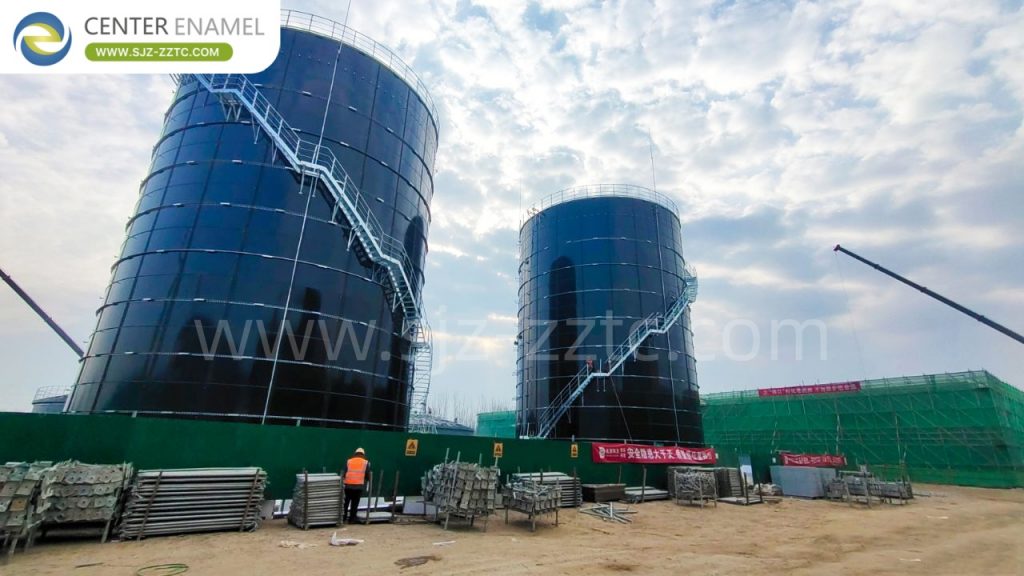
Regional Trends Driving Anaerobic Digestion Demand
The Asia-Pacific region, particularly China, has become the world's largest industrial wastewater treatment market, with the operation and maintenance service segment's contribution continuing to rise-marking a shift from project construction to long-term operational management. The North American market focuses on upgrading existing facilities, while Europe emphasizes high-value-added resource recovery technologies.
Wastewater from the new energy industry chain-lithium batteries, photovoltaics, and hydrogen-has become the most notable emerging growth area due to its complex composition and high treatment difficulty, generating significant demand for customized solutions. The maturity of third-party treatment models in industrial parks continues to improve, driving consolidation in the professional operation market. The Middle East has strong demand for advanced treatment and reuse of industrial wastewater due to water scarcity, while manufacturing transfer in Southeast Asia drives local treatment facility construction demand.
Across all these regions, Anaerobic Digestion remains the core biological process for high-strength organic streams-and Pharmaceutical Wastewater Treatment sits at the most demanding end of that spectrum.
What Is the IC Process?
IC, or Internal Circulation Anaerobic Reactor, is the third-generation high-efficiency anaerobic treatment technology built upon UASB. Its core innovation is the built-in gas-lift internal circulation system, enabling autonomous wastewater recirculation without external return pumps.
The reactor features a dual-zone configuration: a lower main reaction zone and an upper polishing zone. Biogas gas-lift creates hydraulic internal circulation, significantly increasing upflow velocity and enhancing sludge-wastewater contact. With extremely high compactness, it is specifically designed for high-concentration, high-flow industrial organic wastewater-combining high efficiency, energy savings, and minimal footprint. It is the core process for modern industrial high-strength wastewater treatment and a proven foundation for Anaerobic Digestion in Pharmaceutical Wastewater Treatment.
GFS Tanks for Compact, Intensive Plant Layouts
GFS tanks offer flexible customization of size and appearance, with higher land utilization rates-ideally suited for modern compact plant layouts, with significant advantages over fixed poured concrete tanks.
Concrete tanks cannot alter volume or shape after pouring. Their heavy bases occupy large areas, making placement difficult on narrow or irregular plots, and their rough, uniform appearance cannot match modern facility aesthetic requirements.
By contrast, GFS tank volume can be precisely customized as needed, with capacities ranging from dozens of cubic meters to 50,000 cubic meters freely selectable. Tank height and diameter can be flexibly combined to fit narrow or irregularly shaped plots, effectively saving plant land occupation. Enamel color customization is also supported, achieving visual harmony with plant buildings and environmental facilities.
During later plant expansion, GFS tanks can be directly adjusted in layout and expanded; concrete tanks, being monolithic structures, must be demolished and rebuilt-offering far less flexibility in land resource utilization. This aligns well with the intensive construction and aesthetic operation and maintenance needs of industrial parks.
GFS Tanks vs. Concrete Tanks
| Parameter | GFS Tanks | Concrete Tanks |
| Volume Flexibility | Customizable after design | Fixed once poured |
| Capacity Range | Dozens to 50,000 m³ | Limited by structure |
| Footprint Efficiency | High, fits irregular plots | Low, heavy base |
| Expansion | Adjustable and expandable | Demolish and rebuild |
| Appearance | Custom enamel colors | Rough, uniform finish |
| Construction Time | Short, modular | Long curing period |
Where Pharmaceutical Wastewater Comes From
Pharmaceutical wastewater originates from the entire production process of chemical synthesis, fermentation antibiotics, traditional Chinese medicine, and biopharmaceuticals-representing a typical high-difficulty industrial wastewater.
Key pollution-generating stages include raw material washing, reaction synthesis, fermentation culture, extraction crystallization, and filtration separation. Auxiliary wastewater includes equipment washing, workshop floor cleaning, laboratory testing, and exhaust gas scrubbing. Fermentation wastewater mainly consists of bacterial cell residues and spent culture media. Chemical synthesis wastewater is rich in reaction byproducts and organic solvent residues. TCM wastewater is concentrated in herb decoction and alcohol precipitation/concentration stages.
Wastewater generation is continuous, with significant variations due to drug type and production batch changes. Small and medium-sized pharmaceutical companies lack stable production conditions, causing extreme fluctuations in water quality and quantity-the highest industry-wide pollution control difficulty. This variability is precisely why Anaerobic Digestion systems must be robust, and why equipment corrosion resistance and process stability are non-negotiable in Pharmaceutical Wastewater Treatment.
Pharmaceutical Wastewater Sources and Characteristics
| Source Category | Main Pollution Stages | Wastewater Characteristics |
| Fermentation Antibiotics | Fermentation culture, filtration | Bacterial residues, spent media, high COD |
| Chemical Synthesis | Reaction, extraction, crystallization | Solvent residues, byproducts, high toxicity |
| Traditional Chinese Medicine | Herb decoction, alcohol precipitation | High organic load, variable quality |
| Biopharmaceuticals | Culture, separation, purification | Complex composition, biological toxicity |
| Auxiliary Streams | Equipment washing, floor cleaning, lab testing | Lower strength, high variability |
Case Study: Pakistan Food Waste + Napier Grass Biogas Demonstration Project
Center Enamel served as general contractor for this official local demonstration project, applying CSTR as the core anaerobic process with food waste and Napier grass as mixed fermentation feedstock. The system is equipped with a mechanical mixing system ensuring thorough contact between feedstock and anaerobic microorganisms-achieving efficient organic degradation with stable daily biogas production of 100 m³.
This project validates gas production efficiency and long-term continuous operational stability. Following successful pilot operation, multiple large-scale Napier grass biogas projects are planned locally to promote biomass clean energy and support regional low-carbon development.
Project Data Summary
| Project Parameter | Specification |
| Location | Pakistan |
| Application | Food waste + Napier grass co-digestion |
| Core Process | CSTR anaerobic digestion |
| Daily Biogas Output | 100 m³ |
| Tank Material | Glass-Fused-to-Steel (GFS) |
| Purpose | Official demonstration project |
Material Innovation Behind Reliable Anaerobic Digestion
Center Enamel has built a full-chain professional team covering R&D, design, marketing, installation, and after-sales. The R&D team is led by national-level materials technology experts, specializing in enamel frit and tank anti-corrosion core technologies. External senior environmental engineering and mechanical structure engineers are retained to strengthen R&D capabilities, focusing on anti-corrosion coating formulations, specialty corrosion-resistant tanks, and anaerobic supporting integrated equipment-continuously breaking through industry technological barriers.
The team operates through proprietary laboratories with external university research collaboration-conducting year-round new material and new process durability pilot testing and long-term corrosion simulation testing. Specialized enamel formulations are iteratively developed for extreme conditions such as high-salinity wastewater, strong acid/alkali POME, and high-organic livestock manure-providing core technical support for the company's annual new invention and utility patents, and building a proprietary material technology barrier.
This research foundation directly supports Pharmaceutical Wastewater Treatment, where aggressive chemistry and high salinity shorten the life of ordinary equipment.
Innovative Material Technology for 30-Year Service Life
Center Enamel has independently developed over 200 anti-corrosion enamel formulations, with proprietary double-sided double-layer enameling technology. GFS tank anti-corrosion service life exceeds 30 years-far surpassing concrete and ordinary equipment-making it suitable for global high-corrosion wastewater and biogas fermentation conditions.
For Anaerobic Digestion in Pharmaceutical Wastewater Treatment, this means tanks that withstand high salinity, toxic organics, and aggressive chemical residues without frequent repair or replacement-protecting both process stability and operating budgets.
Frequently Asked Questions
Q1: Can Anaerobic Digestion really treat pharmaceutical wastewater?
Yes. Anaerobic Digestion handles high-concentration organic streams effectively. With the IC Process, it tolerates high toxicity and fluctuating loads-making it suitable for Pharmaceutical Wastewater Treatment when paired with proper pretreatment.
Q2: Why are GFS tanks preferred for pharmaceutical wastewater projects?
GFS tanks resist pH 1–14, high salinity, and microbial corrosion, with a 30+ year service life. This durability is critical where aggressive pharmaceutical chemistry would rapidly degrade ordinary tanks.
Q3: What capacity range do GFS tanks support?
GFS tank volume is precisely customizable from dozens of cubic meters up to 50,000 m³, with flexible height and diameter combinations to fit compact or irregular plant layouts.
Let's Solve Your Pharmaceutical Wastewater Challenge
Pharmaceutical wastewater demands more than a standard treatment train-it requires a process and equipment combination proven to survive toxic, high-salinity, and highly variable conditions. Share your effluent profile with Center Enamel, and our engineers will design an Anaerobic Digestion and Pharmaceutical Wastewater Treatment solution tailored to your site and regulatory environment.
From feasibility study to commissioning and long-term O&M support, we deliver complete solutions backed by 30,000+ global projects. Contact us today to discuss how we can support your next project.