
Fruit and Vegetable Waste to Biogas Malaysia | GFS Tanks & Double Membrane Roof Solutions by Center Enamel
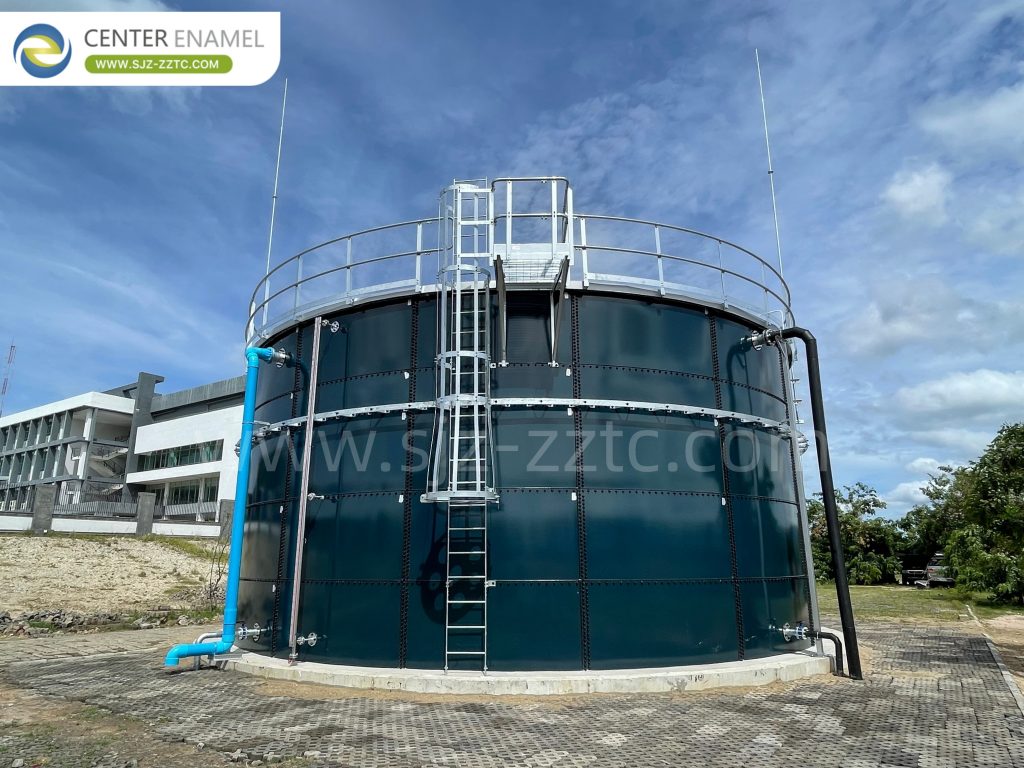
Malaysia's rapid urbanization and thriving agro-industrial sector, including its position as a major fruit producer, have led to a significant increase in organic waste. It is estimated that Malaysians generate about 1.17 kg of municipal solid waste (MSW) per capita daily, with a staggering 55% of this waste being organic, primarily from food scraps, fruits, and vegetables. The disposal of this waste in landfills contributes to the release of greenhouse gases (GHGs) like methane and poses severe environmental and health risks, including attracting pests and contaminating water sources.
The management of fruit and vegetable waste is a pressing issue, as its high moisture and organic content make it a challenge for traditional disposal methods. However, these same characteristics make it an ideal feedstock for biogas production through anaerobic digestion (AD). By converting this waste into a valuable resource, Malaysia can significantly reduce its landfill dependency, cut GHG emissions, and generate clean, renewable energy.
From Waste to Energy: The Science of Biogas
The transformation of fruit and vegetable waste into biogas is a natural biological process known as anaerobic digestion. In this oxygen-free environment, a consortium of microorganisms breaks down the complex organic matter in four key stages: hydrolysis, acidogenesis, acetogenesis, and methanogenesis. During this process, the organic acids and sugars found in fruit and vegetable peels, seeds, and trimmings are converted into a methane-rich gas (typically 60-70% biogas). This biogas is a clean and sustainable energy source that can be used for electricity generation, heat, or upgraded to biomethane for vehicle fuel, contributing to a circular economy and reducing reliance on fossil fuels.
The Core Technology: CSTR for Optimal Digestion
The heart of a modern biogas plant is the digester. A proven and efficient technology for processing high-solid organic waste like fruit and vegetable waste is the Continuous Stirred-Tank Reactor (CSTR). In this system, the feedstock and anaerobic microorganisms are continuously or semi-continuously fed into a closed, heated tank and kept in a "completely mixed" state through a mechanical stirring device. This constant agitation ensures uniform temperature, prevents the formation of a scum layer, and maximizes contact between the bacteria and the organic material, leading to higher biogas yields and effective degradation of the waste.
The CSTR process is particularly suited for Malaysia's fruit and vegetable waste due to its ability to handle high concentrations of suspended solids. Research has shown that co-digesting fruit and vegetable waste with other substrates in a CSTR can significantly enhance biogas and methane production, sometimes by over 20%. This makes it a robust and adaptable solution for the Malaysian context.
Center Enamel: Your Trusted Partner for Biogas Solutions
With over 36 years of experience and a legacy, Center Enamel is a global leader in providing comprehensive biogas solutions. As the largest manufacturer of Glass-Fused-to-Steel (GFS) tanks in Asia, we are committed to delivering high-quality, durable, and cost-effective equipment for water, wastewater, and biogas projects worldwide.
For our clients in Malaysia, we offer more than just products; we provide complete peace of mind. Our Biogas Solutions encompass everything from initial consultation and engineering design to the supply of world-class equipment and EPC (Engineering, Procurement, and Construction) services. Center Enamel's expertise ensures that every project is tailored to meet specific needs, comply with international standards (such as AWWA D103, ISO 28765, and NSF/ANSI 61), and achieve optimal performance for years to come. Our presence in Malaysia is a testament to our dedication to supporting the nation's sustainable energy and waste management goals.
Core Components for a High-Performance Biogas Plant
GFS Tanks: The Unmatched Standard for Durability
For the critical role of anaerobic digestion and storage in a biogas plant, GFS Tanks are the premium technology of choice. At Center Enamel, our GFS Tanks are manufactured using a unique Glass-Fused-to-Steel (GFS) technology. The steel panels are fired at temperatures between 820°C and 930°C, fusing the glass to the steel to create a chemically inert and inorganic bond. This process results in a tank that combines the strength and flexibility of steel with the outstanding corrosion resistance of glass. This robust coating provides an impermeable barrier, making it ideal for the highly acidic and corrosive environment within an anaerobic digester, thereby ensuring a long service life with minimal maintenance. Our GFS Tanks are a proven and reliable storage solution used in hundreds of biogas and environmental projects worldwide.
Double Membrane Roof: Efficiency and Cost Optimization
The Double Membrane Roof is a state-of-the-art cover solution, particularly suited for biogas applications like anaerobic digestion. This system offers significant advantages over traditional structures by directly reducing the roof cost and significantly minimizing the floor area required. This space efficiency eliminates the need for expensive foundation construction for a ground-mounted gas holder, making it a highly cost-effective choice. Its design ensures optimal air-tightness, which is crucial for capturing and storing biogas and controlling odors, making it the preferred solution for modern biogas projects.
Center Enamel’s Comprehensive Tank Cover Solutions
Beyond our industry-leading Double Membrane Roof, Center Enamel offers a diverse range of cover solutions to meet specific project requirements and environmental conditions. Our standard offerings include:
Aluminum Geodesic Dome Roof: Known for its expansive clear span capability and advanced corrosion resistance, this is a durable and low-maintenance option.
Glass-Fused-to-Steel Roof: As an integral part of our GFS Tanks, this roof provides excellent air-tightness for pressurized structures and odor control.
Aluminum Alloy Trough Deck Roof: An economical and practical choice for applications like potable water and wastewater storage where air-tightness is not required.
Stainless Steel Roof: Offers superior anti-corrosion performance and a long service life for demanding applications requiring air-tightness.
FRP Roof: A lightweight and corrosion-resistant option suitable for non-airtight storage needs, such as drinking water and fire water.
Complete Biogas Equipment Package
To ensure the success of your biogas project, Center Enamel can supply a full suite of complementary equipment. Our comprehensive Biogas Solutions include:
Gas Holders: For efficient storage of the produced biogas.
Black Membrane: Used for lining and covering applications within the plant.
Solid-Liquid Separator: An essential piece of equipment for separating the digestate into solid and liquid fractions for use as fertilizer or further treatment.
Torch System: A safety device for the controlled flaring of excess biogas during maintenance or emergencies.
Dehydration and Desulfurization Tank: These systems are critical for upgrading raw biogas by removing moisture and corrosive hydrogen sulfide, thereby protecting downstream equipment like engines.
Screw Sludge Dewatering Machine: For efficiently reducing the volume and moisture content of the residual sludge.
The Center Enamel Advantage: Efficient Installation and Unrivaled Quality
Center Enamel’s GFS Tanks are designed for rapid and efficient on-site assembly. This bolted tank design, manufactured in our state-of-the-art 150,000m² production facility, offers numerous benefits:
Speed of Construction: The bolted design allows for much faster assembly times compared to welded or concrete tanks, significantly shortening project timelines.
High-Quality Manufacturing: Our production line can manufacture over 250,000 sheets per year, ensuring consistent quality and supply for projects of all sizes.
Strength and Adaptability: The tanks are designed to be robust and can be customized to withstand local environmental conditions, making them adaptable for various terrains and climates.
Global Standards Compliance: All our tanks are designed and manufactured in strict accordance with international standards such as AWWA D103, ISO 28765, and CE/EN 1090, guaranteeing safety, quality, and reliability.
Global Expertise: With over 500 employees and a presence in more than 100 countries, our team of experts brings decades of experience to your project.
One-Stop Biogas Solutions for Malaysia: A Sustainable Partnership
As Malaysia continues its transition towards a greener economy, Center Enamel stands ready as a trusted partner. Our position as a one-stop solution provider means we can handle every aspect of your biogas project, from the initial concept to full operation. By choosing Center Enamel, you gain access to:
Complete EPC Services: We can manage your entire project, ensuring seamless integration of all components.
Process Package Expertise: Our team can design the optimal process flow for your specific feedstock to maximize biogas yield.
World-Class Equipment Supply: We offer a comprehensive range of high-quality, durable equipment, from GFS Tanks and Double Membrane Roofs to all necessary auxiliary systems.
Proven Track Record: Our GFS tanks have been successfully delivered for a major biogas project in Malaysia, demonstrating our capacity and local expertise.
Commitment to Sustainability: Our solutions are designed to help you meet your environmental goals, reduce waste, and generate clean, renewable energy.
By partnering with Center Enamel, you are investing in a sustainable future for Malaysia, transforming a significant waste problem into a valuable energy asset.
Conclusion: A Sustainable Future with Fruit and Vegetable Waste
The challenge of fruit and vegetable waste in Malaysia is immense, but it also presents a remarkable opportunity. By embracing biogas technology, the nation can transform this environmental burden into a clean, renewable energy source. Center Enamel is at the forefront of this energy revolution, offering robust and reliable Biogas Solutions that are tailored to the Malaysian context. Our industry-leading GFS Tanks and efficient Double Membrane Roof are critical components for a successful AD plant. Combined with our comprehensive EPC service and a vast array of supporting equipment, we are fully equipped to help you turn waste into a sustainable and profitable resource, contributing to a cleaner and more energy-secure Malaysia.
Frequently Asked Questions (FAQs)
1. What types of fruit and vegetable waste are suitable for biogas production?
A wide variety of fruit and vegetable waste is excellent for biogas production. This includes peels (e.g., durian, banana, mango, watermelon), seeds, pulp, and trimmings from processing. These wastes are rich in readily biodegradable carbohydrates and organic matter, making them a high-yield substrate for anaerobic digestion.
2. How does the GFS coating on Center Enamel's tanks benefit a biogas plant?
The Glass-Fused-to-Steel (GFS) coating is fired at high temperatures (820-930°C) to create an inert, inorganic bond. This provides exceptional corrosion resistance, which is critical for protecting the tank from the highly acidic and corrosive environment inside an anaerobic digester. This ensures a much longer service life with minimal maintenance compared to other tank options.
3. Can the biogas produced from fruit and vegetable waste be used for electricity generation in Malaysia?
Yes, absolutely. The biogas produced, which is rich in methane (60-70%), can be used as a fuel in a combined heat and power (CHP) unit or a gas engine to generate electricity and heat. This renewable energy can be used on-site for the facility or exported to the grid, providing significant economic and environmental benefits.