
POME to Biogas Project in Malaysia: Leading GFS Tanks and USR Process Solution
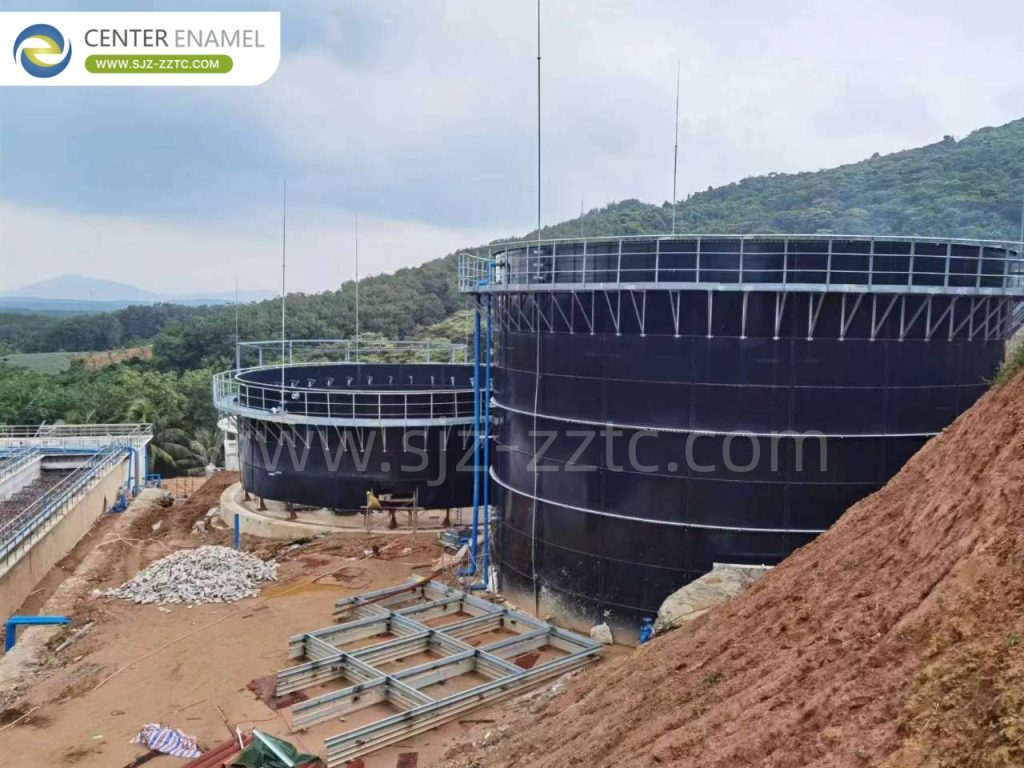
Malaysia's palm oil industry produces some of the highest volumes of POME in the world, and converting this wastewater into a productive Biogas Project is now central to sustainable mill operations. This article explains how the USR Process and GFS Tanks work together to help Malaysian mills capture clean energy from palm oil effluent.
Palm Oil Production and Wastewater Treatment Challenges in Malaysia
As one of the world's top palm oil producers, Malaysia operates a dense network of mills across Peninsular Malaysia, Sabah, and Sarawak, each processing thousands of tons of fresh fruit bunches daily. This large-scale processing generates enormous volumes of Palm Oil Mill Effluent (POME), a thick, high-strength organic wastewater with elevated COD and BOD levels. Left untreated in open ponds, POME pollutes rivers, damages aquatic ecosystems, produces strong odours, and releases uncontrolled methane, a potent greenhouse gas. With Malaysia's tightening environmental regulations and growing sustainability certification requirements for palm oil exports, mills increasingly need enclosed, efficient treatment systems capable of both protecting waterways and unlocking renewable energy value from this abundant effluent stream.
Converting POME into Biogas
Rather than viewing POME purely as a disposal challenge, many Malaysian mills now treat it as the feedstock for a Biogas Project. The process starts with mechanical bar screening and a horizontal flow oil separator, removing fibrous solids and residual oil before the wastewater enters a regulating tank that balances flow, temperature, and pH. The conditioned effluent then flows into an anaerobic digester, where naturally occurring microorganisms break down organic matter in an oxygen-free environment, releasing methane-rich biogas. After dehydration and desulfurization, this biogas can power boilers, drive biogas generators for on-site electricity, or be upgraded into compressed natural gas (CNG) for transport fuel. The remaining digestate separates into liquid fertilizer suitable for direct land application and fibrous organic solids that can be composted, supporting a closed-loop approach across plantation operations.
The USR Process Explained
Many Malaysian POME treatment systems rely on the USR Process, or Upflow Solids Reactor, an anaerobic digestion technology well suited to organic wastewater with total solids content between 3% and 6%. Wastewater flows upward through the reactor and passes through an active solid bed, where microorganisms break down organic pollutants while biogas rises into an integrated gas holder above the tank. Reactor volume is calculated based on volumetric loading, taking into account wastewater characteristics, operating temperature, and required removal efficiency, typically targeting 3 to 5 kg COD per cubic meter per day under mesophilic conditions. The vertical, cylindrical, air-tight tank design, paired with a water collection and recycling system, ensures stable and efficient long-term treatment.
Center Enamel's Professional Design Solutions for Biogas Projects
A dependable Biogas Project starts with engineering suited to each mill's specific wastewater profile. Operating from a 150,000 square meter research and production base with an annual capacity of 250,000 sheets, Center Enamel's engineering team designs pretreatment, digestion, and gas utilization systems tailored to Malaysian palm oil mill conditions. Backed by certifications including CE/EN1090, ISO 9001, NSF61, WRAS, and EN28765, and design standards such as AWWA D103, OSHA, EN28765, and EuroCode, the company configures each system's sizing and process flow to match site-specific loading and treatment goals, delivering consistent, dependable performance.
GFS Tanks and Double Membrane Roof
Two products form the backbone of Center Enamel's biogas solutions for palm oil mills. GFS Tanks — Glass-Fused-to-Steel tanks — are produced by bonding molten glass onto steel plate at 820°C to 930°C, creating an inert, highly corrosion-resistant surface with a double coating layer structure (2C2F) protecting both interior and exterior faces. This construction withstands the acidic, high-strength conditions typical of POME, and modular bolted assembly enables considerably faster on-site erection than conventional construction methods. Paired with a Double Membrane Roof, the system delivers an air-tight, cost-optimized cover: this design reduces roof construction costs while cutting the footprint and foundation requirements compared with traditional ground-mounted gas holders, making it an ideal fit for anaerobic digestion and biogas storage.
Center Enamel's Range of Storage Tanks and Roof Solutions
Beyond GFS Tanks, Center Enamel offers a wide selection of tank and roof solutions to match different mill requirements:
Galvanized Steel Tanks — treated through a galvanizing process for a tough, wear-resistant, corrosion-protective coating.
Fusion Bonded Epoxy (FBE) Tanks — developed with AkzoNobel, a global leader in paints and coatings, offering advanced epoxy protection.
Stainless Steel Tanks — manufactured in AISI 304/316 grades for demanding storage applications.
Aluminum Geodesic Dome Roof — offering advanced corrosion resistance, wide clear-span coverage, and minimal maintenance.
Glass-Fused-to-Steel Roof — air-tight and cone-shaped, suitable for pressurized structures and odour control.
Single and Double Membrane Roof — the preferred air-tight cover for anaerobic digestion and biogas applications, offering an integrated, cost-effective tank top.
Stainless Steel Roof — air-tight, corrosion-resistant, suited to pressurized and harsh environments.
Aluminum Alloy Trough Deck Roof and FRP Roof — economical, non-air-tight options for potable water, agricultural, and firewater storage.
Supporting Biogas Equipment
To complete a fully functioning Biogas Project, Center Enamel also supplies key supporting equipment:
Gas Holders for flexible biogas storage capacity
Lagoon/Black Membrane covers as an economical anaerobic solution
Hot Water Boilers for utilizing recovered biogas as combustion fuel
Emergency Torch Systems for safe flaring of excess biogas
Lifting Pumps for wastewater and sludge transfer
Dehydration and Desulfurization Tanks for biogas purification before use
Screw Sludge Dewatering Machines for efficient digestate solid-liquid separation
Efficient GFS Tank Installation Capability
Fast, reliable installation is essential for mills seeking to minimize downtime during construction. Center Enamel supports this through:
Modular, bolted panel assembly that eliminates the need for on-site welding
Factory-standardized panel manufacturing that ensures consistent quality control before shipment
Installation teams experienced with tropical climates and remote plantation logistics across Southeast Asia
Efficient shipping and on-site erection workflows for GFS Tanks, shortening overall project timelines
Thorough quality inspection at every stage to guarantee long-term structural reliability
Center Enamel as a One-Stop Solution Provider for Biogas Projects
Center Enamel simplifies project delivery for palm oil mill owners by offering complete, integrated services:
EPC service covering engineering design, equipment procurement, and construction execution
Process Package solutions tailored to each mill's wastewater profile and energy recovery goals
Equipment Supply spanning tanks, roofs, reactors, and auxiliary systems from a single manufacturer
Global certification compliance ensuring projects meet recognized international standards
A proven track record across more than 100 countries, supported by a team of over 500 employees
Case Studies
Indonesia Palm Oil Wastewater Treatment Project
Application:Anaerobic Reactors at Palm Oil Wastewater Treatment Plant
Tank Model:Ø17.58*8.4m, Ø16.82*7.2m
Tanks Quantity: 3 nos. of GFS tanks
Installation Date: 2013
Thailand Palm Oil Wastewater Treatment Project
Tank Size: Ø29.79 * 13.8m, 9000m3
Tank Quantity: 2 nos. of CSTR GFS tanks
Conclusion
Malaysia's palm oil sector has a clear opportunity to transform POME from an environmental liability into a source of renewable energy. Through the USR Process for biological treatment and GFS Tanks paired with Double Membrane Roofs for durable, air-tight containment, mills can reliably capture biogas while meeting environmental standards. With proven engineering and equipment from Center Enamel, Malaysian producers gain a dependable path to a fully operational Biogas Project.
Frequently Asked Questions
Q1: What COD loading range does the USR Process typically handle?
Under mesophilic conditions, the USR Process typically targets a volumetric loading of 3 to 5 kg COD per cubic meter per day, depending on wastewater characteristics and temperature.
Q2: How does the Double Membrane Roof reduce project costs?
The Double Membrane Roof lowers roof construction costs and reduces the footprint and foundation requirements compared with traditional ground-mounted gas holders, making it a cost-efficient biogas storage solution.
Q3: What advantage does GFS Tank technology offer for POME treatment?
The fused glass coating on GFS Tanks resists the acidic, high-strength conditions of palm oil wastewater while modular bolted assembly allows faster construction on active mill sites.