
What Is the Wastewater Formed in Papermaking? A Complete Guide to Papermaking Wastewater Treatment
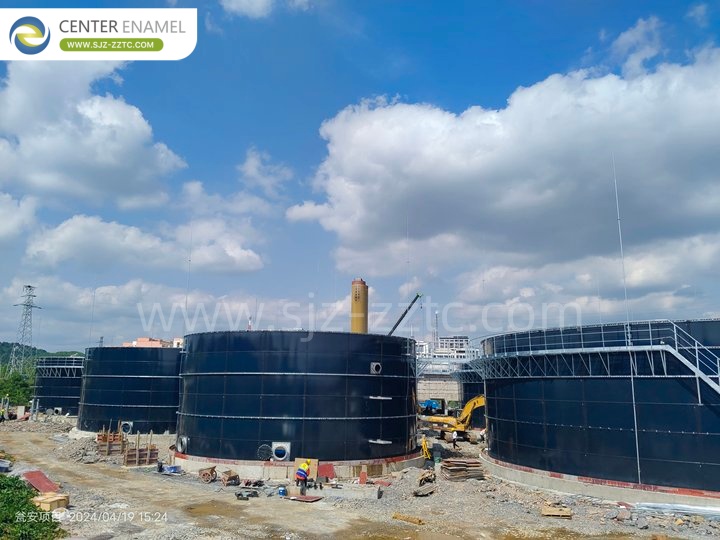
Papermaking is one of the most water-intensive manufacturing processes in the world, generating large volumes of complex, high-strength wastewater at nearly every production stage. This wastewater carries high organic loads, suspended fibers, chemical additives, lignin, and colorants, posing severe risks to aquatic ecosystems and public health if discharged untreated.
Understanding what wastewater is formed in papermaking, how it is generated, how to treat it efficiently, and how to implement reliable Papermaking Wastewater Treatment Project infrastructure is critical for mills to meet discharge standards, lower operational costs, and achieve sustainable production. This article explains papermaking wastewater origins, full treatment workflows, four key anaerobic technologies, advantages of GFS Tanks, and why Center Enamel leads in delivering professional Wastewater Treatment Solutions.
What Is the Wastewater Formed in Papermaking and How Is It Generated?
Papermaking wastewater is the liquid effluent released during raw material preparation, pulping, bleaching, paper forming, and waste paper recycling. It varies significantly in composition, concentration, and toxicity depending on the process used. The main sources include:
1. Pulping and Bleaching Wastewater
This is the most contaminated stream, including black liquor from chemical cooking, washing wastewater, and bleaching effluent. It contains massive amounts of lignin, cellulose, hemicellulose, residual alkaline chemicals, and chlorinated organic compounds, with extremely high COD, BOD, and dark color. It is highly corrosive and difficult to biodegrade.
2. White Water from Paper Machine Operations
White water is produced during sheet forming, pressing, and drying. It contains fine fibers, fillers, sizing agents, and retention additives. While organic concentration is lower than pulping wastewater, suspended solids (SS) are extremely high, leading to fiber loss and eutrophication risks if released directly.
3. Waste Paper Recycling Wastewater
Generated during waste paper pulping, deinking, and cleaning, this stream contains ink particles, adhesives, microfibers, and chemical residues. It has poor biodegradability and often inhibits microbial activity in standard treatment systems.
4. Auxiliary Process Wastewater
Wash water from chipping, debarking, and equipment cleaning contains bark, sand, grit, and coarse solids that cause abrasion and sedimentation issues in treatment units.
Overall, papermaking wastewater is characterized by high COD, variable pH, high suspended solids, deep color, chemical toxicity, and large flow volume, requiring robust, corrosion-resistant, and high-load treatment systems.
Standard Papermaking Wastewater Treatment Process Flow
A complete Papermaking Wastewater Treatment Project uses a multi-stage process to remove solids, organics, nutrients, and color before discharge or reuse.
1. Primary Treatment
Physical separation removes large solids via screening, grit removal, sedimentation, and dissolved air flotation (DAF). This stage reduces SS, floating materials, and fibrous debris, lowering the organic load for subsequent treatment.
2. Secondary Treatment (Biological Treatment)
Biological processes break down dissolved and colloidal organic matter. Anaerobic treatment is widely used for high-strength papermaking wastewater due to high COD removal efficiency and biogas recovery potential. It is typically followed by aerobic treatment (such as activated sludge or biofilters) to further polish effluent quality.
3. Tertiary Treatment
Advanced processes including coagulation-flocculation, filtration, activated carbon adsorption, and UV disinfection remove residual color, fine particles, and refractory organics to meet strict discharge or reuse requirements.
4. Sludge Treatment
Sludge from sedimentation and biological processes is thickened, dewatered, and stabilized, often for incineration, composting, or landfill, completing the zero-waste target.
Four Core Anaerobic Technologies in Papermaking Wastewater Treatment
Anaerobic digestion is the backbone of modern Wastewater Treatment Solutions for papermaking. Center Enamel integrates four proven high-rate anaerobic processes to match different mill sizes and wastewater characteristics:
1. IC (Internal Circulation) Reactor
IC reactors use biogas-driven internal liquid circulation to enhance mixing and mass transfer. Volume loading rates are 3–5 times higher than conventional reactors, making them ideal for large-scale mills with high COD loads and limited space. They provide stable COD removal and strong shock resistance.
2. UASB (Upflow Anaerobic Sludge Blanket) Reactor
A mature, reliable technology widely used in Southeast Asia. Wastewater flows upward through a dense granular sludge bed, enabling efficient organic degradation. UASB systems have simple structures, low operating costs, and high stability, suitable for medium-sized papermaking wastewater projects.
3. CSTR (Completely Stirred Tank Reactor)
CSTR uses mechanical stirring to prevent sedimentation and crusting, making it highly suitable for high-fiber, high-solid wastewater. It ensures uniform mixing, stable operation, and consistent biogas production, supporting zero-waste and resource recovery goals.
4. USR (Upflow Solid Reactor)
USR is designed for high-solid wastewater without complex separators or stirring equipment. It retains high concentrations of anaerobic microbes via natural sedimentation and filtration. It offers simple operation, low investment, and strong adaptability for small and medium-sized mills.
Center Enamel customizes process combinations based on water quality testing and simulation to maximize COD removal and biogas recovery for each Papermaking Wastewater Treatment Project.
Advantages of GFS Tanks in Papermaking Wastewater Treatment
GFS Tanks (Glass-Fused-to-Steel Tanks) are the core equipment in Center Enamel’s solutions, offering unmatched performance for papermaking wastewater applications:
Extreme Corrosion ResistanceFused at over 820°C, GFS tanks form a permanent molecular bond between glass and steel. They resist pH 1–14, enduring acidic, alkaline, and chemically aggressive papermaking wastewater without rust or delamination.
Structural Stability and Longevity: Bolted connections provide excellent seismic resistance, while the tank surface withstands strong UV, high humidity, and coastal salt spray. Service life exceeds 30 years with minimal maintenance.
Fast, Flexible Installation: Factory-prefabricated plates are assembled on-site with bolts, eliminating on-site welding and long curing times. This speeds up project delivery significantly compared to concrete tanks.
Abrasion Resistance: The smooth, hard glass surface resists scouring from fibers and grit, reducing wear and extending service life in high-solids conditions.
Compliance with International Standards: GFS tanks meet ISO 28765, AWWA D103-09, OSHA, and NSF/ANSI 61 standards. Every plate passes a 1500V high-voltage spark test to ensure zero coating defects.
Why Center Enamel Is the Preferred EPC Partner for Papermaking Wastewater Treatment Projects
Center Enamel is a global leader in EPC services for Papermaking Wastewater Treatment Project, delivering trusted Wastewater Treatment Solutions supported by advanced technology and industrial expertise:
1. Strong R&D and Proprietary Technology
With over 200 patented enamel formulas and in-house enamel frit production, Center Enamel’s coatings outperform generic products in corrosive papermaking environments.
2. Asia’s Largest GFS Tank Manufacturing Base
Standardized modular production ensures consistent quality, short lead times, and reliable delivery even for remote project sites.
3. Full-Cycle Turnkey EPC Service
Center Enamel provides end-to-end solutions including process design, manufacturing, transportation, installation, commissioning, and after-sales support, reducing customer coordination burdens and maximizing ROI.
4. Advanced Installation Technology
Hydraulic jacking systems enable top-down installation without high-altitude scaffolding or heavy cranes, ideal for narrow or remote sites. Bolted assembly avoids quality risks caused by high humidity and dust.
5. Proven Global Project Experience
Center Enamel has completed numerous papermaking wastewater and biogas projects worldwide, with deep understanding of tropical climates, regulatory requirements, and local construction challenges. Its solutions ensure stable long-term operation and compliance.
The wastewater formed in papermaking is a complex, high-strength effluent originating from pulping, bleaching, paper forming, and waste paper recycling. Effective treatment requires a well-designed process combining physical separation, advanced anaerobic technologies, and reliable equipment such as GFS Tanks. As a leading EPC contractor, Center Enamel delivers tailored Wastewater Treatment Solutions for every Papermaking Wastewater Treatment Project, integrating IC, UASB, CSTR, and USR anaerobic systems with durable, corrosion-resistant GFS tanks.
With strong R&D, manufacturing capacity, full-cycle services, and global experience, Center Enamel helps paper mills achieve compliant discharge, energy recovery, cost reduction, and sustainable development. For mills aiming to upgrade or build new wastewater treatment systems, Center Enamel provides the technical reliability and long-term value needed for lasting success.