
Expert Biogas Plant Design with Premium GFS Tanks for Reliable Industrial Wastewater Treatment
The core challenges of industrial wastewater treatment center on the "three highs"-high difficulty, high cost, and high energy consumption. Wastewater from new energy, chemical, and pharmaceutical industries is complex in composition with numerous characteristic pollutants, and traditional treatment processes are difficult to remove effectively. These persistent issues place a premium on selecting an experienced partner who can design systems that balance performance with operational economy.
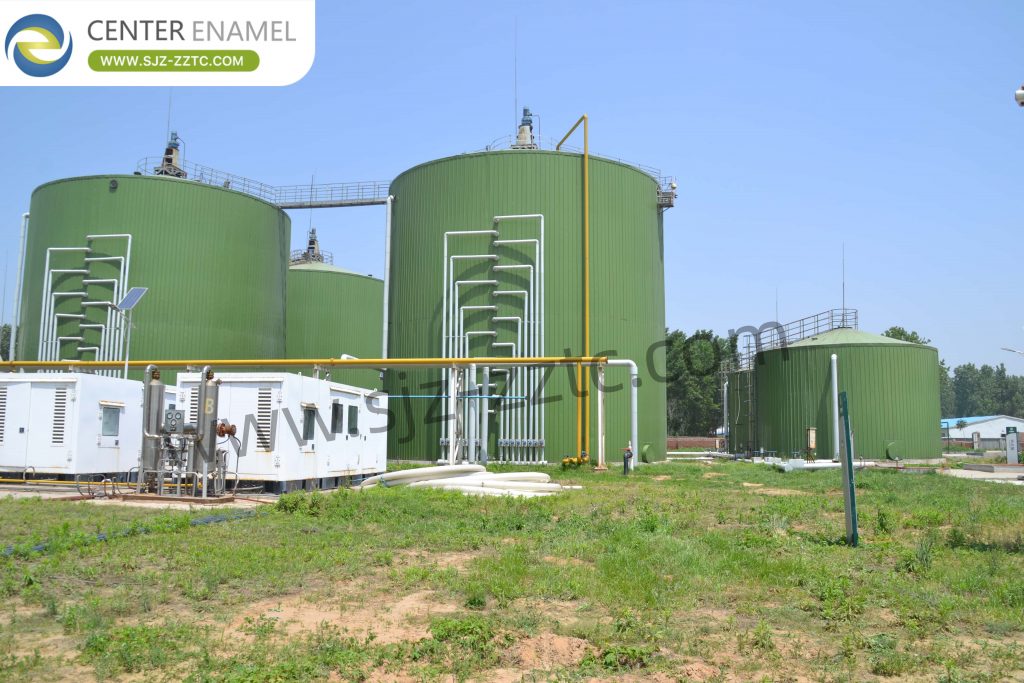
Chinese companies have significant price advantages in the mid-to-low-end equipment segment, yet the industry also faces continuous technological upgrade pressure from increasingly stringent emission standards, as well as new requirements for digitalization and low-carbon transformation on operational refinement management capabilities. Addressing these demands requires not only advanced biological processes but also robust physical infrastructure, which is where factory-engineered GFS tanks provide a decisive advantage over conventional construction. A well-executed biogas plant design integrates these components to deliver sustainable, long-term solutions for challenging industrial effluents.
Versatile UASB Applicable Scenarios Across Industries
To overcome the variability inherent in different waste streams, proven anaerobic technology serves as the biological core of many industrial wastewater treatment systems. The UASB process is suitable for soluble medium-to-high concentration organic wastewater, covering light industrial wastewater from brewing, sugar refining, starch, papermaking, food processing, printing and dyeing, and similar sectors. It is particularly effective for wastewater where organics are predominantly soluble with low suspended solids content, making it a versatile component of modern treatment approaches, though it is not suitable for high-solids, high-viscosity wastewater.
The UASB process can be used alone as the primary treatment process or as a pretreatment for high-strength wastewater to reduce downstream aerobic load, offering operators significant flexibility. It is also suitable for municipal wastewater anaerobic pretreatment and low-solids livestock wastewater treatment. With its low cost and stable operation advantages, the UASB process is suitable for long-term continuous, large-flow industrial wastewater treatment projects, providing a reliable biological backbone for facilities worldwide. For any biogas plant design, integrating UASB reactors with GFS tanks ensures optimal performance and durability.
Cost-Effective Brewery Wastewater Operation and Maintenance
For industries like brewing, where the UASB process is frequently applied, operational economics determine long-term viability. O&M costs for brewery wastewater treatment are moderate to low, with stable controllable processes and significant resource recovery benefits offsetting expenses-good overall economics. The treatment system uses simple durable equipment with no high-end precision wear parts-low failure rates and low maintenance costs, which directly supports affordable industrial wastewater treatment for mid-sized producers. Excellent wastewater biodegradability requires no large quantities of oxidants or detoxification agents-only small amounts of flocculants and pH adjusters, keeping chemical costs low. Stable biogas production from anaerobic digestion can be used directly for plant heating and equipment insulation, significantly reducing energy costs. Only during peak season with high load fluctuations is process parameter adjustment needed-low labor requirements. Spent grain, digestate solids, and liquid fertilizer can be sold, further improving economics. These combined savings make the UASB process an economically attractive choice for breweries looking to turn waste into a resource, and a skilled biogas plant design maximizes these benefits through optimized GFS tanks configuration.
Real-World Application: Indonesia Palm Oil Biogas Upgrade Project
Cost efficiency and biological performance come together in real-world applications, as demonstrated by a landmark project in Southeast Asia. Commissioned in 2013 as the core anaerobic digestion reactor for the POME treatment station, this Indonesia palm oil biogas upgrade project features 3 GFS tanks in two sizes: 17.58 m dia. × 8.4 m height / 16.82 m dia. × 7.2 m height. The tanks serve as the core anaerobic reaction equipment specifically for high-organic palm oil production wastewater-anaerobic digestion degrades pollutants and recovers biogas, showcasing the UASB process's adaptability to high-strength tropical effluents. Tanks are adapted to local palm industry wastewater needs, providing a customized industrial wastewater treatment solution for a challenging waste stream. GFS tanks assembly is convenient with corrosion resistance for Southeast Asia's hot humid high-corrosion environment-a mature biomass energy environmental benchmark project that continues to influence regional biogas plant design standards.
Global Installation Coverage and Delivery Capability
The success of projects like the Indonesian palm oil facility reflects a broader global capability. Center Enamel is the pioneer of Chinese GFS equipment exports, with installation service coverage across over 100 countries and regions-possessing full delivery capability across climates, regulations, and geographies, ensuring that every industrial wastewater treatment solution arrives on time and operates as designed.
Overseas coverage includes Southeast Asia (Vietnam, Thailand, Malaysia, Indonesia, Cambodia, Bangladesh, Nepal, etc.), Africa (Ghana, South Africa, Mali, Guinea, Zambia, Kenya, Pakistan, etc.), Europe/Americas (Sweden, USA, Russia, etc.), the Middle East, and Latin America-adaptable to tropical rainy high-salt spray, high-altitude mountainous, Nordic severe cold, and high-standard European/American facility conditions. Whether the project requires a simple storage tank or a complex UASB process reactor for industrial wastewater treatment, the company's logistics and installation teams are prepared.
The company uses a dual-service model of "own cross-border construction teams + overseas local agent coordination"-whether clients are in developed countries or remote developing regions-providing one-stop services including on-site survey, on-site installation, process commissioning, and operator training. Complete coverage covers biogas engineering, municipal wastewater, industrial wastewater treatment, livestock manure, drinking water storage, and other global mainstream environmental engineering projects-possessing the full delivery capability to undertake large-scale tank farm projects in any country worldwide, backed by decades of proven experience in biogas plant design and GFS tanks manufacturing.
Comprehensive After-Sales and Technical Support Team
This global reach is underpinned by a commitment to long-term partnership and operational excellence. The after-sales team adheres to the service principles of rapid response, professional efficiency, and full-cycle support-providing 24/7 full-lifecycle O&M support to global clients.
Standard remote services include fault diagnosis, process parameter adjustment, and tank anti-corrosion maintenance guidance. For domestic and long-distance overseas clients, overseas technical service personnel can be dispatched for on-site inspection, annual inspection, and equipment refurbishment as needed. The team also maintains long-term client feedback tracking mechanisms-regularly collecting tank and anaerobic equipment operational data to continuously optimize product structure and support processes.
Supporting external technical expert teams provide specialized support for anaerobic process commissioning, biogas upgrading O&M, and wastewater upgrade/retrofit projects-ensuring long-term stable operation of domestic and overseas projects, continuously improving global client satisfaction and repurchase rates. This robust support network ensures that every biogas plant design delivers reliable performance throughout its lifecycle, with GFS tanks maintaining their integrity for decades.
Versatile FRP Roof Cover Solution for Storage Applications
Complementing the robust GFS tanks, auxiliary components like roofing complete the system design for optimal functionality. FRP Roof is a general-purpose economical roof for atmospheric pressure storage tanks without air-tightness requirements, suitable for drinking water storage, agricultural irrigation water, firewater reserve, and general production wastewater temporary storage. It is available in two styles: flat and dome, allowing flexible selection based on tank specifications and site aesthetic requirements. The roof is integrally molded from resin and fiberglass, lightweight, with natural water resistance and mild acid/alkali corrosion resistance.
It will not rust or rot in long-term humid environments, eliminating the frequent anti-corrosion maintenance required for metal roofs. The dome style features excellent drainage performance due to its curved structure, resisting water accumulation, dust buildup, snow load, and strong winds. The flat style facilitates the installation of maintenance walkways, level gauges, and vents on top, making inspection and operation convenient. The product is fully insulated with no risk of galvanic corrosion, will not contaminate drinking water quality, and meets environmental standards for domestic water storage.
The modular design with low individual component weight allows for simple on-site hoisting and assembly, offering high construction efficiency and affordable procurement and installation costs. It is only suitable for atmospheric pressure water storage tanks without biogas collection or pressurization requirements, and is not recommended for anaerobic fermentation gas-producing conditions. It is widely used in rural agricultural water storage tanks, industrial park firewater tanks, waterworks buffer tanks, and small to medium-sized domestic wastewater temporary storage facilities, making it a cost-effective general-purpose roof choice for conventional water storage applications. For sealed anaerobic reactors in industrial wastewater treatment, however, GFS tanks with gas-tight covers remain the standard in professional biogas plant design.
Frequently Asked Questions
1. What does a professional Biogas Plant Design include?
It includes site assessment, reactor sizing (UASB/EGSB), GFS tank specification, biogas piping, corrosion protection, and full integration with pretreatment and post-treatment systems-ensuring safe, efficient biogas recovery and effluent compliance for industrial wastewater treatment.
2. Why are GFS tanks preferred for Industrial Wastewater Treatment?
GFS tanks are factory-engineered with double-sided enamel coating, providing 30+ years of corrosion resistance against organic acids, salts, and chemicals. They eliminate on-site quality variability, ensure gas-tightness, and reduce construction time significantly compared to concrete.
3. Can Center Enamel provide after-sales support for overseas projects?
Yes. Our 24/7 after-sales team offers remote diagnostics, on-site inspections, and maintenance guidance. We dispatch technical personnel globally for annual inspections and equipment refurbishment, ensuring long-term stability for your biogas plant design and GFS tanks.