
China Municipal Sewage Treatment Project EPC Contractor: A²O Process and GFS Tanks for Efficient Wastewater Treatment
As urban populations grow and environmental standards become more demanding, municipal sewage treatment has become essential to protecting public health, restoring water ecosystems, and supporting sustainable urban development. Treatment plants must handle continuous wastewater flows, remove organic pollutants and nutrients, and maintain reliable performance while controlling construction and operating costs.
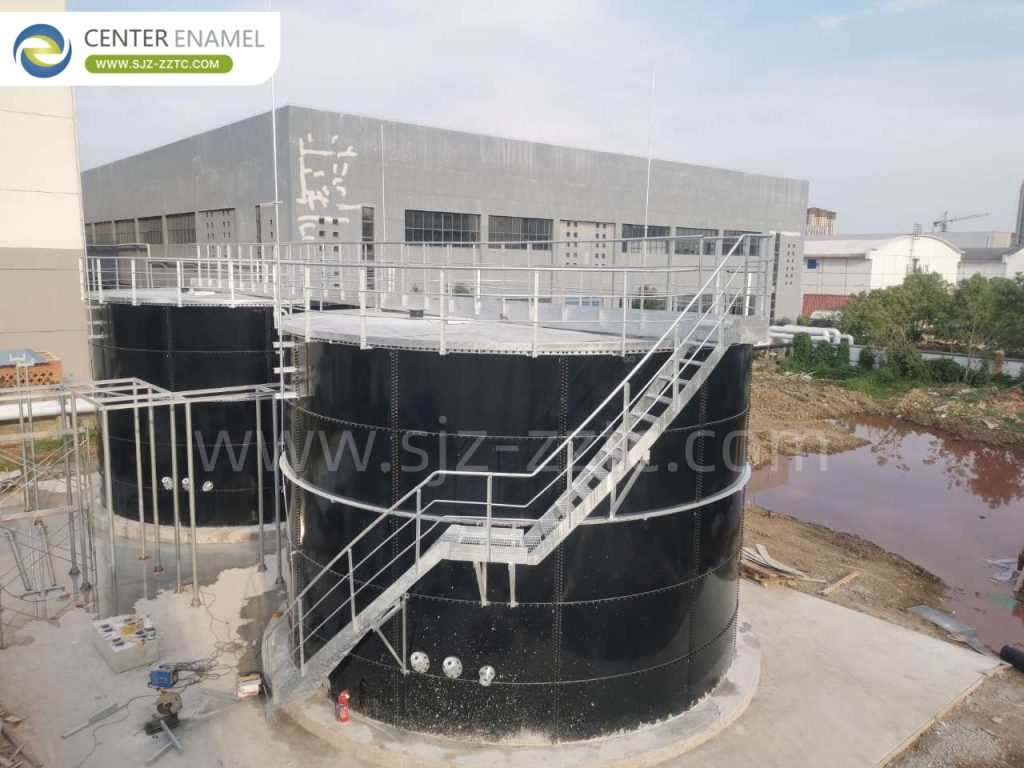
For project owners seeking a China Municipal Sewage Treatment Project EPC Contractor, selecting the right treatment process and equipment is critical. The A²O Process provides an established biological solution for simultaneous nitrogen and phosphorus removal, while Glass-Fused-to-Steel (GFS) Tanks offer durable storage and reactor structures for demanding wastewater environments.
By integrating process engineering, specialized tank technology, manufacturing, and professional installation, Center Enamel supports municipal wastewater infrastructure with coordinated environmental engineering solutions.
Municipal Wastewater: Growing Treatment Demands
Municipal wastewater is collected through urban sewer networks and mainly consists of residential sewage, commercial wastewater, and public facility wastewater. It may also contain limited amounts of pretreated industrial effluent and stormwater overflow. Common sources include homes, hotels, restaurants, schools, shopping centers, and office buildings.
Because these sources generate wastewater throughout the day, municipal treatment plants must accommodate continuous flows and variations in water quality. Effective treatment therefore requires a coordinated system that can remove suspended solids, organic pollutants, nitrogen, and phosphorus before the treated water is discharged or reused.
However, municipal wastewater infrastructure faces several challenges. Incomplete sewer networks and collection gaps can prevent sewage from reaching treatment facilities efficiently. Meanwhile, treatment plants must balance increasingly strict discharge requirements with energy consumption and carbon reduction targets.
Emerging contaminants also create pressure for process upgrades, while fluctuating energy prices and the high investment required for pipeline renovation can increase financial burdens. These challenges make process selection, equipment durability, and long-term operating efficiency central considerations in municipal sewage projects.
A²O Process: Reliable Biological Nutrient Removal
The A²O Process, also known as the Anaerobic-Anoxic-Oxic Process, is an optimized activated sludge technology widely used in municipal wastewater treatment. It is designed to remove organic pollutants while achieving simultaneous nitrogen and phosphorus removal.
Its treatment mechanism is based on three biological reaction zones, each providing different environmental conditions for functional microorganisms.
Anaerobic Zone: Creates conditions for phosphorus release and supports the hydrolysis and acidification of organic matter.
Anoxic Zone: Promotes denitrification, converting nitrate nitrogen into nitrogen gas and helping remove nitrogen from wastewater.
Oxic Zone: Supports organic matter degradation, ammonia nitrification, and excess phosphorus uptake by microorganisms.
By combining these stages, the A²O Process addresses several major municipal wastewater pollutants within an integrated biological treatment system. It is a mature and widely applied option, particularly for domestic sewage and low-concentration mixed wastewater.
For municipal treatment plant designers, this process offers a practical approach to nutrient control. Its suitability still depends on influent characteristics, treatment targets, hydraulic conditions, and site-specific engineering design. High-concentration industrial wastewater with substantial solids content may require different or additional treatment technologies.
GFS Tanks: Durable Structures for Wastewater Applications
Selecting an appropriate biological process is only part of building a reliable wastewater treatment facility. Tanks and storage structures must also withstand continuous exposure to wastewater, changing operating conditions, and potentially corrosive substances.
Center Enamel develops specialized enamel frit formulations for different storage media, with more than 200 formulations and supporting patents. This allows GFS Tanks to be customized for applications involving strong acids, strong alkalis, high organic content, and high salinity.
Unlike conventional concrete structures that may require additional protective linings when storing corrosive media, GFS Tanks use a glass-fused-to-steel surface to provide corrosion protection. This is particularly relevant when projects involve changing wastewater characteristics or multiple storage requirements.
Depending on the engineering design, GFS Tanks can serve in municipal wastewater storage, sludge treatment, anaerobic digestion, and other environmental applications. Their modular bolted construction also supports prefabricated manufacturing and organized on-site installation.
Center Enamel's proprietary double-sided, double-layer enameling technology is designed to enhance tank corrosion protection. The company's technical materials state that GFS tank anti-corrosion service life can exceed 30 years under suitable application and operating conditions.
Integrating A²O Technology with GFS Tank Solutions
A²O technology and GFS Tanks serve complementary roles in municipal sewage treatment projects. The A²O Process provides the biological treatment stages, while GFS Tanks can provide durable structures for selected storage and treatment functions within the wider facility.
An integrated project design should consider influent quality, treatment capacity, discharge requirements, available land, tank functions, and future expansion needs. Tank materials and protective systems should also be selected according to the wastewater composition and actual operating environment.
For example, GFS Tanks may be considered for wastewater equalization, sludge storage, or anaerobic digestion facilities where their corrosion-resistant construction is appropriate. The A²O biological reaction zones, meanwhile, need to be designed around the required hydraulic retention time, sludge characteristics, and nutrient-removal targets.
This combination does not mean every A²O reaction tank must be a GFS tank. Instead, the tank configuration and biological process should be coordinated according to the engineering requirements of each project.
Center Enamel's EPC and Project Delivery Capabilities
A successful municipal sewage treatment project requires more than individual equipment. Engineering coordination, manufacturing quality, installation management, and commissioning all influence project delivery and long-term performance.
Center Enamel has expanded from GFS tank manufacturing into environmental engineering and EPC services. Its company profile describes a service system covering engineering design, equipment research and development, manufacturing, installation, commissioning, and environmental project construction. Its business areas include municipal sewage, industrial wastewater, biogas engineering, and other environmental applications.
The company also maintains domestic and international construction teams trained in GFS tank installation and overseas construction standards. These teams can be deployed across different regions and project sites, supporting installation schedules for both domestic and international projects.
The following examples published on Center Enamel's website illustrate its experience in municipal wastewater-related projects:
| Project | Location | Treatment Capacity / Process |
| Municipal Sewage Treatment Project | Ghana | 1,800 m³/day; UBF and A²O |
| Sewage Treatment Plant | Hunan, China | 2,500 m³/day; Integrated Biofilm Treatment Equipment |
| Sewage Treatment Project | Sichuan, China | 18,000 t/day |
These project references demonstrate experience across different treatment capacities and process configurations. Actual equipment selection and EPC scope should be determined by the requirements and contractual responsibilities of each project.
Choosing the Right Roof for Municipal Water Storage Tanks
Tank roof selection is another important part of municipal wastewater and water storage design. The roof should match the stored medium, operating pressure, sealing requirements, and maintenance arrangements.
Center Enamel's aluminum alloy trough deck roof is designed for atmospheric water storage applications, including drinking water, production wastewater, firewater reserves, and temporary domestic wastewater storage. Its lightweight aluminum structure reduces the load on the tank foundation, while the naturally formed oxide layer provides resistance to outdoor exposure and mild wastewater corrosion.
The flat roof layout can also accommodate maintenance walkways, guardrails, vents, and level monitoring ports. Its relatively simple installation structure helps shorten construction time and reduces the need for regular anti-corrosion painting.
This roof type is suitable for storage tanks that do not require biogas collection or high-pressure sealing. For anaerobic digestion tanks or other gas-producing applications, the roof must instead be selected according to the required gas-tightness and operating conditions.
Why Choose Center Enamel for Municipal Sewage Projects?
Choosing a project partner means evaluating not only product specifications but also technical resources and delivery capabilities. Center Enamel combines specialized enamel development, GFS tank manufacturing, professional installation teams, and environmental engineering services to support different wastewater treatment requirements.
Its experience with more than 200 specialized enamel formulations provides options for adapting tank protection to different storage media. Its construction teams support installation across domestic and overseas markets, while its broader engineering capabilities cover design, equipment supply, installation, and commissioning.
For clients planning a new municipal sewage treatment plant or upgrading existing infrastructure, Center Enamel can provide project-specific discussions on A²O-related treatment requirements, GFS tank applications, and integrated engineering solutions. The final configuration should be developed around influent characteristics, local standards, site conditions, and the required project scope.
Frequently Asked Questions
What is the main advantage of the A²O Process in municipal sewage treatment?
The A²O Process combines anaerobic, anoxic, and oxic biological stages to remove organic pollutants while supporting simultaneous nitrogen and phosphorus removal. It is widely applied to municipal domestic sewage and low-concentration mixed wastewater.
Why are GFS Tanks suitable for municipal wastewater projects?
GFS Tanks combine the structural strength of steel with the corrosion-resistant properties of a glass coating. Specialized enamel formulations can be selected for different wastewater conditions, including high organic content and high salinity. Their modular bolted design also supports organized installation.
Can Center Enamel provide EPC services for municipal sewage treatment projects?
Center Enamel's environmental engineering business covers project design, equipment manufacturing, installation, commissioning, and EPC services. The specific scope depends on the project requirements and agreed contract, including process selection, tank configuration, and delivery responsibilities.
For your next municipal wastewater project, contact Center Enamel to discuss how the A²O Process and GFS Tanks can be incorporated into an engineering solution tailored to your treatment requirements.
Looking for a reliable China Municipal Sewage Treatment Project EPC Contractor? Get in touch with our team to explore suitable equipment, technical support, and project delivery options.