
Why CSTR Anaerobic Technology is Suitable for Livestock Manure Treatment
Livestock expansion has brought severe manure pollution and resource-utilization challenges to the farming industry worldwide. CSTR anaerobic digestion stands out as a practical solution that turns harmful livestock waste into biogas and organic fertilizer through circular biogas engineering.
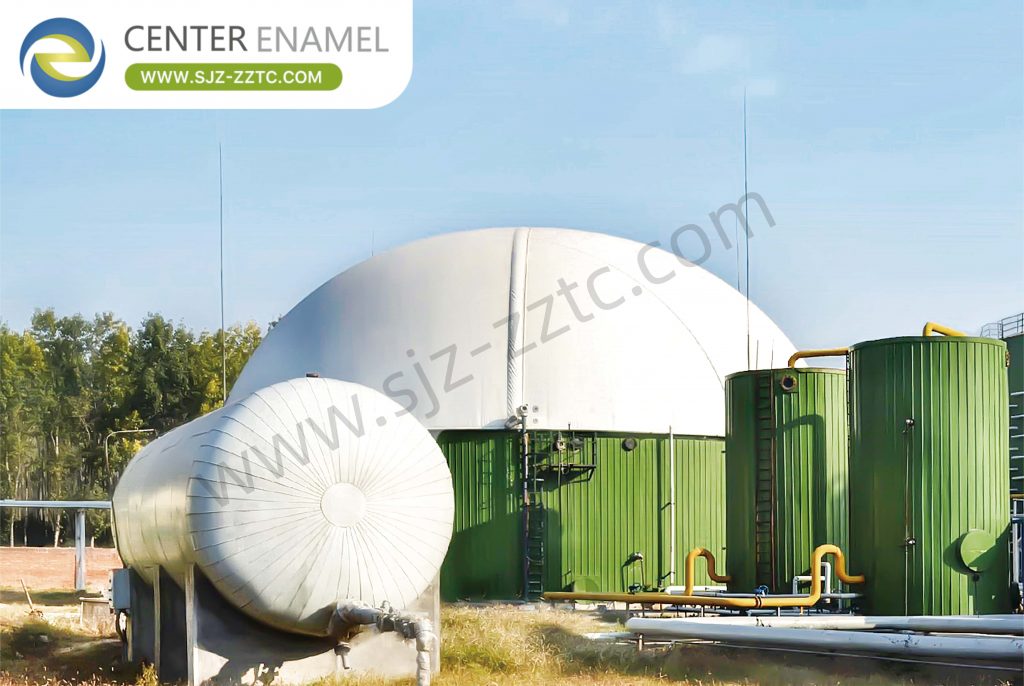
This article explains the working mechanism, core equipment, practical cases and frequently-asked questions of CSTR technology for farm manure treatment.
1. Challenges of Livestock Manure Management and Opportunities for Biogas Utilization
With the rapid expansion of large-scale livestock farming, contradictions in livestock manure treatment have become prominent. Manure is generated in large volumes and discharged intensively. Improper disposal may easily cause soil and water pollution. Meanwhile, the geographical mismatch between breeding and crop production leads to high costs for manure collection and transportation, as well as insufficient channels for resource-based utilization. Reliance merely on end-of-pipe treatment can hardly achieve both environmental compliance and economic benefits.
Biogas production serves as a vital technical solution to address manure treatment challenges. Through anaerobic fermentation, manure can be reduced and rendered harmless. The produced biogas can be used for heating and power generation. Fermentation by-products, biogas residue and biogas slurry, can be processed into organic fertilizer for farmland application, forming a circular development model of “livestock breeding-biogas-planting”. Guided by green and low-carbon policies, biogas utilization reduces environmental compliance pressure for farms and realizes waste recycling, bringing important opportunities for the green and low-carbon transformation of the livestock industry.
2. Principles of CSTR Technology — Why it Fits High-Solids Livestock Manure Fermentation
2.1 Definition and Working Principle
The Continuous stirred tank reactor (CSTR) has a history of more than one hundred years and is widely used for treating organic materials with high solid content such as livestock manure. It relies on anaerobic activated sludge inside the reactor to degrade pollutants. After entering the tank, organic materials are fully mixed with anaerobic microorganisms through stirring. Organic substances in manure are converted into biogas via adsorption, metabolism and degradation by microorganisms.
2.2 Process Advantages
The CSTR reactor features simple operation and maintenance. It is compatible with high-concentration, high-suspension and high-solid organic materials. Besides livestock manure, it can also treat organic wastewater from catering, dairy, papermaking and other industries. Featuring strong tolerance to high-solids livestock manure containing fibers and impurities, CSTR is a mainstream process option for farm biogas projects.
3. Application of CSTR in Livestock Manure Treatment
CSTR treats livestock manure by feeding manure into a sealed tank for anaerobic fermentation under constant temperature and stirring to generate biogas. Biogas residue and slurry are further processed into organic fertilizer for land application. The whole process consists of four key procedures: pretreatment, anaerobic fermentation, biogas purification and utilization, as well as biogas residue and slurry disposal.
Pretreatment: Manure passes through grilles to remove sand, stones and long-fiber impurities, then flows into the homogenization tank to adjust feed concentration and pH. The total solid (TS) concentration of feedstock is controlled at 6%-12%.
Anaerobic fermentation: Materials are pumped into the CSTR reactor. Mechanical stirring ensures sufficient contact between materials and microorganisms. Mesophilic fermentation is mostly adopted at 33-35 °C, with a hydraulic retention time of 15-30 days and COD removal efficiency reaching 55%-75%.
Biogas purification and utilization: The crude biogas is purified by dehydration and desulfurization. It can be applied for power generation, upgraded to biomethane, or supplied for local production and domestic consumption.
Biogas residue and slurry disposal: Biogas slurry goes through solid-liquid separation and is stored in storage tanks for field application in fertilizing seasons. Biogas residue can be used as raw material for solid organic fertilizer to produce commercial organic fertilizer.
4. Core Equipment for Biogas Projects: CSTR Reactors and Gas Storage Facilities
4.1 Equipment Requirements for CSTR Reactors
According to the process characteristics of CSTR including sealed fermentation, stirring and mass transfer, constant-temperature operation and process monitoring, the complete set of equipment mainly comprises six systems:
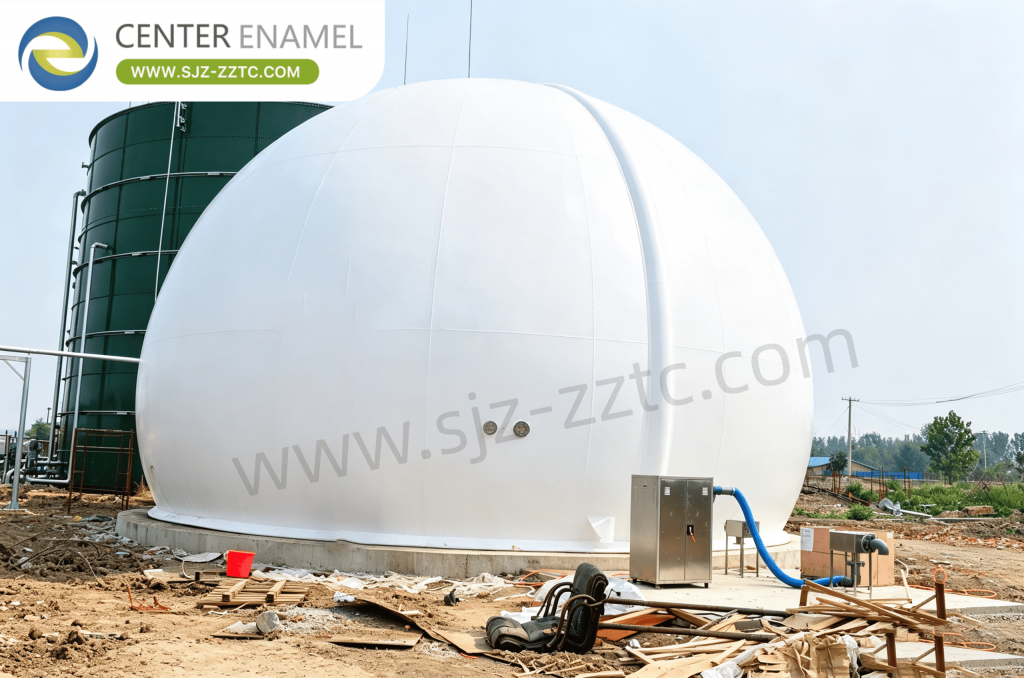
Tank and Sealing System: Tank volume is customized according to manure treatment capacity. Materials such as stainless steel and glass-fused-to-steel tanks are selected for high mechanical strength and corrosion resistance. Pressure-vacuum relief protectors, sealing flanges and double-membrane gas holders are equipped to maintain strict anaerobic and air-tight conditions inside the tank.
Stirring System: Top-entry, side-entry mechanical stirring or biogas stirring devices are configured. Agitator types including paddle and anchor types are selected based on material properties. Matched motors, reducers and transmission components enable adjustable stirring speed and intermittent modes to prevent material sedimentation and crusting and ensure uniform mass and heat transfer.
Temperature Control System: Jacket, coil or external heat-exchange equipment is applied to meet temperature requirements for mesophilic and thermophilic fermentation. Temperature sensors and automatic temperature-control modules are installed to monitor and stably regulate fermentation temperature.
Monitoring and Control System: Online sensors for temperature, pH, ORP, gas flow and foam detection collect real-time operating data. The automatic control system adjusts stirring, temperature, pH reagent dosing and defoaming according to monitored data to ensure stable system performance.
Material Inlet-Outlet and Auxiliary System: Inlet, outlet, overflow ports and metering pump groups are arranged to support continuous or semi-continuous feeding and discharging. Sampling ports, observation sight glasses, water seals and biogas collection pipelines are equipped for convenient operation and inspection.
Safety and Auxiliary Devices: High-low pressure alarms, gas leakage detectors and safety valves are installed together with matched pipelines and foundations to guarantee safe and stable operation of the whole unit.
4.2 Advantages of Glass-Fused-to-Steel (GFS) Tanks
Glass-fused-to-steel tanks are assembled on-site with specialized enamel steel plates, stirrups, self-locking bolts and sealant. The base material is titanium-alloy hot-rolled steel plate. After high-temperature firing at 820-930 °C, the enamel glaze fuses with steel plates to form an inert anti-corrosion coating, representing an advanced anti-corrosion solution for steel storage tanks.
Main advantages:
- Excellent anti-corrosion performance: Double-sided double-layer firing delivers outstanding corrosion resistance.
- Wide application scope: More than 200 glaze formulas are available to adapt to diverse stored media.
- High structural safety: Anti-wind and anti-seismic customized design according to local project conditions.
- Flexible construction: Factory standardized prefabrication and on-site assembly shorten construction periods. Tanks can be disassembled, relocated and expanded later.
- Site-friendly layout: Customizable dimensions and colors save land space and fit modern plant construction.
4.3 Double-Membrane Roof Solution
The double-membrane roof is a preferred integrated solution for anaerobic biogas projects. It combines the digester tank and membrane-type gas-storage roof, balancing economic efficiency and performance.
- Cost reduction and space saving: Replaces traditional roof structures to lower civil-engineering costs. No separate ground-mounted gas holder is required, saving land and foundation investment.
- Superior gas tightness and environmental performance: High-performance membrane material ensures excellent gas tightness for biogas collection and storage and inhibits odor emission to improve plant ambient conditions.
- High integration and reliable operation: Integrated design of tank body and gas-storage roof creates a compact structure with stable working conditions, suitable for continuous operation of farm biogas projects.
5. Center Enamel: Solution Provider for Biogas Projects
5.1 Company Profile
Shijiazhuang Zhengzhong Technology Co., Ltd (Center Enamel) is a national “Specialized, Refined, Distinctive and Innovative” high-tech enterprise. It specializes in R&D and manufacturing of glass-fused-to-steel tanks, Fusion Bonded Epoxy Tanks, aluminum dome roofs, pressure vessels and other environmental-protection equipment, and undertakes EPC and anaerobic-process engineering. Its business covers farm biogas, kitchen-waste treatment, landfill leachate, municipal sewage, industrial wastewater and other sectors, providing full-chain services including engineering design, equipment manufacturing, installation and commissioning.
The company has independently developed double-sided enamel technology for hot-rolled steel plates, filling relevant technical gaps in China. Its products and services are delivered to more than 100 countries and regions worldwide, with over 30 000 completed projects. As a leading supplier of assembled storage equipment, Center Enamel adheres to the philosophy of “Quality, Sincerity, Friendship, Progress” and provides reliable environmental-protection equipment and engineering solutions for global clients.
5.2 Project Cases
| Project Parameters | Case 1: Zhazi, Inner Mongolia Project | Case 2: Zhenyuan Group, Henan Project |
| Project Type | Medium-temperature anaerobic fermentation biogas project | Vehicle-grade methane production project |
| Location | Zhazi, Inner Mongolia | Henan Province |
| Handling Capacity | 900 m³/D (manure + agricultural waste) | 650 T/D (manure + washing wastewater) |
| Feedstock | Animal manure + grass straw | Animal manure + washing wastewater |
| Treatment Type | Medium Temperature Anaerobic Fermentation | Medium Temp. Anaerobic Fermentation |
| Reactor Type | CSTR (Continuous Stirred-Tank Reactor) | CSTR (Continuous Stirred-Tank Reactor) |
| Reactor Configuration | 4 sets of CSTR anaerobic reactors | Primary: 3 setsSecondary: 1 set(Two-stage digestion system) |
| Reactor Size | 4 sets of Ø25.98 × 8.4 m | Primary: 3 sets, Ø15.29 × 15 mSecondary: 1 set, Ø5.22 × 6 m |
| Output | Daily Biogas Output: 20 000 m³/day | Annual Methane Production: 3 000 000 m³ (vehicle-grade) |
| Key Features | Specifically designed for cold climate operation | Two-stage digestion system for vehicle fuel production |
6. Conclusion
Livestock manure treatment is not only a mandatory environmental requirement but also a breakthrough for the circular economy in the farming industry. With good adaptability to high-solids livestock manure, CSTR anaerobic technology, together with mature equipment systems including glass-fused-to-steel tanks and double-membrane roofs, can efficiently realize manure harmless treatment as well as biogas and organic fertilizer production.
Practical projects ranging from biogas heating projects in cold northern regions to large-scale vehicle-grade biomethane plants prove that CSTR processes can meet the actual demands of farms of different scales and in diverse regions. In the future, alongside the green transformation of livestock farming, CSTR-centered biogas projects will further break bottlenecks in breeding-planting circular systems, help farms cut costs and raise efficiency, and support the achievement of agricultural carbon peaking and carbon neutrality goals. Selecting proven processes, reliable equipment and professional engineering service providers is critical for the long-term stable operation of farm biogas projects.
If you are troubled by livestock manure disposal, please contact Center Enamel for customized professional solutions.
7. FAQ
Q1: What-scale farms are suitable for building CSTR biogas projects?
A: CSTR technology can be applied to both medium-small-scale and large-scale livestock farms. Project planning mainly depends on manure output, together with comprehensive evaluation of local organic-fertilizer consumption and biogas utilization conditions, to determine reactor volume and supporting configurations.
Q2: The CSTR feed TS concentration is controlled at 6%-12%. What problems will be caused by excessively high or low concentration?
A: Excessively high concentration reduces material fluidity, increases stirring load and easily leads to sedimentation and crusting. Too-low concentration lowers organic loading inside the tank, reduces biogas yield and results in insufficient equipment utilization. Therefore, homogenization and solid-content adjustment in pretreatment are essential.
Q3: Will biogas production of CSTR biogas projects be greatly affected in winter in cold northern areas?
A: Ambient temperature will have impacts. Good tank insulation and matched temperature-control heating systems are required. As demonstrated by the Inner Mongolia project case, targeted design for low-temperature conditions ensures stable mesophilic fermentation temperature and steady biogas output in winter.
Q4: What are the core advantages of glass-fused-to-steel tanks compared with concrete tanks?
A: Compared with concrete tanks, the enamel sealing structure of glass-fused-to-steel tanks delivers superior air-tightness and anti-seepage performance, effectively preventing biogas slurry leakage and biogas escape. All components are factory-prefabricated and assembled on-site, shortening construction time without long-time pouring and curing. Tanks can be expanded, disassembled and relocated later with great reconstruction flexibility.
Concrete tanks require long pouring and curing cycles. Their anti-seepage layers are prone to stress-cracking, bringing risks of liquid and gas leakage. Concrete tanks have heavy dead weight leading to high foundation costs, and can hardly be expanded or relocated after completion. Therefore, glass-fused-to-steel tanks are more suitable for working conditions of farm biogas projects.
Q5: What are common biogas utilization options and how to make selections?
A: Biogas can be used for on-site boiler heating and power generation, or upgraded into vehicle-grade biomethane. Small-scale projects prioritize on-site heating and power generation. Large-scale projects with sufficient feedstock may consider biomethane upgrading. Selection should be based on local energy consumption and market conditions.