
Center Enamel: EPC Contractor for Palm Oil Wastewater Treatment Project in Philippines
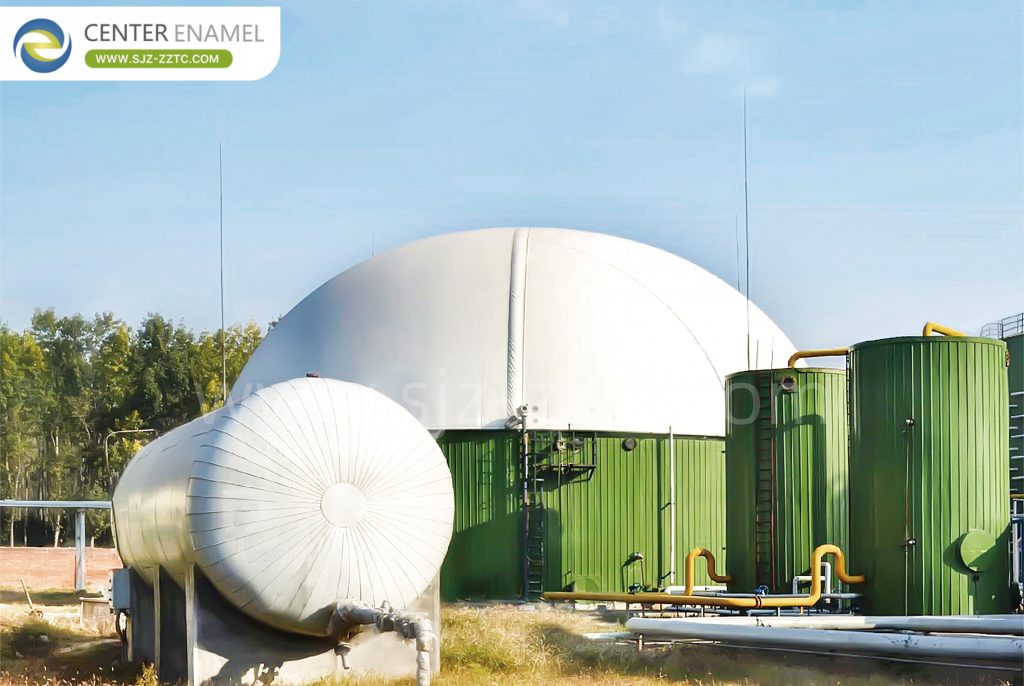
The Philippines is gradually expanding its palm oil industry across Mindanao, Palawan, and other southern regions, supporting local agricultural development and providing stable supply for domestic food, chemical, and energy industries. As environmental protection requirements become stricter and the demand for sustainable palm oil grows globally, a reliable Palm Oil Wastewater Treatment Project has become a necessity for compliant and profitable palm oil mills.
Center Enamel (Shijiazhuang Zhengzhong Technology Co., Ltd) is a professional Palm Oil Wastewater Treatment Project EPC Contractor offering full turnkey solutions powered by advanced anaerobic technologies including USR Process and high-performance Glass-Fused-to-Steel (GFS) tanks, helping palm oil enterprises in the Philippines achieve efficient wastewater purification, high-value biogas recovery, and long-term green industrial growth.
Generation and Environmental Hazards of Palm Oil Mill Effluent (POME)
Palm Oil Mill Effluent (POME) is mainly generated from three core production processes: fresh fruit bunch sterilization, oil pressing and clarification, and equipment washing. This high-strength organic wastewater poses severe ecological and legal risks without professional treatment:
- Ultra-high organic concentration: COD ranges from 40,000 to 80,000 mg/L, causing serious oxygen depletion in rivers, lakes, and coastal waters.
- High oil & grease content: Residual oil and fatty acids form impermeable layers that block sunlight and gas exchange, damaging aquatic organisms and mangrove ecosystems.
- High suspended solids: Fibers, pulp, and sediment lead to pipeline blockage, equipment abrasion, and sediment accumulation.
- Acidic & high-temperature properties: Raw POME has a pH of 4–5 and temperature of 40–60°C, accelerating corrosion and destabilizing conventional treatment systems.
Untreated POME contaminates water sources, destroys natural habitats, and violates Philippine industrial discharge standards. For palm oil producers, investing in a standardized Palm Oil Wastewater Treatment Project is both a legal obligation and a prerequisite for stable operation, market access, and sustainable certification.
Advanced Anaerobic Technologies for Philippine Palm Oil Wastewater Treatment
Center Enamel integrates four high-efficiency anaerobic processes customized for palm oil mills in the Philippines, with USR Process as the core recommended technology, supported by mature CSTR, UASB, and IC systems to meet diverse mill scales, waste compositions, and site constraints.
1. USR Process (Upflow Solid-state Reactor)
The USR Process is specially optimized for POME’s high suspended solids and oil content. It maintains a dense sludge bed using upflow hydraulic mixing without mechanical stirring, ensuring stable treatment and consistent biogas production.
- Advantages: Strong shock load resistance, low energy consumption, easy operation, excellent tolerance to oils and fibers.
- Application: Ideal for small-to-medium palm oil mills in the Philippines seeking stable, low-maintenance performance.
2. CSTR Process (Completely Stirred Tank Reactor)
CSTR uses high-torque mechanical agitation to fully mix sludge, wastewater, and solid residues, preventing crusting and sedimentation caused by oil and pulp.
- Advantages: Strong handling of high-solid streams, reliable operation, steady biogas output.
- Application: Suitable for large-scale mills and zero-waste integrated processing facilities.
3. UASB Process (Upflow Anaerobic Sludge Blanket)
A globally proven technology where wastewater flows upward through a dense granular sludge bed to achieve high organic removal efficiency.
- Advantages: Mature design, high COD removal, stable performance, widely applied in Southeast Asia.
- Application: Best for mills with relatively low suspended solids focusing on liquid-phase treatment.
4. IC Process (Internal Circulation)
IC is a high-rate anaerobic system using biogas-driven internal circulation to enhance mixing and mass transfer, with volume loading rates 3–5 times higher than conventional reactors.
- Advantages: Ultra-high efficiency, compact vertical footprint, strong organic shock resistance.
- Application: Preferred for large modern palm oil industrial hubs.
By combining oil separation, pH adjustment, and residue removal as pretreatment, Center Enamel ensures stable and efficient operation of every Palm Oil Wastewater Treatment Project.
Core Advantages of Center Enamel in Philippine Palm Oil Wastewater Treatment
As a leading Palm Oil Wastewater Treatment Project EPC Contractor, Center Enamel offers comprehensive strengths tailored to the Philippine market:
- Proprietary enamel formulas: Over 200 patented recipes provide superior corrosion resistance to acidic, oily POME.
- Asia’s largest GFS tank manufacturing base: Automated production ensures consistent quality, short lead times, and reliable delivery to remote sites in Mindanao and Palawan.
- International standard compliance: Products meet ISO 28765, AWWA D103-09, OSHA, and NSF/ANSI 61; each tank plate passes 1500V high-voltage spark testing.
- Localized engineering design: Systems adapt to the Philippines’ tropical humidity, coastal salt spray, monsoon rains, and seismic conditions.
- Full-lifecycle EPC service: One-stop solution from design, procurement, fabrication, installation to commissioning and after-sales support.
Key Equipment for Palm Oil Wastewater Treatment by Center Enamel
Center Enamel’s turnkey solutions feature high-durability equipment engineered for POME’s harsh environment:
1. Glass-Fused-to-Steel (GFS) Tanks
GFS tanks are the core of anaerobic treatment systems, formed by fusing glass and steel at over 820°C.
- Corrosion resistance: Wide pH 1–14 tolerance, unaffected by organic acids, oil, and aggressive compounds.
- Seismic & weather stability: Bolted structure offers better flexibility than concrete; resistant to strong UV and heavy monsoon rains.
- Application: Anaerobic reactors, biogas digesters, and effluent storage tanks.
2. Fusion Bonded Epoxy (FBE) Coated Tanks
Used for equalization, intermediate storage, and treated water tanks with cost-effective anti-corrosion performance.
3. Biogas Storage and Utilization Equipment
- Double Membrane Gas Holders: High air tightness for safe biogas storage and pressure control.
- Biogas desulfurization and power generation units: Convert biogas into on-site electricity or thermal energy for sterilization and drying.
4. Tank Roof Systems
- Aluminum Dome Roof: Windproof, rainproof, salt-spray resistant, ideal for the Philippines’ tropical coastal climate.
- Enamel Roof, Air Membrane Roof, FRP Roof, and Sun Panel Roof for diversified application scenarios.
Why Center Enamel Is the Preferred Palm Oil Wastewater Treatment Project EPC Contractor
Philippine palm oil enterprises choose Center Enamel for proven reliability and high return on investment:
- Professional POME treatment expertise: Deep experience with high-oil, high-fiber wastewater ensures stable reactor performance and high biogas yield.
- Full EPC responsibility: Single-point accountability reduces coordination risks, shortens construction cycles, and lowers overall cost.
- High-value energy recovery: Biogas production turns waste into usable energy, improving mill economics.
- Remote-site capability: Logistics and installation plans adapt to the Philippines’ terrain and infrastructure conditions.
- Long-term durability: GFS tanks last decades with minimal maintenance, lowering lifecycle cost vs. concrete or ordinary steel.
Efficient Installation Process for Rapid Commissioning
Center Enamel’s modular bolted tank technology supports fast and safe installation even in remote areas:
- Factory prefabrication: All components are precision-made in-house to ensure quality.
- Hydraulic jacking system: Top-down installation eliminates high-altitude scaffolding and reduces crane dependence.
- Zero on-site welding: Bolted assembly avoids welding failures caused by high humidity and dust.
- Fast commissioning: No concrete curing time; projects can be put into operation much earlier than traditional methods.
This efficiency helps palm oil mills meet production schedules and environmental compliance deadlines.
Successful Project Cases in Southeast Asia
1. Malaysian Palm Oil Biogas Project
Tank Dimensions: Ø18.33*8.4m
Number of Tanks: 5 GFS Tanks
Installation Time: 7 people, 100 days
Installation Date: June 2013
2.Indonesian Palm Oil Biogas Project
Application: Anaerobic reactor for palm oil wastewater treatment plant
Location: Indonesia
Tank Model: Ø17.58*8.4m, Ø16.82*7.2m
Number of Tanks: 3 GFS tanks
Installation Date: 2013
These cases fully prove Center Enamel’s strong capability as a trusted Palm Oil Wastewater Treatment Project EPC Contractor in Southeast Asia, including the Philippines.
Conclusion
The Philippines’ palm oil industry is moving toward standardized, green, and sustainable development. A high-performance Palm Oil Wastewater Treatment Project has become a core competitive advantage for palm oil enterprises. Center Enamel, as a professional Palm Oil Wastewater Treatment Project EPC Contractor, provides complete solutions based on advanced anaerobic technologies including USR Process, high-quality GFS tanks, and full-cycle EPC management.
By cooperating with Center Enamel, Philippine palm oil enterprises can meet strict environmental regulations, protect local ecosystems, recover valuable biogas energy, and enhance long-term business viability. We are committed to becoming the most reliable EPC partner for Palm Oil Wastewater Treatment Project in the Philippines and supporting the local palm oil industry’s green growth.