
Expert Biogas Plant Design: Innovative GFS Tanks and UASB Process Solutions
The global livestock manure treatment policy system, with the US and EU as typical representatives, is shifting from end-of-pipe treatment to full-process nutrient management. The US establishes a manure management framework covering the entire livestock production process through Comprehensive Nutrient Management Plans. The EU, through the Nitrates Directive, strictly limits manure application amounts, with Germany and the Netherlands using tax instruments to mandate nitrogen and phosphorus recovery rates, and Denmark demonstrating distinctive features in livestock regulation and ecological compensation. The Netherlands uses a management mechanism linking manure treatment with phosphate quotas. China has issued a series of environmental regulations, with the current legal system providing comprehensive regulation of pollution from large-scale livestock operations.
As regulations tighten globally, the necessity for professional Biogas Plant Design has never been more critical. Moving toward a full-process nutrient management model requires high-quality infrastructure that complies with international standards. Our engineered solutions provide the structural foundation required to meet these rigorous environmental mandates effectively.
GFS Tanks Adaptable to Extreme Climates
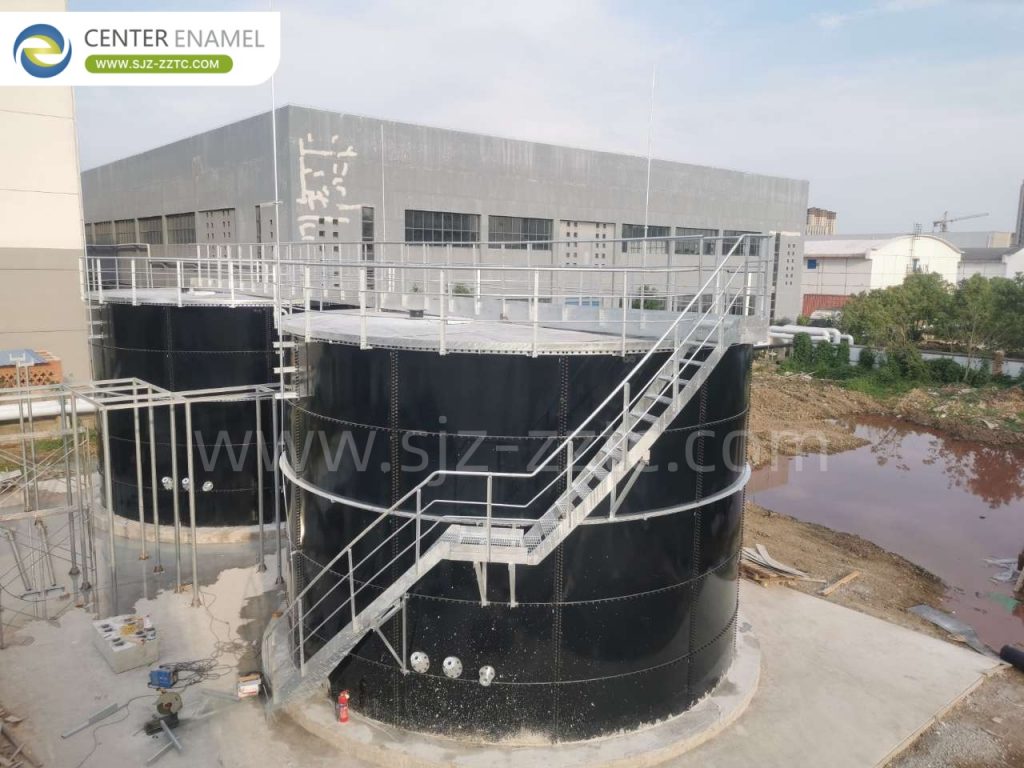
GFS Tanks can undergo customized wind and seismic design based on project site climate and geological conditions, with environmental adaptability far superior to concrete tanks. Concrete tanks are cast-in-place monolithic structures, with seismic and wind resistance entirely dependent on on-site construction quality. In remote areas, typhoon-prone zones, and earthquake belts, construction quality is difficult to control. Under strong earthquakes or typhoons, concrete tanks are prone to cracking and base settlement damage, with subsequent reinforcement costs equivalent to rebuilding.
GFS tanks undergo collection of local seismic intensity, maximum wind pressure, and foundation bearing capacity data before construction, with customized thickened steel panels, stiffening ribs, and anchored base components-all factory-prefabricated to standardized specifications. The bolted panel structure has excellent stress distribution capability, making it less prone to overall fracture under seismic and typhoon impacts, and minor foundation settlement will not cause through-cracking. Structural parameters can be flexibly adjusted for mountainous, coastal typhoon-zone, and high-seismic-zone projects, providing long-term protection against extreme natural climate damage.
A secure containment system is merely the first step in creating a high-performance energy facility. The biological core of the treatment plant determines the efficiency of energy conversion and operational stability. Implementing a robust UASB Process is essential to maximize your facility's organic degradation and biogas output capabilities.
UASB Applicable Scenarios
Suitable for soluble medium-to-high concentration organic wastewater, covering light industrial wastewater from brewing, sugar refining, starch, papermaking, food processing, printing and dyeing, etc. Suitable for wastewater where organics are predominantly soluble with low suspended solids content, not suitable for high-solids, high-viscosity wastewater. Can be used alone as the primary treatment process or as a pretreatment for high-strength wastewater to reduce downstream aerobic load. Suitable for municipal wastewater anaerobic pretreatment and low-solids livestock wastewater treatment. With its low cost and stable operation advantages, it is suitable for long-term continuous, large-flow industrial wastewater treatment projects.
Effective technology implementation must be supported by a clear understanding of the project's long-term financial viability. Optimizing operational expenses is a key driver for sustainable growth in the environmental sector. Our standardized treatment approach ensures that projects remain cost-effective throughout their entire life cycle.
Livestock Wastewater Operation and Maintenance Cost Analysis
O&M costs are relatively low with excellent input-output ratio-the highest cost-effectiveness among the five wastewater types. Core treatment units are primarily physical separation, anaerobic digestion, and ecological polishing-no high-end precision equipment or expensive chemicals. Equipment is simple with low failure rates and low maintenance costs. Anaerobic digestion produces stable biogas for plant heating and power generation, offsetting energy costs. Ecological treatment units have virtually no ongoing O&M costs. Only periodic cleaning of sedimentation tanks and polishing ponds is required, with low labor costs. Manure solids, sludge, and digestate can be sold as resources, further reducing net treatment costs.
Managing costs effectively requires a partner with significant international experience and a proven track record of successful project delivery. Our team has successfully navigated diverse climates and regulatory landscapes to deliver excellence. The following highlights our expansive capability to implement these solutions on a global scale.
Center Enamel Overseas Installation Coverage Countries and Delivery Capability
Center Enamel is the pioneer of Chinese GFS equipment exports, with installation service coverage across over 100 countries and regions-possessing full delivery capability across climates, regulations, and geographies.
Overseas coverage includes Southeast Asia (Vietnam, Thailand, Malaysia, Indonesia, Cambodia, Bangladesh, Nepal, etc.), Africa (Ghana, South Africa, Mali, Guinea, Zambia, Kenya, Pakistan, etc.), Europe/Americas (Sweden, USA, Russia, etc.), the Middle East, and Latin America-adaptable to tropical rainy high-salt spray, high-altitude mountainous, Nordic severe cold, and high-standard European/American facility conditions. The company uses a dual-service model of "own cross-border construction teams + overseas local agent coordination"-whether clients are in developed countries or remote developing regions-providing one-stop services including on-site survey, on-site installation, process commissioning, and operator training. Complete coverage covers biogas engineering, municipal wastewater, industrial wastewater, livestock manure, drinking water storage, and other global mainstream environmental engineering projects-possessing the full delivery capability to undertake large-scale tank farm projects in any country worldwide.
Our commitment to service extends beyond initial construction, as we provide flexible delivery systems tailored to the specific needs of each project site. By combining modular technology with expert onsite support, we ensure that every facility reaches its operational potential quickly. Our comprehensive support structure is designed to guarantee long-term stability and success.
Flexible and Efficient Service Delivery System
Center Enamel's own cross-border construction teams + global localized agent network-modular GFS tank assembly with short construction periods and dismantlable/reusable capability-suitable for overseas short-term projects, phased expansions, and relocation needs-full-lifecycle after-sales O&M support ensuring long-term stable client operations.
For facilities requiring advanced environmental protection and odor control, the roof structure is just as important as the containment tank itself. Integrating a specialized cover ensures the facility meets air quality standards while maximizing biogas collection efficiency. Our advanced aluminum roofing solutions provide the perfect complement to our core tank systems.
Aluminum Geodesic Dome Roof
Aluminum Geodesic Dome Roof independently developed by Center Enamel is manufactured using high-strength aluminum alloy plates through integral stamping. It features a triangular grid spherical self-supporting structure, enabling large-span full coverage without internal support columns. Made of aluminum alloy, the roof offers excellent weather resistance and corrosion resistance, capable of long-term protection against acid rain, salt spray, and UV radiation, suitable for various extreme outdoor climate conditions. The structural design complies with international AWWA D108 standards, with aluminum plate thickness, rib cross-sections, and joint connections all verified by finite element stress analysis, ensuring wind and snow load resistance that meets building code requirements across different global regions.
The weight of the Aluminum Geodesic Dome Roof is only one-third to one-half of a steel roof with the same span, significantly reducing the load on the tank top and allowing direct installation without tank wall reinforcement. The roof provides superior overall sealing performance, with double sealing between panels using specialized sealant strips and mechanical interlocking, enabling both airtight gas storage and enclosed odor control, suitable for biogas collection and storage, wastewater tank odor control, and drinking water contamination prevention. The support-column-free design does not interfere with the installation and operation of internal equipment such as mixers and water distributors. The aluminum material does not support microbial growth, requiring no anti-corrosion maintenance over long-term use, resulting in total life-cycle costs.
Frequently Asked Questions (FAQ)
How does professional Biogas Plant Design improve project success?
Professional design integrates advanced containment technologies, efficient process workflows like UASB, and local regulatory compliance. By optimizing these components, Center Enamel ensures high gas yield, operational stability, and long-term cost-efficiency, reducing risks and maximizing return on investment for global waste-to-energy projects.
Why are GFS Tanks preferred for biogas infrastructure?
GFS tanks are engineered for exceptional corrosion resistance and durability in harsh, high-sulfide biogas environments. Their factory-prefabricated, bolted design allows for rapid, precision installation in any climate, providing a robust, leak-proof structure that significantly reduces maintenance requirements compared to traditional, on-site constructed concrete tanks.
What is the advantage of using the UASB Process in my facility?
The UASB process is a highly efficient anaerobic treatment method that provides excellent organic pollutant degradation with very low energy consumption. Its compact design for reaction and separation makes it ideal for large-flow industrial wastewater, offering a mature, scalable, and cost-effective solution for biogas production and environmental compliance.