
Global Biogas Solution Provider: Innovative GFS Tanks and UASB Process Engineering
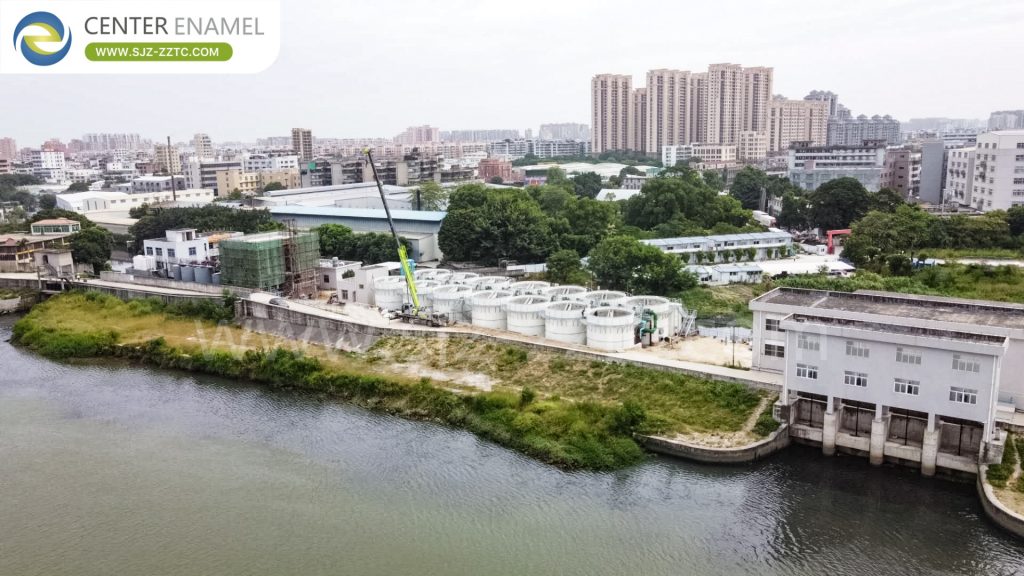
The livestock manure treatment market is transitioning from environmental compliance-driven to dual-value-driven by energy and fertilizer valorization. The European digestate concentration fertilizer market is mature, and large-scale biogas projects in North America commonly include digestate processing centers. In terms of business model innovation, the asset-light model of farmers paying per volume treated has been piloted successfully in some countries.
China's "biogas operation outsourcing" model is beginning to penetrate county-level projects. Digital technology-driven precision nutrient management platforms are emerging as new industry links connecting farms, treatment centers, and agricultural end-users. In terms of process equipment, CSTR is the mainstream anaerobic digestion process for treating livestock manure. After anaerobic digestion, manure produces biogas for power generation or grid-injection purification, while digestate is processed into organic fertilizer for farmland application. GFS tanks, with strong corrosion resistance and low maintenance costs, are widely used in manure treatment projects on large-scale farms in North America, Europe, and China, particularly suited to the corrosive environments of high ammonia-nitrogen and high hydrogen sulfide in manure.
Successfully navigating this evolving market requires a partner capable of integrating diverse technologies into a cohesive system. As a leading Biogas Solution Provider, we bridge the gap between complex regulatory requirements and high-efficiency project delivery. Our commitment to excellence begins with the structural integrity of our storage units, which are engineered to withstand the harshest environmental conditions.
GFS Tanks Adaptable to Extreme Climates
GFS Tanks can undergo customized wind and seismic design based on project site climate and geological conditions, with environmental adaptability far superior to concrete tanks. Concrete tanks are cast-in-place monolithic structures, with seismic and wind resistance entirely dependent on on-site construction quality. In remote areas, typhoon-prone zones, and earthquake belts, construction quality is difficult to control. Under strong earthquakes or typhoons, concrete tanks are prone to cracking and base settlement damage, with subsequent reinforcement costs equivalent to rebuilding.
GFS tanks undergo collection of local seismic intensity, maximum wind pressure, and foundation bearing capacity data before construction, with customized thickened steel panels, stiffening ribs, and anchored base components-all factory-prefabricated to standardized specifications. The bolted panel structure has excellent stress distribution capability, making it less prone to overall fracture under seismic and typhoon impacts, and minor foundation settlement will not cause through-cracking. Structural parameters can be flexibly adjusted for mountainous, coastal typhoon-zone, and high-seismic-zone projects, providing long-term protection against extreme natural climate damage.
Beyond structural durability, the optimization of biological reactor performance remains the core priority for energy recovery. Efficiently processing high-load waste requires a mature approach to internal microbial management and reaction kinetics. Implementing a proven UASB Process ensures your facility maintains optimal activity and stable biogas output.
UASB Process Advantages
No mechanical mixing equipment is required, with sludge suspension achieved through hydraulic action, resulting in very low overall energy consumption. High-concentration anaerobic granular sludge can be cultivated, with high sludge concentration, strong activity, excellent settleability, low sludge washout, and low sludge yield, significantly reducing sludge disposal costs. The integrated design combines reaction, sedimentation, and separation simultaneously, with small footprint and moderate capital investment. Simple structure with low failure rates and convenient maintenance. High volumetric loading rate with excellent organic pollutant degradation efficiency and good shock load resistance. Stable biogas production with high resource recovery value. The process is mature and widely adopted, with well-established construction, commissioning, and O&M systems, suitable for large-scale industrial wastewater treatment.
While technical efficiency is critical, understanding the nature of the influent remains essential for ensuring long-term environmental compliance. Careful analysis of wastewater characteristics allows us to tailor our treatment trains to mitigate ecological risks effectively. This scientific approach ensures that our solutions address pollution at its source while promoting resource safety.
Livestock Wastewater Environmental Toxicity of Pollutants
No synthetic chemical toxicity, no hazardous substances-very low risk of acute or chronic toxicity. Pollution impacts are primarily biological and nutrient pollution. All pollutants are natural organics from livestock metabolites and feed residues, with no inhibition of microbial activity and no toxicity to soil, water, or aquatic organisms. However, they are rich in nitrogen, phosphorus, and suspended impurities, carrying E. coli, parasite eggs, and pathogens. Direct discharge without treatment rapidly causes eutrophication, black-odor conditions, mosquito breeding, and disease transmission. Long-term discharge causes soil compaction and elevated nutrient levels in groundwater-persistent ecological pollution, but no hazardous substance accumulation or carcinogenic/mutagenic risks.
Delivering these high-level environmental outcomes depends on the continuous evolution of our research and development capabilities. Our internal expertise allows us to maintain strict global quality standards, ensuring every project benefits from the latest advancements in materials science. This relentless pursuit of innovation is validated by our extensive range of international certifications.
Center Enamel's Core R&D Capabilities and Global Authoritative Certifications
Technology R&D is Center Enamel's core competitive advantage. The company independently masters over 200 differentiated anti-corrosion enamel formulations, with full self-control over the enamel raw material chain, holding nearly 100 invention and utility patents. Products have passed NSF, WRAS, ASME, BSCI, CE, ISO9001, and other global certifications.
Company certifications and honors include: National High-Tech Enterprise, National Specialized and Sophisticated "Little Giant," Hebei Manufacturing Single Champion, Provincial Smart Factory, Provincial Green Factory; complete environmental engineering and special equipment manufacturing compliance qualifications. The company maintains long-term collaborative research with multiple universities through joint materials laboratories-continuously iterating anti-corrosion coatings and large bolted tank structural design technologies. The proprietary material technology barrier creates an irreplaceable competitive advantage, with product performance comparable to high-end imported European/American storage equipment.
A strong R&D foundation is only effective when coupled with expert onsite execution and professional project management. We take pride in our ability to mobilize experienced teams to any global location, ensuring standardized construction and long-term performance. The following details illustrate the depth of our practical installation and construction capabilities.
Installation and Construction Team
The installation team has practical experience from over 10,000 GFS tank projects globally, strictly following standardized construction procedures-full control over project mobilization, civil coordination, tank assembly, piping, and commissioning schedules and quality.
The team is proficient in complete standardized installation processes for GFS tanks, dual-membrane gas storage covers, USR/CSTR/IC anaerobic reactors, and biogas desulfurization/piping systems-adaptable to large-scale farms, industrial parks, remote mountainous sites, coastal high-corrosion sites, and other complex locations-strictly implementing unified global safety construction standards. For large overseas cross-border projects, the team can be deployed as complete units for on-site construction, technical training, and local worker practical instruction-full control over construction details, air-tightness testing, and corrosion protection-ensuring timely and stable commissioning of global environmental projects through standardized delivery capability.
To further support diverse operational requirements, we offer specialized infrastructure solutions that provide both cost efficiency and functional protection. Whether for water storage or secondary processing, our designs focus on long-term sustainability and operational simplicity. These added value components complement our core biogas and wastewater treatment systems.
Aluminum Alloy Trough Deck Roof
Aluminum Alloy Trough Deck Roof is a cost-effective economical tank cover solution for clean water and wastewater storage scenarios, primarily designed for drinking water, production wastewater, and firewater reserve tanks, balancing practicality and cost advantages. The main body is integrally formed from anti-corrosion aluminum alloy plates, paired with aluminum support trusses. Its lightweight design imposes less load on the tank foundation, reducing civil construction investment. A naturally formed dense oxide protective layer on the surface resists rain and mild wastewater corrosion, withstands outdoor sun and rain exposure, and effectively blocks wind, rain, insects, fallen leaves, and odor volatilization, protecting water quality by preventing dust and debris from falling in and causing secondary contamination. The flat roof structure is neat and orderly, allowing installation of maintenance walkways, guardrails, vents, and level monitoring ports on top, facilitating daily inspection and equipment maintenance. The simple sealing structure enables straightforward installation with short construction timelines, and virtually eliminates the need for anti-corrosion painting maintenance, resulting in extremely low operational costs. It is suitable for various small, medium, and large atmospheric pressure water storage tanks, and has been widely implemented in waterworks clear water tanks, industrial circulating water tanks, park firewater tanks, and domestic wastewater temporary storage facilities. It is highly compatible with water storage applications that do not require biogas collection or high-pressure sealing.
Frequently Asked Questions (FAQ)
Why is Center Enamel the preferred Biogas Solution Provider?
Center Enamel provides comprehensive, turnkey services combining cutting-edge R&D, expert project management, and a decade of global installation experience. We deliver standardized, high-performance GFS tanks and anaerobic technologies that help clients maximize energy recovery while ensuring strict environmental compliance and operational efficiency in diverse global markets.
How do GFS Tanks improve project reliability?
GFS tanks provide superior structural integrity and corrosion resistance, making them ideal for high-ammonia, high-sulfide environments found in biogas projects. Their bolted design allows for fast, precision-engineered assembly that can be customized for extreme wind, seismic, or geological conditions, ensuring long-term containment that significantly outlasts traditional concrete structures.
What are the key benefits of the UASB Process in wastewater treatment?
The UASB process is a highly efficient anaerobic method that requires no mechanical mixing, drastically lowering energy costs. Its integrated design for reaction, sedimentation, and separation maximizes space efficiency, delivers excellent organic pollutant degradation, and provides stable biogas production, making it a mature, scalable solution for large industrial wastewater facilities.