
How an EPC Contractor Uses GFS Tanks to Treat Dairy Wastewater Efficiently
Dairy processing generates wastewater containing high concentrations of lactose, milk proteins, fats, and other biodegradable organic matter. Although these pollutants are naturally derived, their high organic load can create serious environmental problems when wastewater is discharged without adequate treatment. High COD and BOD levels can rapidly deplete dissolved oxygen in receiving waters, while fats may form surface films and protein decomposition can release ammonia and cause unpleasant odors.
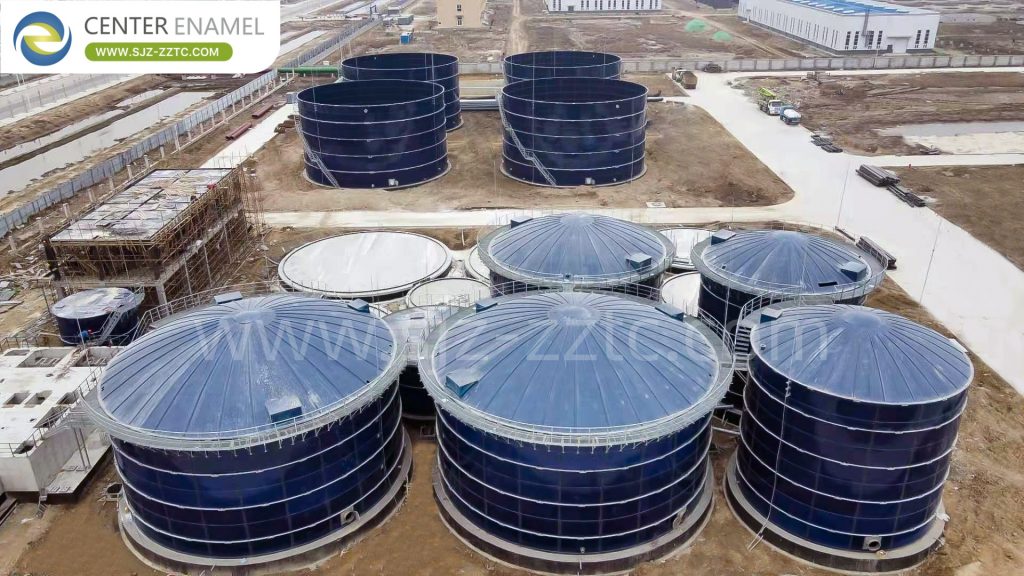
Treating this wastewater requires more than a single piece of equipment. A reliable Dairy Wastewater Treatment system must combine appropriate process design, corrosion-resistant storage and reaction equipment, effective anaerobic treatment, and dependable project execution. This is where an experienced EPC Contractor adds value: coordinating engineering, equipment selection, installation, and commissioning into an integrated treatment solution.
Center Enamel supports industrial wastewater projects with Glass-Fused-to-Steel (GFS) tanks, anaerobic treatment equipment, and engineering and construction capabilities. By matching tank configurations and treatment technologies to project conditions, the company helps dairy and food-processing facilities address wastewater challenges while making efficient use of available plant space.
Dairy Wastewater Characteristics and Treatment Challenges
Dairy wastewater is generated during milk reception, processing, pasteurization, equipment washing, and Clean-in-Place (CIP) operations. Its composition and concentration can change significantly throughout the production cycle, making consistent treatment a key engineering challenge.
The main pollutants include:
Lactose and other soluble organics: Contribute significantly to COD and BOD.
Milk proteins: Increase the organic load and can generate ammonia during decomposition.
Milk fats and oils: May accumulate in treatment equipment or form surface films that interfere with oxygen transfer.
Suspended solids: Include milk residues and other production-related particles.
Cleaning chemicals: Acidic and alkaline CIP solutions can cause substantial pH fluctuations.
Although dairy wastewater generally contains biodegradable organic pollutants rather than persistent toxic chemicals or heavy metals, untreated discharge can still cause serious environmental damage. Rapid decomposition consumes dissolved oxygen, while excessive nutrient loading and odor generation can affect surrounding ecosystems and communities.
For this reason, a Dairy Wastewater Treatment system should be designed around actual wastewater characteristics, production schedules, peak flows, and discharge requirements-not simply the nominal daily wastewater volume.
GFS Tanks for Reliable Dairy Wastewater Treatment
Tank selection is an important part of treatment plant engineering. Anaerobic reactors, equalization tanks, and other process units must withstand wastewater exposure while maintaining structural integrity and reliable operation.
Center Enamel's Glass-Fused-to-Steel (GFS) tanks combine the strength of steel with a fused glass coating. The coating is formed by firing enamel onto specially prepared steel panels at high temperatures, creating a durable, chemically resistant surface. This makes GFS tanks suitable for demanding wastewater and biogas applications.
For dairy facilities, the technology offers several practical advantages:
Corrosion resistance: Dairy wastewater may contain organic acids, fats, and residues from cleaning operations. The glass coating provides a protective barrier against corrosive process conditions. Center Enamel's dairy-sector project information specifically identifies GFS tanks as suitable for wastewater containing lactic acid and aggressive CIP cleaning chemicals.
Modular installation: Factory-manufactured steel panels are transported to the project site and assembled using bolted connections. This reduces dependence on extensive on-site welding and supports installation in locations where construction space or resources are limited.
Flexible capacity and configuration: Tank diameter and height can be customized to suit the treatment process and available land. This flexibility is useful for dairy plants with compact or irregularly shaped sites.
Expansion potential: Modular tank configurations can support future plant expansion, helping operators adapt treatment capacity as production requirements change.
GFS Tanks Compared with Conventional Concrete Tanks
| Evaluation factor | GFS Tanks | Conventional concrete tanks |
| Corrosion protection | Fused glass coating provides a protective barrier | May require additional protective lining in corrosive conditions |
| Installation | Prefabricated panels assembled on site | Requires extensive on-site civil construction |
| Capacity configuration | Height and diameter can be customized | Shape and volume are largely fixed after construction |
| Plant expansion | Modular design supports layout adjustments and expansion | Expansion may require additional construction or rebuilding |
| Site adaptability | Suitable for narrow or irregular plant layouts | Heavy foundations and fixed dimensions can limit placement |
Center Enamel states that its GFS tank capacities can be customized from dozens of cubic meters to 50,000 m³, with different height and diameter combinations available. Actual tank specifications should be determined through project engineering and site assessment.
IC Process for High-Strength Organic Wastewater
For dairy plants generating high-strength organic wastewater, anaerobic treatment can reduce the organic load before downstream treatment. Depending on wastewater characteristics and the overall process design, an Internal Circulation (IC) reactor may be considered as a high-rate anaerobic treatment option.
The IC process uses gas-lift-driven internal circulation to promote contact between wastewater and anaerobic sludge. This supports biological degradation while reducing the need for external recirculation equipment.
Center Enamel's technical material identifies several advantages of IC technology:
Compact footprint: The IC reactor can occupy approximately one-third of the footprint of traditional anaerobic processes for the same treatment capacity, according to the supplied technical material.
Internal circulation: Biogas-driven circulation promotes sludge and wastewater mixing without a separate external recirculation system.
High loading capacity: Strong hydraulic mixing helps maintain contact between microorganisms and organic pollutants.
Shock-load adaptability: The internal circulation system is designed to help the reactor handle changes in hydraulic and organic loading.
Sludge retention: Granular sludge with high biological activity supports stable anaerobic treatment.
Biogas recovery: Organic matter degradation produces biogas that may be collected and utilized as an energy resource.
These characteristics can make IC technology attractive for large-flow, high-concentration industrial wastewater. However, the final process selection should consider suspended solids, fat content, biodegradability, temperature, pH, and the required effluent quality. Pretreatment is particularly important where fats and solids could interfere with anaerobic reactor performance.
Integrated Equipment for Stable Treatment Operations
A wastewater treatment plant depends on coordinated equipment rather than an isolated reactor or tank. An EPC Contractor must consider how wastewater enters the system, how process conditions are controlled, how biogas is handled, and how sludge is managed.
For dairy wastewater projects using anaerobic treatment, the main equipment categories may include:
| Equipment | Main function |
| GFS tanks | Provide corrosion-resistant containment for selected treatment and storage stages |
| Screening and separation equipment | Remove coarse solids and other materials before biological treatment |
| Equalization tanks and feed pumps | Balance wastewater flow and regulate reactor feeding |
| IC or other anaerobic reactors | Break down biodegradable organic matter under anaerobic conditions |
| Biogas collection and treatment equipment | Collect, desulfurize, dehydrate, and store generated biogas |
| Online monitoring instruments | Monitor operating parameters such as temperature, pH, and liquid level |
| Sludge discharge and circulation equipment | Support sludge management and stable reactor operation |
The specific configuration depends on the selected treatment process. For example, a project may require additional pH adjustment, flow control, gas storage, or advanced treatment equipment according to its wastewater characteristics and discharge targets.
Center Enamel's environmental equipment portfolio includes GFS tanks, supporting tank covers, biogas-related equipment, and engineering services for anaerobic treatment and wastewater projects.
A Complete Dairy Wastewater Treatment Process
An effective treatment train generally combines physical separation, biological treatment, and final polishing. For dairy wastewater, pretreatment is especially important because excessive fats, oils, and suspended solids can affect downstream biological processes.
A typical process arrangement may include the following stages:
Preliminary screening and separation
Screens remove larger suspended materials and production residues. Where necessary, additional separation equipment can remove grit and other solids before wastewater enters the equalization stage.
Equalization and pH adjustment
Wastewater flow and composition may fluctuate with production and CIP cleaning cycles. An equalization tank helps balance these variations. pH adjustment can also be incorporated to create more suitable conditions for biological treatment.
Fat, oil, and grease removal
Dissolved Air Flotation (DAF) or other suitable separation methods can remove floating and emulsified fats, oils, and grease. This helps reduce the risk of fat accumulation and biological inhibition in downstream treatment units.
Anaerobic digestion
UASB, EGSB, IC, or other suitable anaerobic technologies can be selected according to wastewater concentration, solids content, and project requirements. During this stage, anaerobic microorganisms convert biodegradable organic matter into biogas and reduce the organic load.
Aerobic treatment and polishing
Aerobic processes can further remove residual organic matter and, where required, support nitrogen removal. Additional clarification, filtration, or disinfection may be included to achieve the required final effluent quality.
The following table summarizes the process logic:
| Treatment stage | Main objective | Typical equipment or process |
| Pretreatment | Remove coarse solids and reduce FOG | Screens, separators, DAF |
| Equalization | Balance flow and wastewater characteristics | Equalization tank, pumps, pH adjustment |
| Anaerobic treatment | Reduce high concentrations of biodegradable organics | IC, UASB, or EGSB reactor |
| Aerobic treatment | Further reduce residual COD and BOD | A/O, contact oxidation, or other aerobic processes |
| Advanced treatment | Improve final effluent quality | Sedimentation, filtration, disinfection |
This is a general process framework rather than a fixed design. The final configuration should be established through wastewater analysis, process calculations, and applicable discharge standards.
Proven Project Experience in High-Strength Wastewater Treatment
Experience in related high-strength organic wastewater applications can help demonstrate an EPC Contractor's ability to coordinate tank equipment, treatment infrastructure, and project installation.
One example from Center Enamel's supplied project material is the South Africa Brewery High-Strength Wastewater Treatment Project. Although this is a brewery wastewater project rather than a dairy wastewater project, it demonstrates the use of GFS and stainless steel tanks in an industrial wastewater treatment application.
South Africa Brewery Wastewater Treatment Project
| Project element | Details |
| Location | South Africa |
| Industry | Brewing |
| Wastewater characteristics | High-COD, high-sugar, readily biodegradable wastewater from production and cleaning |
| Core equipment | GFS tanks and stainless steel tanks |
| GFS tank application | Primary anaerobic digestion system |
| Stainless steel tank application | Wastewater transfer and chemical storage |
| Project objective | Support long-term wastewater treatment through corrosion-resistant equipment and flexible assembly |
The GFS tanks serve as the primary anaerobic digestion infrastructure, while stainless steel tanks support wastewater transfer and chemical storage. According to the supplied project description, the combined equipment package was designed to support stable treatment of brewery production and cleaning wastewater.
The project is relevant to dairy processors because both industries can generate high-strength organic wastewater and require coordinated treatment infrastructure. Nevertheless, actual dairy projects require their own wastewater characterization and process design rather than directly copying a brewery treatment configuration.
EPC Contractor Capabilities from Engineering to Installation
Choosing an EPC Contractor involves more than selecting a tank manufacturer. The contractor must coordinate engineering requirements, equipment supply, construction activities, and commissioning to ensure that the complete system works as intended.
Center Enamel's project delivery capabilities include GFS tank manufacturing, installation, and support for anaerobic treatment systems. Its installation team has experience across more than 10,000 GFS tank projects globally, according to the supplied company material.
Key installation capabilities include:
GFS tank assembly and installation
Dual-membrane gas storage cover installation
USR, CSTR, and IC anaerobic reactor installation
Biogas desulfurization and pipeline system installation
Civil construction coordination and piping integration
Air-tightness testing, quality control, and commissioning support
For overseas projects, installation teams can also provide on-site technical guidance and practical training for local workers. This is particularly valuable for projects in remote areas, industrial parks, and coastal environments where construction conditions may be more demanding.
By coordinating equipment installation, piping, process systems, and commissioning activities, an experienced EPC Contractor can help reduce interface risks between different project components.
Global Project Experience and Customized Engineering
Dairy wastewater treatment requirements vary according to production capacity, wastewater composition, local climate, available land, and environmental regulations. A treatment solution designed for one facility may not be suitable for another without technical adjustments.
Center Enamel's supplied company information reports the following global project experience:
| Experience indicator | Company-reported figure |
| Countries and regions served | 100+ |
| Completed projects | 30,000+ |
| GFS tank project experience of installation team | 10,000+ |
These figures represent the company's broader project and installation experience across multiple industries, not dairy wastewater projects alone.
Its project portfolio covers applications including palm oil processing, livestock wastewater, municipal treatment, brewing, and food waste biogas. This cross-industry experience provides a foundation for adapting tank configurations and engineering approaches to different wastewater conditions.
For dairy processors, project customization may involve:
Selecting tank capacity and dimensions based on wastewater flow and site conditions.
Choosing appropriate corrosion protection for the operating environment.
Matching anaerobic technology to organic loading and wastewater characteristics.
Integrating biogas collection and treatment equipment where applicable.
Coordinating installation schedules, construction requirements, and commissioning.
Considering local environmental standards and project-specific compliance requirements.
Why Choose Center Enamel for Dairy Wastewater Treatment?
A dependable Dairy Wastewater Treatment project requires suitable equipment, practical process engineering, and coordinated project delivery. Center Enamel brings together tank manufacturing and environmental engineering capabilities to support industrial wastewater and anaerobic treatment applications.
Its GFS tanks provide modular, corrosion-resistant containment for selected treatment stages. Its broader equipment and engineering capabilities can support anaerobic reactor systems, biogas-related infrastructure, and other wastewater project requirements.
As an EPC Contractor, Center Enamel can support customers through equipment selection, customized engineering, manufacturing, installation coordination, and project commissioning support. The precise scope of EPC services should be confirmed according to each project's contract and technical requirements.
For dairy processing facilities planning new wastewater infrastructure or upgrading existing systems, an integrated engineering approach can help align treatment performance, tank durability, site utilization, and long-term operating needs.
Frequently Asked Questions
What makes dairy wastewater difficult to treat?
Dairy wastewater contains high concentrations of lactose, proteins, fats, and suspended solids. Its organic load can cause elevated COD and BOD, while CIP cleaning cycles may create significant pH fluctuations. Pretreatment and equalization are therefore important for protecting downstream biological processes and maintaining stable treatment conditions.
Why are GFS tanks suitable for dairy wastewater treatment?
GFS tanks combine steel strength with a fused glass coating that provides corrosion resistance and a durable containment surface. Their modular bolted construction also supports flexible capacity configuration, efficient site assembly, and future expansion. They can be used in selected anaerobic treatment and wastewater storage applications.
What should an EPC Contractor provide for a dairy wastewater project?
An EPC Contractor should coordinate engineering design, equipment selection, manufacturing, installation, and commissioning according to project requirements. The scope may also include anaerobic reactor integration, biogas collection systems, technical training, and after-sales support. The final responsibilities should be clearly defined in the project contract.
Discuss Your Dairy Wastewater Treatment Project with Center Enamel
Looking for a reliable EPC Contractor to develop or upgrade your dairy wastewater treatment facility? Contact Center Enamel to discuss your wastewater characteristics, project capacity, site conditions, and GFS tank requirements.
From customized GFS tank solutions to integrated anaerobic treatment infrastructure, our team is ready to help you explore a practical solution for your next industrial wastewater project.