
How Does Biogas Produce Electricity? A Complete Guide to Conversion Technologies
Biogas is a renewable fuel produced when organic matter-such as agricultural waste, food scraps, or sewage sludge-breaks down in the absence of oxygen. The resulting gas, primarily composed of methane (CH₄) and carbon dioxide (CO₂), carries significant chemical energy. Converting that energy into electricity is a well-established process that transforms waste management into a source of clean power. The fundamental principle is straightforward: burn the methane to drive a mechanical device connected to a generator, or use a chemical process to convert the gas directly into electrons. Understanding the specific technologies and their trade-offs reveals why biogas power is a growing component of sustainable energy systems.
The Chemistry Behind Biogas Electricity
Biogas is produced through anaerobic digestion, a natural process where microorganisms break down organic material without oxygen . The resulting gas typically contains 55–60% methane, 40–45% carbon dioxide, and trace amounts of other gases like hydrogen sulfide . Methane is the energy carrier-its combustion releases heat that can be harnessed for power generation.
The basic combustion reaction is simple: CH₄ + 2O₂ → CO₂ + 2H₂O + heat. In a biogas power system, this heat is either used to drive a thermodynamic cycle (like a turbine) or converted directly into mechanical work (like an engine piston). The critical difference from fossil fuels is that the carbon in biogas originated from recently living biomass, making the net carbon cycle far shorter and the electricity generation closer to carbon-neutral.
Reciprocating Engines: The Workhorse of Biogas Power
Reciprocating internal combustion engines are the most widely deployed technology for biogas-to-electricity conversion. These engines operate on the same principle as gasoline or diesel generators: a piston compresses a fuel-air mixture, which ignites and drives the piston down, rotating a crankshaft connected to an electrical generator.
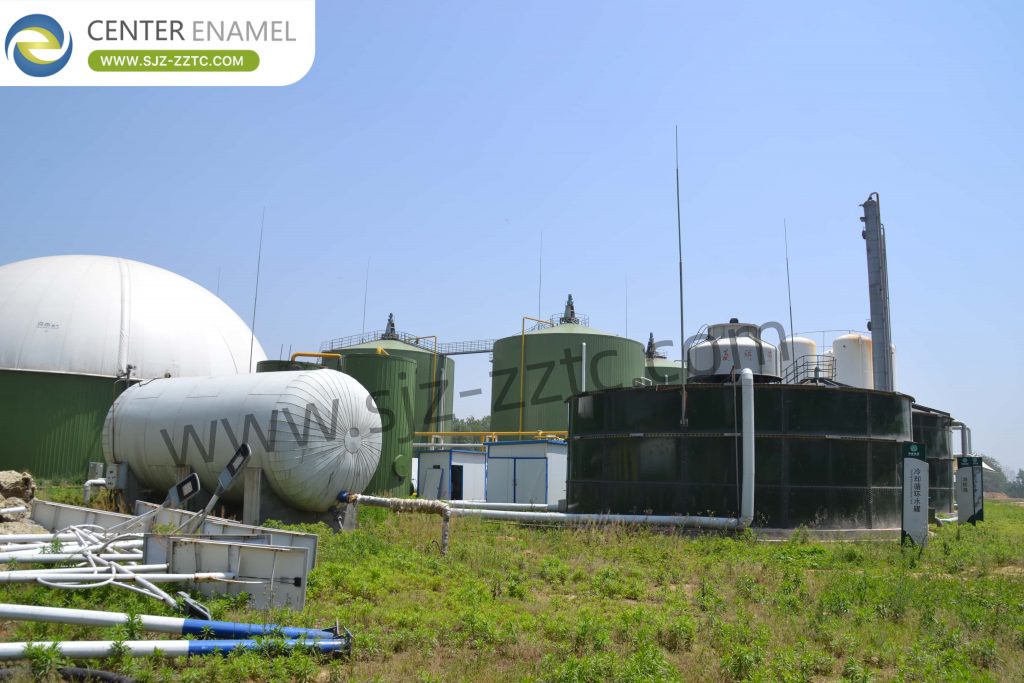
For biogas applications, engines are typically modified to handle the lower energy density and varying methane content of the fuel. A real-world example is Butler Farms in North Carolina, where a swine facility uses a 180 kW generator set fueled by biogas from covered lagoon digesters. This system produces approximately 545,000 kWh of electricity annually, enough to power the farm and sell excess to the local utility through a power purchase agreement . The waste heat from the engine exhaust is also captured and used to maintain the digester at its optimal temperature, demonstrating the efficiency of combined heat and power (CHP) operation.
Reciprocating engines offer several advantages: they are relatively inexpensive, have high electrical efficiency at smaller scales, and can handle the variable gas quality typical of on-farm digesters. Their main drawback is that they require gas cleaning-particularly removal of hydrogen sulfide (H₂S)-to prevent corrosion of engine components .
Microturbines and Gas Turbines: Compact and Clean
Microturbines are small combustion turbines, typically available in capacities from 30 kW to 333 kW per unit. They operate on the Brayton cycle: air is compressed, fuel is injected and burned, and the hot high-pressure gas expands through a turbine that spins a generator . For biogas applications, microturbines offer electrical efficiencies ranging from about 22% to 27% (on a higher heating value basis) .
The efficiency of a microturbine depends heavily on ambient conditions. As the table below shows, larger units achieve slightly better efficiency, and all units lose output as air density decreases at higher elevations or temperatures .
| Capacity (kW) | Electrical Efficiency (HHV) | Heat Rate (Btu/kWh) |
| 30 | 22% | 15,700 |
| 65 | 23% | 14,600 |
| 200 | 26% | 13,200 |
| 250 | 26% | 13,000 |
| 333 | 27% | 12,600 |
Microturbines produce very low NOx emissions-typically below 9 ppmv when running on biogas . They are also compact, quiet, and require less maintenance than reciprocating engines. However, their lower electrical efficiency means that for a given amount of biogas, they produce less electricity than an engine of comparable fuel input. They are best suited for applications where waste heat recovery is valuable or where emissions regulations are particularly strict.
Fuel Cells: The High-Efficiency Pathway
Fuel cells represent a fundamentally different approach to converting biogas into electricity. Rather than burning the methane, fuel cells use an electrochemical reaction to generate electricity directly, bypassing the thermal inefficiencies of combustion. This can yield significantly higher electrical efficiencies.
One commercial biogas fuel cell solution achieves 65% electrical efficiency-among the highest of any biogas conversion technology . A fuel cell system also produces virtually no air pollutants like NOx or particulate matter, making it attractive for urban or environmentally sensitive locations. The trade-off is cost: fuel cell systems are more expensive per kilowatt than engines or turbines, and they require extensive gas cleanup to remove sulfur compounds that would poison the fuel cell stack.
Fuel cells are particularly well-suited for continuous, baseload operation where the high capital cost can be amortized over many years of high-efficiency operation. As the technology matures and costs decline, they are expected to play a larger role in biogas power generation.
Combined Heat and Power: Maximizing Energy Recovery
The combined heat and power (CHP) configuration is not a separate conversion technology but an operational strategy that dramatically improves overall efficiency. When biogas is burned in an engine or turbine, only a fraction of the energy becomes electricity-the rest is lost as heat. A CHP system captures that waste heat for useful purposes, such as heating the anaerobic digester, providing space heating, or supplying hot water for industrial processes.
A case study from a 4,000 kW biogas power plant in Turkey illustrates the potential. The plant, fueled by chicken manure, was integrated with an Organic Rankine Cycle (ORC) unit to generate additional electricity from waste exhaust gas. This optimization increased the plant’s power output while reducing emissions . The plant meets the electrical needs of approximately 7,262 people with its installed capacity .
The table below compares the key characteristics of the three main prime mover technologies for biogas electricity generation.
| Technology | Typical Electrical Efficiency | Key Advantages | Key Limitations |
| Reciprocating Engine | 30–40% (CHP: up to 80% total) | Low cost, high efficiency at small scale, proven reliability | Requires gas cleaning (H₂S), higher maintenance |
| Microturbine | 22–27% | Low emissions, compact, low maintenance | Lower electrical efficiency, sensitive to ambient conditions |
| Fuel Cell | Up to 65% | Highest efficiency, near-zero pollution | High capital cost, stringent gas cleanup required |
Gas Cleanup: The Essential Prerequisite
Raw biogas contains contaminants that can damage power generation equipment. Hydrogen sulfide (H₂S) is the most critical: when burned, it forms sulfur dioxide (SO₂), which combines with moisture to create corrosive acids. Even small concentrations can significantly shorten engine life .
Common H₂S removal methods include biological scrubbing, where bacteria oxidize sulfide to elemental sulfur; chemical absorption using iron chelates or activated carbon; and water scrubbing. In the Butler Farms example, a scrubber removes hydrogen sulfide from the biogas before it enters the generator set . For fuel cells, even more stringent cleanup is required, as sulfur compounds can permanently degrade the catalysts.
Moisture removal is also important, as water vapor can condense in pipes and cause corrosion. Depending on the end-use technology, additional treatment to remove siloxanes (common in landfill gas) may be necessary.
Real-World Applications and Scale
Biogas electricity generation operates across a wide range of scales, from small farm-based systems to utility-scale plants. On the smaller end, a swine farm with 8,000 hogs can generate enough biogas to run a 180 kW generator and produce over half a million kilowatt-hours per year . At the larger end, a 4,000 kW plant processing chicken manure can power thousands of homes .
Landfill gas-a form of biogas produced by decomposing waste in landfills-is also a significant source. The methane from landfills can be collected and burned in gas turbines or piston engines to produce electricity, a practice that both generates renewable power and reduces greenhouse gas emissions from uncontrolled methane release .
In the United States, the EPA has documented numerous biogas-to-electricity projects at agricultural operations, wastewater treatment plants, and landfills. These projects typically qualify for renewable energy credits and may benefit from federal or state incentive programs.
Environmental and Economic Considerations
The environmental case for biogas electricity is compelling. Methane is a potent greenhouse gas-over 25 times more impactful than CO₂ over a 100-year period. Capturing biogas that would otherwise escape into the atmosphere and converting it to electricity displaces fossil fuel generation while preventing methane emissions. The net carbon effect is near-zero because the CO₂ released during combustion was recently absorbed by the organic matter that produced the biogas .
Economically, biogas power projects face challenges related to capital cost, scale, and feedstock availability. The gas cleanup equipment and the prime mover represent significant upfront investments. However, the combination of electricity sales, waste heat utilization, and waste management cost avoidance often makes these projects viable, particularly when policy incentives are available. The payback period for a well-designed system can be in the range of five to eight years, depending on local energy prices and incentives .
Frequently Asked Questions
Can all biogas be used directly in an engine without treatment?
No. Raw biogas contains hydrogen sulfide and moisture that can corrode engine components and degrade lubricating oil. While some engines can tolerate moderate H₂S levels, most installations require at least basic gas cleaning-typically biological or chemical H₂S removal-to ensure reliable operation and acceptable maintenance intervals .
What is the difference between biogas electricity and natural gas electricity?
Chemically, the combustion process is similar, but there are two key differences. First, biogas has a lower methane concentration (typically 55–60% versus over 90% for natural gas), so it has lower energy content per unit volume and may require larger fuel delivery systems or engine modifications. Second, biogas is produced from renewable biomass, so the electricity generated qualifies as renewable energy and has a much lower net carbon footprint than natural gas power .
How much electricity can a typical farm-scale biogas system produce?
It varies widely with feedstock volume and digester design, but a mid-sized swine or dairy operation with a covered lagoon digester can support a generator in the range of 100–250 kW. A documented example produces about 545,000 kWh annually from a 180 kW generator set . Larger operations with co-digestion of food waste can support significantly higher outputs.
Ready to explore how biogas power generation can work for your operation or project? Contact our team today to discuss feasibility, technology selection, and system design tailored to your feedstock and energy goals. We are here to help you turn waste into watts.