
Why IC Process and Expert EPC Delivery Define Modern Beverage Wastewater Success
Industrial wastewater treatment today faces a triad of pressures: increasingly stringent discharge limits, volatile energy costs, and the need to recover value from waste streams rather than simply disposing of them. For beverage producers-whether brewing, soft drinks, juices, or tea-the effluent profile is uniquely challenging yet uniquely promising. It carries an exceptionally high organic load from sugars and fruit residues, fluctuates violently with Clean-in-Place cycles, and yet remains almost entirely biodegradable. Capturing that load as biogas rather than aerating it away is the economic and environmental imperative.
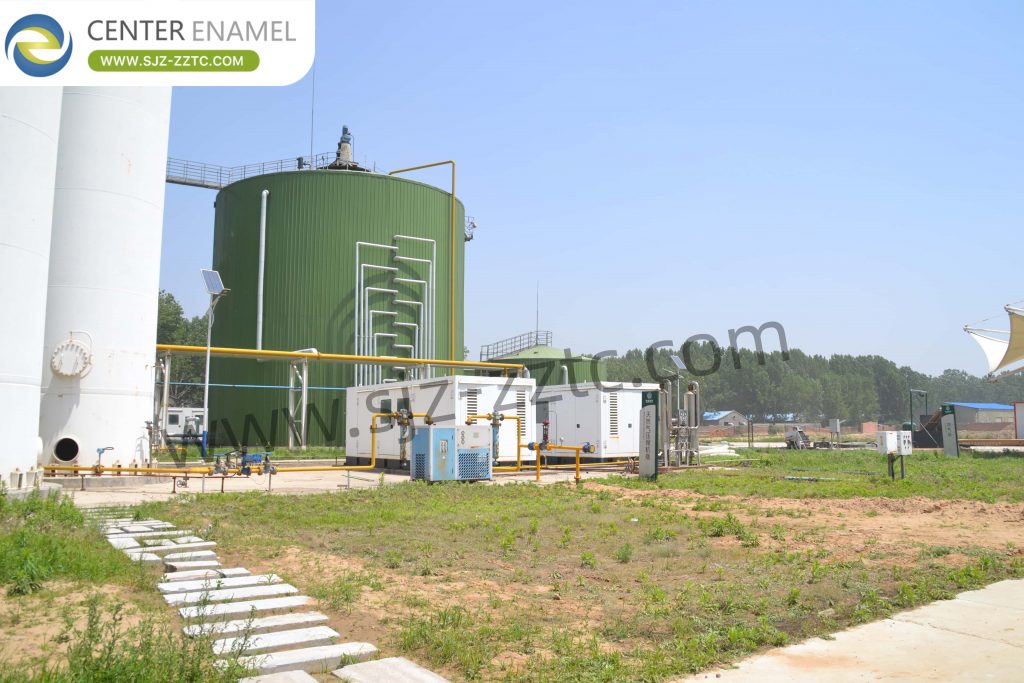
Meeting this imperative requires two things working in lockstep: a reactor architecture engineered for high-strength, high-flow organic streams, and a delivery partner capable of guaranteeing the entire treatment train from influent characterization to commissioning. The IC Process provides the first. Center Enamel, as a China Beverage Wastewater Treatment Project EPC Contractor, provides the second.
The IC Process: Compact Anaerobic Power for High-Strength Effluent
The Internal Circulation reactor represents the third generation of high-rate anaerobic technology, building upon the UASB platform with a critical innovation: a built-in gas-lift internal circulation system that recirculates wastewater without external return pumps. Biogas produced in the lower reaction zone lifts the sludge-water mixture to a gas-liquid separation chamber, where gas is released and the mixture returns downward through a central riser. This autonomous circulation dramatically increases upflow velocity, keeping granular sludge in a fluidized state and maximizing contact between biomass and pollutants.
The practical consequences for beverage plants are substantial. The IC reactor’s footprint is roughly one-third that of a conventional anaerobic system at equivalent treatment capacity, making it viable for space-constrained facilities. Its dual-zone configuration-a high-load main reaction zone followed by a polishing zone-delivers stable effluent quality even when influent COD spikes during CIP discharges or product changeovers. With reactor heights reaching 16 to 25 meters, the IC Process achieves volumetric loading rates that conventional designs cannot match.
Beverage Wastewater: High Sugar, High Opportunity
Beverage manufacturing generates effluent across the entire processing chain: raw material washing and juicing, syrup preparation, blending, filtration, filling line rinses, and the critical high-concentration pulses from CIP cleaning. Juice streams carry pectin and fruit pulp; carbonated beverage waste contains residual syrup and phosphoric acid; tea processing contributes polyphenols that can inhibit biomass at elevated concentrations. The common thread is oxygen demand. Soluble sugars are non-toxic but rapidly strip dissolved oxygen from receiving waters, while the sheer variability of batch production makes equalization and shock tolerance non-negotiable design requirements.
Anaerobic digestion is the natural fit. It degrades organic matter without aeration energy, converts carbon into methane-rich biogas rather than surplus sludge, and tolerates the intermittent high-strength pulses that aerobic systems struggle to absorb. The IC Process amplifies these advantages through its internal circulation, which maintains biomass retention and process stability under exactly the fluctuating conditions beverage plants produce.
Beyond the Reactor: Containment That Survives the Real World
A high-performance reactor is only as reliable as the vessel that contains it. Beverage wastewater and anaerobic fermentation conditions are corrosive-volatile fatty acids, fluctuating pH from CIP chemicals, and alternating high and low organic concentrations attack conventional concrete and coated steel. Center Enamel’s Glass-Fused-to-Steel (GFS) tanks address this with a fusion-bonded inert glass coating applied at 820°C to 930°C, creating a surface resistant to strong acids, alkalis, and organic solvents. With over 200 proprietary enamel formulations, GFS tanks deliver a corrosion protection service life exceeding 30 years.
For biogas collection and odor control, the Aluminum Geodesic Dome Roof offers a complementary engineering solution. Manufactured from high-strength aluminum alloy through integral stamping, the triangular grid spherical structure is self-supporting across large spans without internal columns. Its weight is only one-third to one-half that of a steel roof of equivalent span, reducing tank top loading and eliminating the need for wall reinforcement. Double sealing between panels with specialized sealant strips and mechanical interlocking enables both airtight gas storage and enclosed odor containment.
Proven Performance: Sweden Organic Waste Biogas Project
A 2024 installation in Northern Europe demonstrates how these technologies perform under demanding conditions. The Sweden project utilizes UASB anaerobic process with GFS tanks as the main reaction equipment, with a single fermentation tank measuring 19.11 meters in diameter by 19.2 meters in height. The GFS tanks resist acid and alkali corrosion while withstanding the low-temperature conditions of Nordic organic waste fermentation. The project achieves dual objectives: harmless treatment of organic waste and recovery of biogas as clean energy, establishing a European biomass environmental demonstration reference.
| Project Parameter | Specification |
| Location | Sweden (Northern Europe), 2024 |
| Core Process | UASB Anaerobic Digestion |
| Containment | GFS Tanks |
| Single Tank Dimensions | Ø 19.11 m × 19.2 m height |
| Key Challenge Addressed | Acid/alkali corrosion resistance; low-temperature Nordic climate |
| Outcome | Organic waste treatment + biogas energy recovery |
The EPC Contractor Advantage: Single-Point Accountability
Technology alone does not deliver a functioning plant. The gap between design intent and operational performance is where projects fail-under-specified influent data, interface disputes between equipment vendors, and commissioning that validates hardware rather than biological performance. For international beverage producers, coordinating process design, tank fabrication, and on-site construction across multiple vendors introduces risk that directly threatens capital budgets and compliance timelines.
Engaging a specialized EPC Contractor transfers that risk. Center Enamel assumes single-point responsibility for engineering, procurement, construction, and commissioning, with performance guarantees tied to effluent quality and biogas yield rather than best-efforts promises. The company’s 30-plus-year history includes over 30,000 environmental projects delivered globally, a track record that supports both technical credibility and commercial reliability. As a National High-Tech Enterprise and Manufacturing Single Champion, Center Enamel integrates enamel frit research, intelligent equipment manufacturing, and full-scope project contracting under one organizational roof.
Selecting the Right Partner for Your Next Project
Beverage wastewater treatment is not a commodity purchase. The choice of anaerobic process, the corrosion resistance of containment, and the accountability structure of project delivery determine whether a facility becomes an energy-recovering asset or a maintenance liability. The IC Process offers a technically superior solution for high-strength soluble organic streams, particularly where land is constrained and loading is intense. GFS tanks ensure that the reactor and digester vessels survive the chemistry they contain. And an experienced China Beverage Wastewater Treatment Project EPC Contractor brings the integration and guarantees that turn these components into a working, compliant, value-generating system.
Frequently Asked Questions
Q: What makes the IC Process suitable for beverage wastewater specifically?
Beverage effluent is high in soluble sugars and organic matter, making it ideal for anaerobic digestion. The IC Process’s internal circulation and dual-zone design handle high organic loads and shock pulses from CIP cleaning, achieving rapid COD removal in a footprint roughly one-third that of conventional anaerobic systems.
Q: How does an EPC Contractor reduce project risk for overseas beverage plants?
A single EPC Contractor manages design, equipment supply, construction, and commissioning under one fixed-price contract with guaranteed performance metrics. This eliminates interface disputes between multiple vendors and ensures the final effluent quality meets discharge or reuse standards before handover.
Q: Can GFS tanks handle the acidity swings from beverage CIP cleaning?
Yes. Center Enamel’s GFS tanks use fusion-bonded glass coatings with over 200 specialized formulations developed for strong acid, strong alkali, high organic, and high salinity conditions. The inert coating withstands pH fluctuations from CIP chemicals while providing a service life exceeding 30 years.
Ready to evaluate whether the IC Process fits your beverage plant’s effluent profile? Share your influent data and capacity requirements with our engineering team for a preliminary process design and budgetary proposal.
Connect with Center Enamel today to schedule a technical consultation with an EPC specialist who understands beverage wastewater from the inside out.