
IC Reactor Technology for Papermaking Wastewater Treatment: Built for Pulp Mill Scale
Papermaking wastewater treatment is no longer a question of installing a bigger basin. Mills now face tighter discharge limits, rising energy bills and investors asking what happens to the organic load once it leaves the pipe. The IC Reactor answers all three at once: it strips carbon out of high-strength papermaking wastewater, converts part of it into biogas, and does so on a footprint small enough to fit inside an existing mill.
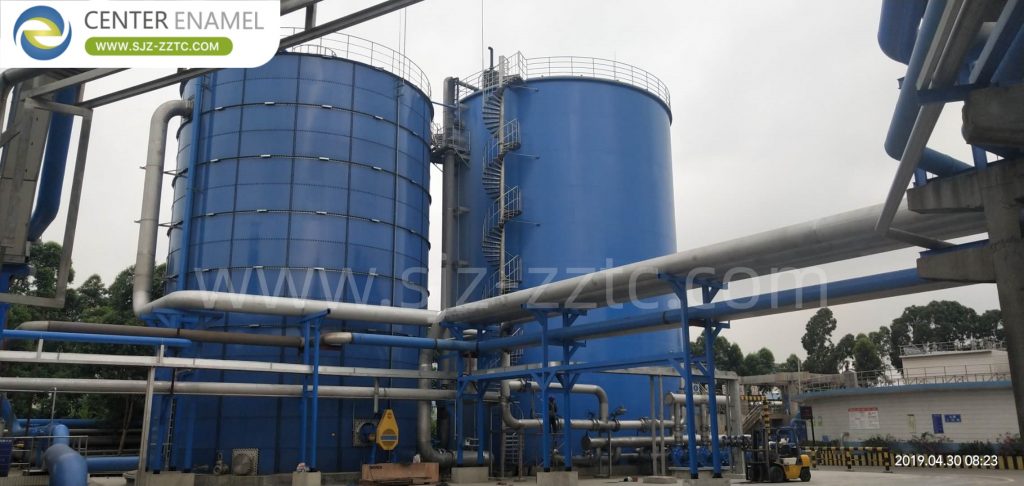
This article follows the logic a mill owner actually works through-first the policy pressure, then the process, then the streams to be treated, then the equipment that has to survive decades of contact with that water.
The Policy Squeeze: From Compliance Discharge to Zero Liquid Discharge
Global industrial wastewater rules are escalating from "compliance discharge" toward mandatory resource recovery and zero liquid discharge. The EU, through its Circular Economy Action Plan, requires member states to raise industrial wastewater reuse rates and extends carbon footprint accounting across the full life cycle of treatment. China keeps tightening industrial water pollutant standards, with increasingly strict limits on total nitrogen, total phosphorus and characteristic pollutants in chemicals, pharmaceuticals, printing and dyeing; some water-scarce regions and highly polluting industries are mandated to adopt zero or near-zero liquid discharge. Germany has built a differentiated pretreatment standard system by industry, requiring industrial wastewater to meet defined quality thresholds before it enters a municipal plant.
For a pulp and paper mill, these rules converge on one demand: the organic load must be removed and, wherever possible, converted into value rather than sent to aeration tanks that consume power to destroy it. That is precisely the design brief of an anaerobic reactor.
Inside the IC Reactor: Internal Circulation Without Return Pumps
IC, the Internal Circulation Anaerobic Reactor, is the third-generation high-efficiency anaerobic technology built on the UASB platform. Its core innovation is a built-in gas-lift internal circulation system, which recirculates wastewater inside the vessel without external return pumps. The reactor is organised as a dual-zone configuration-a lower main reaction zone and an upper polishing zone-and the biogas gas-lift drives a hydraulic internal circulation that sharply raises upflow velocity and improves contact between sludge and wastewater.
The practical consequences matter more than the mechanism. Because circulation is self-generated, there is no return pump to power, seal or maintain; because the two zones work in series, polishing continues after the bulk of the COD is already gone; and because the vessel is extremely compact, high-concentration, high-flow industrial organic wastewater can be treated in a footprint that retrofits into an operating mill. High efficiency, low energy demand and minimal land take are not separate features-they are the same design decision seen from three angles.
Six Streams, One Problem: Where Papermaking Wastewater Comes From
That design decision only pays off if the reactor is fed the right stream, and papermaking wastewater is not one stream but several. It originates across the whole production chain of pulp and papermaking-chemical pulping by alkaline and sulfate processes, mechanical pulping, recycled fiber pulping and papermaking itself-making it the largest-volume, highest-suspended-solids wastewater in the light industry sector.
The pollution stages run in sequence: raw material preparation (chipping and washing of wood or grass), cooking (the core chemical pulping stage, producing high-concentration black liquor), washing and screening, bleaching with multistage discharges, papermaking with sheet forming, pressing and drying flows, and white water recirculation from the wire and press sections. Cooking black liquor is the core pollution source, carrying extremely high COD and strong alkalinity; white water is large in volume but low in pollutant concentration and can be recycled in the mill; recycled fiber pulping wastewater carries inks, adhesives and fillers that require deinking before biological treatment. Large mills discharge tens of thousands of tons daily, which is what makes papermaking one of the largest industrial wastewater sectors in the world.
Matching Each Stream to the Right Treatment Route
Once the streams are separated, the treatment route becomes a matter of matching load to process instead of sending everything to one basin. The table below maps the main streams to the focus each one actually needs.
| Production stage | Main stream | Load character | Treatment focus |
| Cooking | Black liquor | Very high COD, strong alkalinity | IC Reactor anaerobic digestion, biogas recovery |
| Washing and screening | Dilute black liquor, wash filtrate | High COD, moderate solids | IC Reactor feed, solids removal upstream |
| Bleaching | Multistage bleach filtrate | Recalcitrant, colour-bearing organics | Segregated pretreatment before anaerobic polishing |
| Papermaking | Forming, pressing, drying flows | Moderate COD, fines and fillers | Primary clarification, equalisation |
| White water recirculation | Wire and press water | Low concentration, high volume | Internal recycling, short-loop reuse |
| Recycled fiber pulping | Deinking effluent | Inks, adhesives, fillers | Deinking, then biological treatment |
Read down the "load character" column and the argument for the IC Reactor becomes visible: only the cooking and washing streams carry the concentrated organic load that anaerobic digestion converts into energy, while white water is better returned to the process than treated. Treating everything together wastes reactor volume and throws away recoverable fibre.
How the IC Reactor Performs in Pulp and Paper Service
Applied to those concentrated streams, the IC Reactor does three jobs that a conventional aerobic train cannot do economically. It removes a large share of the organic load before any aeration blower starts, which cuts the electricity that dominates a mill's treatment opex. It captures methane from the converted COD, so the pollution becomes fuel for the mill's own boilers or dryers. And it does this in a tall, sealed vessel whose footprint is measured in a fraction of the equivalent aerobic basin-the difference between a retrofit and a greenfield expansion.
The technology also tolerates what papermaking throws at it. Because the internal circulation dilutes incoming peaks almost instantly, shock loads from a black liquor spill or a grade change are buffered inside the reaction zone rather than passed downstream. The upper polishing zone then finishes the job, which keeps effluent quality stable enough for a downstream aerobic or advanced stage to meet tight nitrogen and phosphorus limits.
Equipment That Has to Survive the Chemistry
A process is only as good as the steel that holds it, and this is where the reactor meets its weakest link. Papermaking streams are warm, alkaline and sulphate-bearing; biogas fermentation adds organic acids and moisture on the gas side. Center Enamel (ZZTANK, Shijiazhuang Zhengzhong Technology) has been engaged in the environmental bolted storage equipment field for over 30 years, starting from proprietary enamel anti-corrosion material technology and completing the upgrade from a single tank manufacturer to a comprehensive environmental EPC service provider. The company is recognised as a National High-Tech Enterprise, a National Specialized and Sophisticated "Little Giant", a Manufacturing Single Champion and a Provincial Green Factory, with more than 30,000 environmental projects delivered globally.
That capability rests on material science rather than coating promises. Center Enamel has independently developed over 200 anti-corrosion enamel formulations and applies proprietary double-sided, double-layer enameling, giving GFS tank anti-corrosion service life beyond 30 years-well past concrete and ordinary coated equipment-for high-corrosion wastewater and biogas fermentation conditions worldwide. For a papermaking wastewater treatment plant expected to run for decades, the tank is not a container; it is the life of the asset.
Roofing That Protects Water Quality and Budget
The vessel also needs a top, and the choice of cover decides whether odour, rain and debris enter the water. The Aluminum Alloy Trough Deck Roof is a cost-effective cover for clean water and wastewater storage, built for drinking water, production wastewater and firewater reserve tanks where practicality and cost must balance. Its body is integrally formed from anti-corrosion aluminium alloy plates on aluminium support trusses; the lightweight structure loads the foundation less and reduces civil investment. A naturally formed dense oxide layer resists rain and mild wastewater attack, blocks wind, rain, insects, leaves and odour volatilisation, and stops dust and debris from falling in and causing secondary contamination.
The flat roof is neat and orderly, and accepts maintenance walkways, guardrails, vents and level monitoring ports, which makes daily inspection practical. Sealing is simple, installation is quick, and anti-corrosion painting maintenance is virtually eliminated-extremely low operating cost. It suits small, medium and large atmospheric-pressure water tanks and is widely used in waterworks clear water tanks, industrial circulating water tanks, park firewater tanks and temporary domestic wastewater storage. It is intentionally not the answer where biogas must be collected or high-pressure sealing is required-in those positions a gas-tight GFS roof takes over.
Reference Case: High-Strength Brewery Wastewater in South Africa
The same equipment set has already proven itself on a comparably aggressive stream. In South Africa, a brewing-industry project for high-concentration organic wastewater was delivered with both Center Enamel GFS tanks and stainless steel tanks as core equipment.
| Reference parameter | Project detail |
| Region and industry | South Africa, brewing |
| Wastewater character | High COD, high sugar, readily decomposable |
| Primary anaerobic system | GFS tanks as the main anaerobic digestion vessel |
| Supporting equipment | Stainless steel tanks for wastewater transfer and chemical storage |
| Equipment advantages | Corrosion resistance, flexible assembly, long-term stable operation |
| Scope covered | Brewery production and cleaning wastewater, full equipment package |
| Outcome | Local brewing pollution challenge solved, with a mature African reference |
Two lessons transfer directly to papermaking wastewater treatment. First, GFS tanks handle high-COD, easily acidified streams in exactly the way black liquor demands. Second, the balance of plant-transfer and chemical storage-decides whether the anaerobic system runs continuously or stops for every dosing change.
Thirty Years Behind Every Reactor We Deliver
Behind each of those projects sits an integrated chain: enamel frit research and development, intelligent environmental equipment manufacturing, and EPC project contracting. Every business breakthrough in the company's history has come through proprietary core anti-corrosion technology, which is why the group is positioned as a leading enterprise in the global GFS tank storage industry rather than a fabricator of commodity panels.
For papermaking wastewater treatment, that integration means one party is accountable for process design, tank manufacture, installation and commissioning-and for the effluent result at handover.
FAQ
Can an IC Reactor treat black liquor directly?
No. Black liquor is too concentrated and alkaline to feed as it comes off the digester. It is diluted with washing and screening filtrate, cooled and equalised, then fed at a controlled organic loading rate so the granular sludge bed remains stable and the internal circulation keeps working as designed. That equalisation step is also where sudden peaks from a grade change are absorbed.
How much space does the reactor save over aerobic treatment? B
ecause the gas-lift circulation supports a much higher volumetric loading rate, the anaerobic stage usually occupies a small fraction of the basin volume an aerobic train would need for the same COD removal-often the difference between retrofitting inside an existing mill and building a new tank farm on land the mill does not have.
Does biogas really offset operating cost?
Yes, in two ways. Methane captured from converted COD can fuel the mill's boilers or dryers, and the aeration power never consumed is normally the larger of those savings, which is why the payback on a papermaking wastewater treatment upgrade is measured in energy rather than in discharge fees, and every tariff rise strengthens that case.
Send us your water quality data, flow rate and discharge target, and we will return a process route with tank sizing and an indicative energy balance. Share your production details today and let our team show you what an IC Reactor can recover from your papermaking wastewater.