
Livestock Wastewater Treatment with Leading Anaerobic Digestion and GFS Tanks
The core dilemma of livestock manure treatment lies in the structural contradiction of "decentralized generation vs. centralized treatment." Manure generation surges during intensification, but supporting treatment facilities lag behind. Digestate resource utilization channels are obstructed, with safety risks from heavy metal and antibiotic residues constraining farmland application.
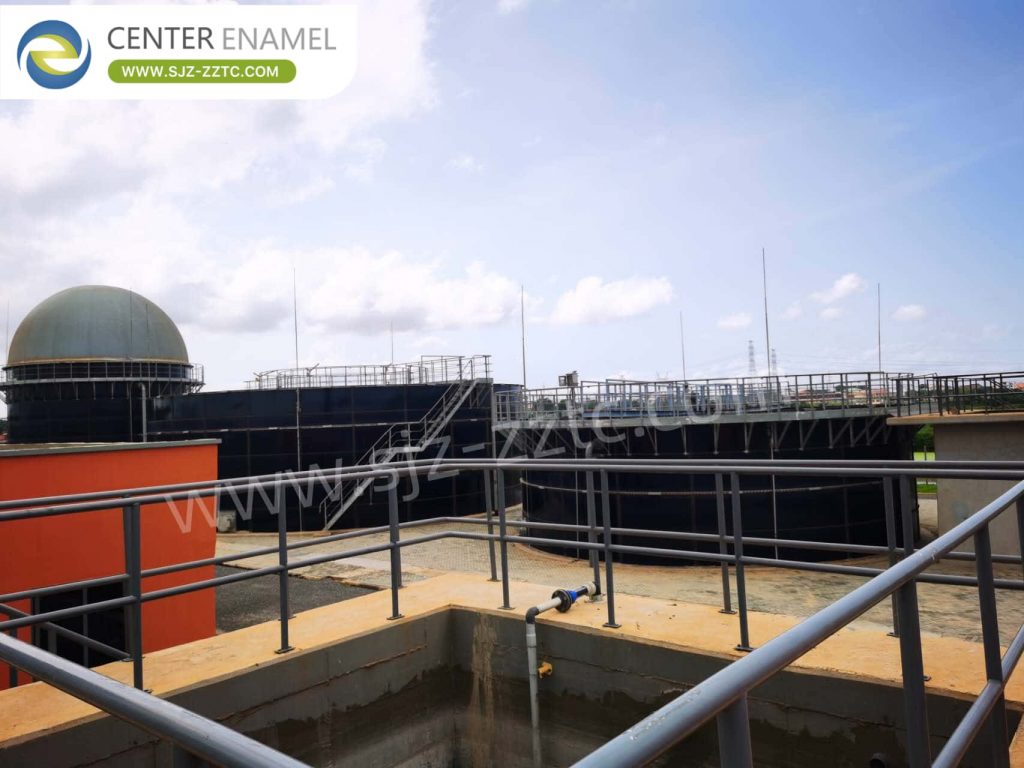
At the enforcement level, farmers' environmental awareness varies, with illegal discharges occurring frequently; at the policy level, subsidies and incentives are insufficient to effectively drive voluntary compliance. Biogas grid connection difficulties and limited digestate transport radius further compress the economic viability of resource utilization. Solving these challenges requires robust equipment and proven process design-which is exactly where Anaerobic Digestion and GFS Tanks deliver their value.
GFS Tanks: Bolted Assembly Construction Advantages
GFS tanks are assembled on-site from prefabricated panels, with short construction periods and support for expansion, relocation, and reuse-advantages distinctly different from immovable concrete tanks. Concrete tank pouring requires formwork, rebar tying, pouring, and long curing periods, with a single tank construction taking months. Rain, snow, and low temperatures force work stoppages and delays. Once poured, they are permanent fixed structures that cannot be dismantled, expanded, or relocated-project relocation means complete abandonment.
GFS tank panels are all factory-prefabricated, transported to site, and directly assembled in panels with simple procedures. Construction can proceed even in low-temperature, light-rain conditions, with installation time only one-third that of concrete tanks-construction schedules are controllable. For expansion, additional steel panels can be installed to increase volume; for plant relocation, tanks can be fully disassembled with panels transported to new sites for reassembly and reuse, significantly reducing material and construction costs for new construction and reconstruction. This is ideally suited for short-term environmental projects, phased expansion projects, and relocated construction projects.
Table 1: GFS Tanks vs. Concrete Tanks
| Comparison Item | GFS Tanks | Concrete Tanks |
| Construction period | One-third of concrete tanks | Months per tank |
| Weather impact | Works in low temperature, light rain | Rain, snow, low temperature cause stoppage |
| Expansion | Add panels to increase volume | Difficult, permanent structure |
| Relocation | Fully disassembled and reused | Abandoned |
| Best suited for | Short-term, phased, relocated projects | Permanent fixed sites |
USR Supporting Equipment for High-Solids Wastewater
Core equipment is the GFS tank with no complex media or precision three-phase separators, featuring a rugged clog-resistant structure. Bottom large-diameter anti-clogging distribution system suitable for high-solids wastewater, preventing pipe clogging. Supporting equipment includes influent lift pumps, simple pretreatment screens, and equalization tanks for impurity removal and water quality balancing. Simple top gas collection devices and biogas conveying/desulfurization equipment for biogas resource recovery. Temperature, level, and pH online monitoring equipment. Bottom large-diameter sludge discharge pipes and pumps for rapid removal of high-concentration residual sludge, suitable for high-solids conditions. The complete system has extremely low failure rates, outstanding wear and clog resistance, and is far easier to maintain than conventional anaerobic processes.
Standardized Treatment Solutions for Livestock Wastewater
Adapted to agricultural and rural settings, the core uses a low-cost treatment train of "solid-liquid separation + anaerobic digestion + ecological polishing," specifically addressing high-suspended-solids, high-concentration organic wastewater. Pretreatment uses solid-liquid separation equipment and sedimentation tanks to rapidly remove solid impurities like manure and feed residues, significantly reducing biochemical load. The main stage uses USR/CSTR anaerobic processes for efficient organic degradation with simultaneous biogas energy recovery. Subsequent A/O biological treatment precisely removes nitrogen and phosphorus, with final constructed wetlands or stabilization ponds for polishing. Digester tanks use Center Enamel GFS tanks, resistant to manure corrosion and with convenient assembly for rural projects. The entire process has strong shock load resistance, adapts to significant water quality and quantity fluctuations, is simple to operate, and achieves both pollution control and resource recycling.
Full-Category Complete Product Matrix
Center Enamel has built a complete product matrix of "core storage tanks + supporting covers + specialty pressure vessels + complete environmental engineering services"-the only company globally to achieve integrated enamel frit R&D, self-manufacturing, and GFS tank application.
① Core: Proprietary GFS Tanks - Using proprietary double-sided hot-rolled double-layer enamel anti-corrosion technology-resistant to strong acids/alkalis, high salinity, and microbial corrosion-modular quick assembly-suitable for all strong-corrosion conditions in wastewater, biogas, and chemical applications.
② Supporting: Fusion Bonded Epoxy Tanks - Produced on China's first intelligent standardized production line-primarily for drinking water, fire water, and neutral medium storage.
③ Sealing: Aluminum Dome Covers
④ Other Tanks: Carbon Steel Tanks, Stainless Steel Tanks, Composting Tanks, Various Non-Standard Pressure Vessels.
⑤ Engineering Services: Environmental EPC General Contracting, Anaerobic Process Section Subcontracting-one-stop coverage across food waste, leachate, municipal wastewater, livestock biogas, petrochemical/metallurgical, and seawater desalination industries-customizable tank volume, corrosion protection grade, and complete process solutions with integrated equipment manufacturing and engineering construction.
Table 2: Center Enamel Complete Product Matrix
| Category | Products / Services | Key Features |
| Core | GFS Tanks | Double-sided double-layer enamel, strong corrosion resistance |
| Supporting | Fusion Bonded Epoxy Tanks | Intelligent standardized production line |
| Sealing | Aluminum Dome Covers | Airtight biogas containment |
| Other Tanks | Carbon steel, stainless steel, composting, pressure vessels | Non-standard customization |
| Engineering Services | EPC contracting, anaerobic subcontracting | One-stop, multi-industry coverage |
Marketing Team
The marketing team brings together environmental industry multi-skilled professionals and multilingual foreign trade specialists, with deep expertise in global biogas, wastewater treatment, and biomass new energy markets-accumulating extensive practical project experience in Southeast Asia, Africa, Europe, and the Americas.
The team is proficient in various countries' wastewater discharge regulations, biogas subsidy policies, and carbon trading rules-providing one-stop preliminary site survey, solution planning, and investment return analysis consulting services. With multilingual capabilities (English, French, Spanish, Arabic), the team effectively communicates with clients worldwide-precisely matching regional industrial resources, project budgets, and environmental requirements-customizing high-cost-performance GFS tanks and anaerobic reactor solutions based on client production capacity, treatment targets, and gas production expectations. Leveraging extensive overseas project experience, the team proactively helps clients avoid risks in overseas approvals, equipment import, and construction implementation-building a globally adaptable integrated environmental equipment business service system.
FRP Roof Cover Solution for Storage Tanks
FRP Roof is a general-purpose economical roof for atmospheric pressure storage tanks without air-tightness requirements, suitable for drinking water storage, agricultural irrigation water, firewater reserve, and general production wastewater temporary storage. It is available in two styles: flat and dome, allowing flexible selection based on tank specifications and site aesthetic requirements. The roof is integrally molded from resin and fiberglass, lightweight, with natural water resistance and mild acid/alkali corrosion resistance. It will not rust or rot in long-term humid environments, eliminating the frequent anti-corrosion maintenance required for metal roofs.
The dome style features excellent drainage performance due to its curved structure, resisting water accumulation, dust buildup, snow load, and strong winds. The flat style facilitates the installation of maintenance walkways, level gauges, and vents on top, making inspection and operation convenient. The product is fully insulated with no risk of galvanic corrosion, will not contaminate drinking water quality, and meets environmental standards for domestic water storage. The modular design with low individual component weight allows for simple on-site hoisting and assembly, offering high construction efficiency and affordable procurement and installation costs.
It is only suitable for atmospheric pressure water storage tanks without biogas collection or pressurization requirements, and is not recommended for anaerobic fermentation gas-producing conditions. It is widely used in rural agricultural water storage tanks, industrial park firewater tanks, waterworks buffer tanks, and small to medium-sized domestic wastewater temporary storage facilities, making it a cost-effective general-purpose roof choice for conventional water storage applications.
Ready to solve your livestock wastewater challenges with proven Anaerobic Digestion and GFS Tanks?
Contact Center Enamel today for a customized treatment train and a free consultation on your farm's specific water quality and capacity needs.
Let's build a compliant, cost-effective livestock wastewater solution together-reach out to our team and start your project with confidence.
FAQ
1. How does Anaerobic Digestion solve livestock manure treatment challenges?
Anaerobic Digestion degrades high-COD organic matter while recovering biogas, offsetting energy costs. Combined with solid-liquid separation and ecological polishing, it addresses decentralized generation and reduces net treatment costs.
2. Why are GFS Tanks suitable for livestock wastewater projects?
GFS Tanks resist strong acids, high salinity, and microbial corrosion. Their bolted assembly allows fast installation, expansion, and relocation-ideal for rural and phased projects where concrete tanks are impractical.
3. What supporting equipment does the USR process require?
Key components include anti-clogging bottom distribution systems, influent pumps, pretreatment screens, equalization tanks, gas collection and desulfurization units, online monitoring, and large-diameter sludge discharge pipes-all designed for high-solids conditions.