
Center Enamel-Leading Palm Oil Wastewater Treatment Project Soluiton with GFS Tanks
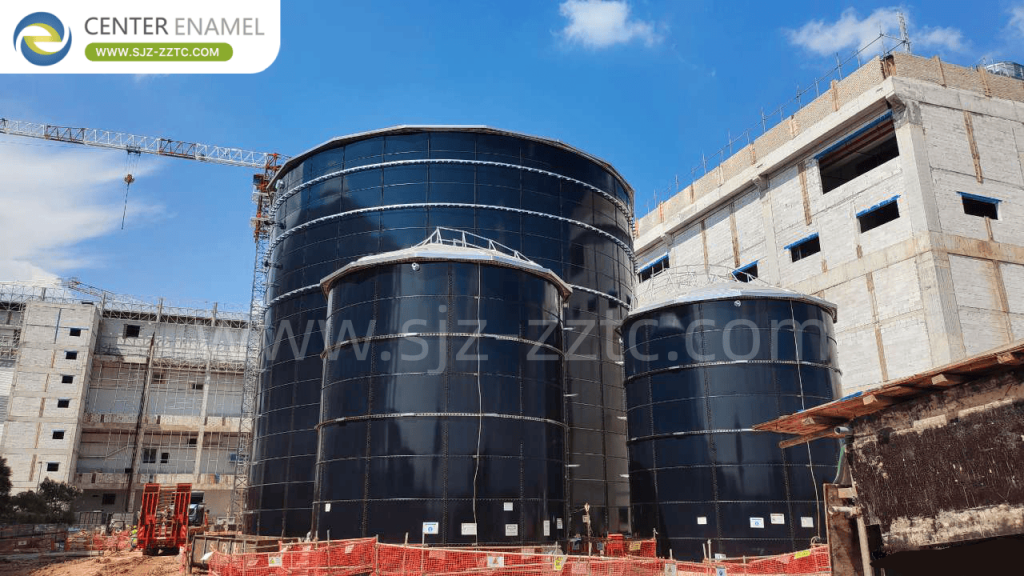
The global biogas industry is in a phase of large-scale expansion, with China contributing the major share of new capacity, becoming the fastest-growing single market. Europe's mainstream model focuses on combined heat and power (CHP) and biomethane grid injection, with active biomethane certificate trading and application scenarios covering power generation, heating, and transportation fuel. China, in contrast, emphasizes vehicle fuel and industrial heating while actively promoting the fertilizer utilization of digestate, showing significant differentiation in application scenarios.
Southeast Asian emerging markets show rapidly growing food waste treatment demand, becoming key areas for global companies; while African and Latin American markets remain in the early stages, primarily relying on low-cost direct application models. Countries show differentiated development paths in biogas resource utilization: Europe focuses on energy output, China emphasizes comprehensive utilization, and emerging markets prioritize pollution control, heavily benefiting any advanced Palm Oil Wastewater Treatment Project in the region.
GFS Tanks Bolted Assembly Construction and Durability
GFS tanks are assembled on-site from prefabricated panels, with short construction periods and support for expansion, relocation, and reuse-advantages distinctly different from immovable concrete tanks. Concrete tank pouring requires formwork, rebar tying, pouring, and long curing periods, with a single tank construction taking months. Rain, snow, and low temperatures force work stoppages and delays. Once poured, they are permanent fixed structures that cannot be dismantled, expanded, or relocated-project relocation means complete abandonment. GFS tank panels are all factory-prefabricated, transported to site, and directly assembled in panels with simple procedures.
Construction can proceed even in low-temperature, light-rain conditions, with installation time only one-third that of concrete tanks-construction schedules are controllable. For expansion, additional steel panels can be installed to increase volume; for plant relocation, tanks can be fully disassembled with panels transported to new sites for reassembly and reuse, significantly reducing material and construction costs for new construction and reconstruction. This is ideally suited for short-term environmental projects, phased expansion projects, and any large-scale Palm Oil Wastewater Treatment Project.
Supporting Equipment in CSTR Process for Wastewater Facilities
The core equipment is a vertical sealed anaerobic reactor tank, with Center Enamel GFS tanks as the mainstream choice for high-corrosion, high-viscosity wastewater conditions. The key operating equipment is a low-speed mechanical stirrer, comprising motor, gearbox, and impeller blades, achieving uniform mixing throughout the reactor and preventing sedimentation and crusting. Supporting equipment includes corrosion-resistant feed pumps, flow control valves, and inlet piping for precise feed flow control; biogas collection systems (piping, water seals, dual-membrane gas holders, desulfurization units) for biogas collection, purification, and storage. Online monitoring equipment for temperature, pH, and liquid level is integrated for real-time reaction parameter monitoring. Sludge discharge pumps, return piping, and emergency drain systems complete the equipment package, with convenient operation and maintenance, low failure rates, and support for long-term continuous stable operation.
Biogas Plant Wastewater Sources and Characteristics
Biogas plant wastewater is secondary wastewater from organic waste resource recovery-primarily digestate from anaerobic digestion, distinct from primary production wastewater. It originates from anaerobic digestion of livestock manure, crop straw, food waste, and brewery residues, as a byproduct of biogas fermentation. Auxiliary wastewater includes equipment washing, digester tank cleaning, desulfurization system drainage, and plant floor washdown. Continuous stable production with only minor variations with feedstock input and fermentation cycles. Pollutants are significantly transformed through anaerobic digestion, with composition distinct from primary high-concentration organic wastewater-it is the core wastewater requiring treatment in biogas plants, which is especially critical when managing a complex Palm Oil Wastewater Treatment Project.
Malaysia Palm Oil Biogas Project Implementation
The project uses Center Enamel GFS tanks as the core anaerobic digestion facility for a benchmark Palm Oil Wastewater Treatment Project with 5 tanks, each with effective volume of 5,400 m³, total effective volume 27,000 m³. Influent COD ≥ 60,000 mg/L, BOD ≤ 25,000 mg/L. After anaerobic digestion, effluent COD drops to below 12,000 mg/L, BOD ≤ 5,000 mg/L-overall organic removal efficiency approximately 80%. Single tank daily biogas production 4,400 m³, total project daily biogas 22,000 m³-stable biogas yield of 0.45 m³ per kg COD removed-efficient biogas energy recovery while solving palm oil processing wastewater pollution.
Center Enamel Marketing Team Expertise and Support
The marketing team brings together environmental industry multi-skilled professionals and multilingual foreign trade specialists, with deep expertise in global biogas, wastewater treatment, and biomass new energy markets-accumulating extensive practical project experience in Southeast Asia, Africa, Europe, and the Americas, particularly supporting every major Palm Oil Wastewater Treatment Project worldwide. The team is proficient in various countries' wastewater discharge regulations, biogas subsidy policies, and carbon trading rules-providing one-stop preliminary site survey, solution planning, and investment return analysis consulting services.
With multilingual capabilities (English, French, Spanish, Arabic), the team effectively communicates with clients worldwide-precisely matching regional industrial resources, project budgets, and environmental requirements-customizing high-cost-performance GFS tanks and anaerobic reactor solutions based on client production capacity, treatment targets, and gas production expectations. Leveraging extensive overseas project experience, the team proactively helps clients avoid risks in overseas approvals, equipment import, and construction implementation-building a globally adaptable integrated environmental equipment business service system.
Comprehensive International Authoritative Certifications and Compliance
Center Enamel holds CE, NSF, WRAS, ISO9001, BSCI, ASME, and other global certifications-fully clearing EU, North American, Southeast Asian, and African project tendering barriers-providing critical hard credential advantages for large overseas project bidding and compliance across international industrial sectors.