
Choosing the Right Anaerobic Technologies and an EPC Contractor for Beverage Wastewater Treatment
Beverage producers rarely fail at treatment because they picked the wrong pump. They fail because the process architecture was mismatched to their effluent, or because no single party owned the outcome from design through commissioning. These two failures are linked: the reactor technology determines what performance is physically achievable, and the delivery model determines whether that performance is ever realized on site. Getting both right is the entire job.
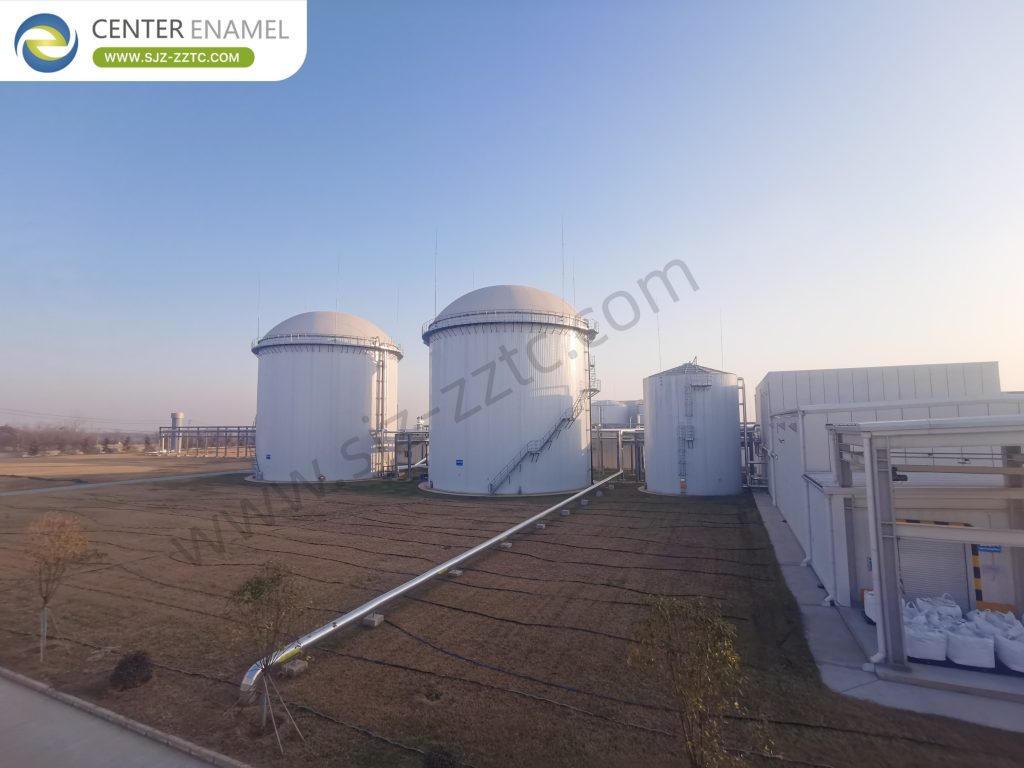
This article addresses both halves of that equation. It examines the anaerobic process options available for high-strength organic streams, explains how the IC reactor works and why it outperforms earlier generations in specific conditions, and sets out the commercial and technical criteria for selecting an EPC Contractor for Beverage Wastewater Treatment who can guarantee results rather than promise them.
The Competitive Landscape for Anaerobic Treatment
The market for industrial anaerobic systems has stratified into distinct tiers. International giants concentrate on high-end customers and the most complex industrial wastewater applications, where process risk justifies premium pricing. Local players compete in the mid- to low-end and industrial park centralized treatment markets on service responsiveness and cost. Chinese manufacturers have consolidated a durable advantage in mid-tier equipment exports, combining proven designs with competitive fabrication economics. Across all tiers, industry concentration is increasing as leading firms build integrated service capabilities through technical integration and capital operations.
Within the anaerobic segment itself, three reactor families dominate high-concentration organic wastewater pretreatment in food processing, pharmaceutical fermentation, alcohol brewing, and chemical production: UASB, EGSB, and the IC reactor. All three share the same fundamental advantage-high volumetric loading rates, small footprints, and stable operation-and all three depend on steel tank shells whose corrosion resistance and gas-tightness directly determine long-term operational stability. This dependency is why glass-fused-to-steel containment has become increasingly prominent in anaerobic applications; the reactor's biology is only as reliable as the vessel that protects it.
How the IC Reactor Achieves Autonomous Circulation
The IC, or Internal Circulation reactor, differs from its predecessors in one decisive respect: it recirculates wastewater without external return pumps. Understanding the flow path explains why this matters.
Pretreated high-strength organic wastewater enters the lower main reaction zone from the bottom, where it mixes with recirculated sludge-water mixture and rises rapidly. Anaerobic microorganisms degrade the organic matter efficiently, producing large volumes of biogas. The gas-lift action of that biogas carries the mixed liquor upward to a top-mounted gas-liquid separator, where the biogas is collected and drawn off. The now-degassed sludge-water mixture returns by gravity through downcomers to the reactor bottom, establishing an autonomous internal circulation loop that repeatedly passes biomass through the reaction zone and drives pollutant degradation to completion.
After multiple circulation cycles, the wastewater enters the upper polishing zone for further reaction and sludge-water separation. Remaining trace organics are fully degraded, settled sludge returns to the lower reaction zone, treated effluent overflows from the top, and aged sludge is periodically discharged. The result is fully autonomous circulation with efficient continuous operation-no return pumps, no external energy input for mixing, and a hydraulic regime that keeps granular sludge in suspension at upflow velocities conventional UASB designs cannot sustain.
Matching Anaerobic Technologies to Effluent Reality
Technology selection only becomes meaningful when mapped against actual water quality. Beverage wastewater presents a distinctive and, in anaerobic terms, favorable profile: high COD, high sugar content, low suspended solids, slightly acidic pH, and excellent biodegradability-but with significant fluctuations. COD typically ranges from 3,000 to 20,000 mg/L, with high-concentration CIP cleaning wastewater peaking above 50,000 mg/L. The core pollutants are soluble sugars-sucrose, fructose, and glucose-which are highly degradable organics, with BOD/COD ratios typically between 0.5 and 0.65, among the best biodegradability figures in industrial wastewater.
Suspended solids remain low, consisting primarily of fruit pulp and tea residue, and pH sits at 3 to 4 for juice streams, while carbonated beverage wastewater contains phosphoric acid. Color ranges from clear to slightly turbid depending on product type-juice streams run high in color, tea streams carry tea color. Temperature is moderate at 20 to 40°C. The defining operational challenge is intermittency: water quality fluctuates with CIP cleaning cycles and product changeovers, alternating between high-concentration cleaning pulses and low-concentration filling wastewater. Any anaerobic technology specified for this duty must tolerate shock loading without biomass washout-precisely the condition the IC reactor's internal circulation is designed to absorb.
| Beverage Wastewater Parameter | Typical Range | Design Implication |
| COD | 3,000–20,000 mg/L (CIP peaks >50,000) | High-rate anaerobic pretreatment |
| BOD/COD ratio | 0.5–0.65 | Excellent anaerobic degradability |
| Suspended solids | Low (pulp, tea residue) | Reduced clogging risk |
| pH | 3–4 (juice); phosphoric acid (carbonated) | Corrosion-resistant containment required |
| Temperature | 20–40°C | Mesophilic operation viable |
| Variability | CIP cycles and product changeovers | Shock tolerance and equalization essential |
Engineering the Vessel: Containment and Roofing Decisions
Anaerobic performance depends on gas-tight, corrosion-resistant containment, and the roof specification follows directly from that requirement. Two roof families serve different duties, and conflating them is a common and costly error.
FRP Roof covers are general-purpose economical roofs for atmospheric pressure storage tanks without air-tightness requirements-suitable for drinking water storage, agricultural irrigation water, firewater reserve, and general production wastewater temporary storage. Available in flat and dome styles, they are integrally molded from resin and fiberglass, lightweight, naturally water-resistant, and mildly resistant to acid and alkali corrosion. They will not rust or rot in long-term humid environments, eliminating the frequent anti-corrosion maintenance that metal roofs demand. The dome style drains excellently due to its curved structure, resisting water accumulation, dust buildup, snow load, and strong winds, while the flat style simplifies installation of maintenance walkways, level gauges, and vents. The product is fully insulated with no risk of galvanic corrosion, will not contaminate drinking water quality, and meets environmental standards for domestic water storage. Modular design with low component weight allows simple on-site hoisting and assembly at high construction efficiency and affordable cost.
The critical limitation is explicit: FRP roofs suit only atmospheric pressure water storage tanks without biogas collection or pressurization requirements, and are not recommended for anaerobic fermentation gas-producing conditions. Where biogas capture is the objective-as it is in virtually every beverage anaerobic project-a gas-tight roof is mandatory.
Proven Delivery: Sweden Organic Waste Biogas Project
A 2024 installation in Northern Europe demonstrates how these engineering choices perform under demanding conditions. The Sweden project uses UASB anaerobic process with Center Enamel GFS tanks as the main reaction equipment, with a single fermentation tank measuring 19.11 meters in diameter by 19.2 meters in height. The tanks resist acid and alkali corrosion as well as low-temperature corrosion, making them suited to Nordic organic waste fermentation conditions. The UASB process efficiently retains granular sludge and degrades organic pollutants, producing stable biogas. GFS tank assembly is convenient, with 30-year corrosion protection suited to Nordic cold climates, achieving both harmless organic waste treatment and biogas clean energy recovery-a European biomass environmental demonstration project.
| Sweden Project Parameter | Specification |
| Location and Year | Sweden, 2024 |
| Core Process | UASB Anaerobic Digestion |
| Containment | Center Enamel GFS Tanks |
| Single Tank Dimensions | Ø 19.11 m × 19.2 m height |
| Conditions Addressed | Acid/alkali corrosion; low-temperature Nordic climate |
| Project Outcome | Organic waste treatment + biogas energy recovery |
Design Capability and Global Track Record
Selecting an EPC partner means assessing design depth as much as fabrication capacity. Center Enamel's design team includes senior engineers registered in the Hebei Provincial Science and Technology Expert Database, with design standards aligned to strict European and American high-end equipment safety standards. The team provides complete integrated design for differentiated overseas projects across livestock biogas, POME, municipal wastewater, hazardous waste storage, and seawater desalination-covering tank structure, anti-corrosion and sealing systems, biogas piping, and anaerobic process integration.
Pre-design work thoroughly investigates local seismic zone, wind pressure, soil bearing capacity, water quality corrosivity, and local environmental discharge standards, applying thickened panels, reinforced anchored bases, and optimized sealing and corrosion structures as needed. Complete customized equipment solutions are tailored to customer plant area, wastewater load, treatment targets, and budget-balancing safety, economics, and local adaptation.
That design capability is backed by practical experience few domestic peers can match: over a decade of global installation covering multiple regions and all industry sectors. In 2009, Center Enamel completed its first overseas GFS tank installation, sending a team to Niger, Africa for drinking water storage tank installation. In 2015, it broke industry ground with China's first GFS tank export and installation to the United States, passing strict US acceptance standards. All installed projects have operated stably for many years, covering livestock biogas, POME, municipal wastewater, and drinking water storage applications. Construction has spanned Southeast Asia, Africa, the Americas, and other regions, accumulating specialized solutions for complex sites including mountainous terrain, coastal salt spray, and tropical high temperatures.
What to Demand from Your EPC Partner
The technical case for high-rate anaerobic pretreatment of beverage wastewater is settled. The commercial case depends on execution. When evaluating an EPC Contractor for Beverage Wastewater Treatment, insist on performance guarantees tied to effluent quality and biogas yield, documented experience with comparable effluent profiles, and single-point accountability across design, fabrication, construction, and commissioning. The anaerobic technologies discussed here-UASB, EGSB, and IC-are mature; the differentiator is the partner who selects, engineers, and delivers them.
Frequently Asked Questions
Q: Which anaerobic technology suits beverage wastewater best?
Beverage effluent's high sugar content and excellent biodegradability (BOD/COD 0.5–0.65) favor high-rate reactors. UASB is proven and cost-effective; EGSB and IC reactors offer higher loading rates and smaller footprints, with the IC reactor's internal circulation providing superior shock tolerance during CIP peaks.
Q: Why can't an FRP roof be used on an anaerobic reactor?
FRP roofs are designed for atmospheric pressure tanks without air-tightness requirements. Anaerobic fermentation produces biogas requiring gas-tight collection, so a sealed roof such as an aluminum geodesic dome is required instead.
Q: What does an EPC contractor guarantee on a beverage wastewater project?
A qualified EPC contractor guarantees effluent quality against agreed discharge standards and specified biogas yield, backed by single-point responsibility for design, equipment supply, construction, and commissioning under one contract.
Send us your effluent analysis and production schedule, and our engineers will return a preliminary anaerobic process selection with indicative capital and operating costs.
Talk to Center Enamel about your beverage wastewater project-our team will help you compare reactor options and containment specifications before you commit to a design.