
What Factors Affect the Anaerobic Digestion Process? Key Factors Affecting Anaerobic Digestion in Livestock Wastewater Treatment
Anaerobic digestion (AD) has emerged as a cornerstone technology for treating livestock wastewater while simultaneously generating renewable biogas. However, the biological processes underlying AD are delicate and sensitive to numerous operational parameters. Even minor deviations from optimal conditions can lead to process instability, reduced biogas yields, or complete system failure.
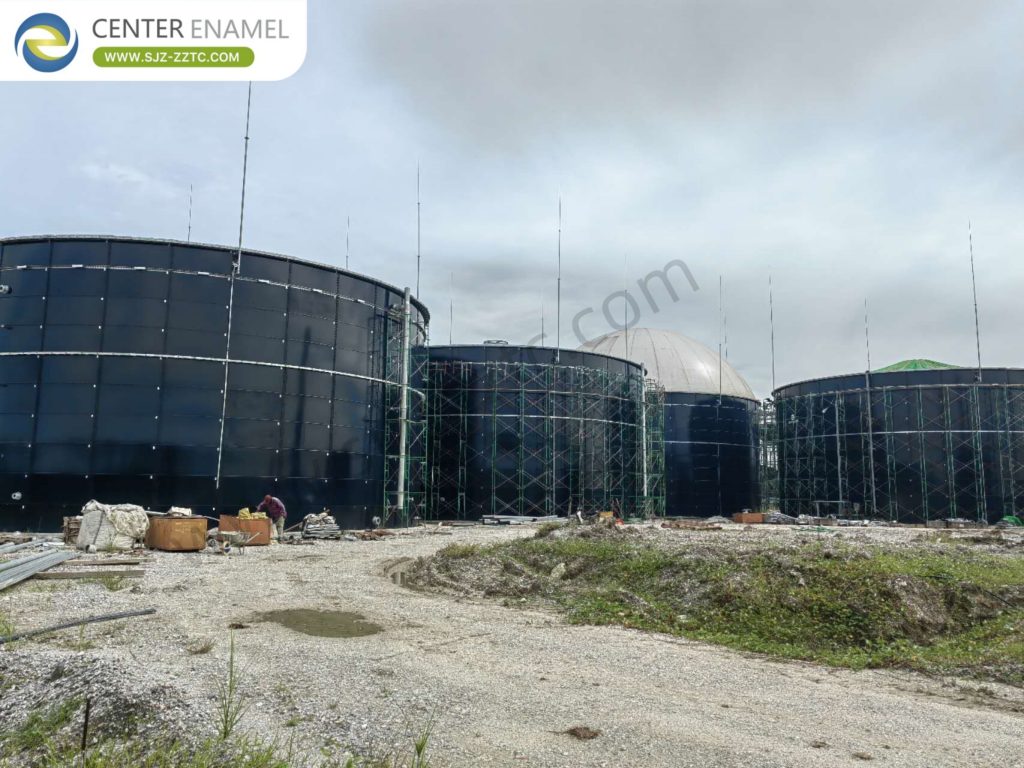
For farms and wastewater treatment facilities, understanding these controlling factors is essential for maximizing both treatment efficiency and energy recovery. This article examines the key parameters that influence anaerobic digestion performance in livestock wastewater applications, providing practical insights for system optimization. Recent research demonstrates that optimizing parameters such as total solids content, substrate-to-inoculum ratio, and digestion time can increase biogas yields by up to 40% compared to non-optimized systems.
Temperature – The Thermal Driver of Microbial Activity
Temperature is one of the most influential factors governing anaerobic digestion kinetics. AD systems operate across three temperature ranges: psychrophilic (<20°C), mesophilic (30–40°C), and thermophilic (50–60°C).
Thermophilic conditions consistently deliver the highest biogas production rates and methane yields. Research on dairy manure digestion demonstrated that thermophilic temperatures accelerated biogas production significantly compared to mesophilic and moderate temperatures, with higher methane content and greater volatile solids reduction achieved within shorter retention periods.
However, thermophilic systems demand more heating energy and are less stable against perturbations. Mesophilic digestion offers a practical balance between performance and energy input, making it the most common configuration for livestock wastewater treatment. Lower temperatures reduce reaction rates and can extend required retention times, though they may be suitable for operations with lower heating capacity.
Temperature Impact on Pathogen Reduction
Temperature also plays a critical role in pathogen inactivation. Thermophilic conditions achieve rapid pathogen kill, whereas mesophilic systems require longer retention times to achieve comparable sanitization.
| Temperature Range | Biogas Production Rate | Methane Content | Retention Time |
| Psychrophilic (<20°C) | Very low | Low | Very long |
| Mesophilic (30–40°C) | Moderate | Moderate | 15–30 days |
| Thermophilic (50–60°C) | Very high | High | 10–20 days |
pH and Alkalinity – Maintaining Process Stability
Methanogenic archaea, the microorganisms responsible for methane production, are highly sensitive to pH fluctuations. The optimal pH range for anaerobic digestion is 6.8–7.4.
When pH drops below 6.5, volatile fatty acids accumulate, inhibiting methanogenesis and creating a feedback loop that can lead to process souring. Conversely, pH above 8.5 can increase free ammonia toxicity, particularly problematic in livestock wastewater with high nitrogen content.
Alkalinity serves as the system's buffer against pH drops. Adequate alkalinity (typically >2,000 mg/L as CaCO₃) is essential for stable operation. The volatile fatty acids-to-alkalinity ratio is a key stability indicator-ratios below 0.3–0.4 generally indicate stable conditions.
Substrate Composition and Total Solids Content
The composition of livestock wastewater directly influences digestibility and biogas potential. Key substrate characteristics include:
Total Solids (TS) and Volatile Solids (VS)
Optimal TS content balances substrate availability against mixing and mass transfer limitations. Research on chicken manure digestion found that 6% TS achieved the highest biogas production (780 mL/g VS) compared to 9% and 12% TS, which yielded 619.0 and 603.1 mL/g VS respectively. Higher solids concentrations impede mixing and increase the risk of ammonia inhibition.
Lignocellulosic Content
Feedstocks with high lignocellulosic matter (cellulose, hemicellulose, lignin) are more resistant to anaerobic degradation. Lignin, in particular, acts as a physical barrier that reduces microbial accessibility to biodegradable components. Pre-treatment or extended retention times may be necessary for high-lignin substrates.
Carbon-to-Nitrogen Ratio
Optimal C:N ratios (typically 20:1–30:1) support balanced microbial nutrition. Livestock manure often has relatively low C:N values, making co-digestion with carbon-rich substrates (e.g., crop residues) beneficial for process stability.
Substrate-to-Inoculum Ratio – Balancing Microbial Activity
The substrate-to-inoculum ratio (SIR) determines the initial microbial population available to process the incoming organic load. Insufficient inoculum leads to slow start-up and acid accumulation; excessive inoculum may reduce substrate utilization efficiency.
Research has demonstrated that an SIR of 2:1 (substrate:inoculum) with 6% TS optimizes biogas production and process stability, achieving 67% methane content and rapid stabilization within 20–30 days-approximately 40% faster than higher TS systems.
The optimal SIR depends on feedstock characteristics and the specific microbial community composition of the inoculum. Farm operators should test multiple SIR configurations to identify the best balance for their particular waste stream.
Inhibitory Compounds – Ammonia, Sulfide, and Other Toxicants
Inhibition is one of the most common causes of AD system failure, particularly in livestock wastewater applications. The primary inhibitors include:
Ammonia (NH₃) Inhibition
Ammonia is released during protein degradation and is particularly problematic in livestock manure. Research confirms that shock loading of total Kjeldahl nitrogen (TKN) significantly decreases methane production yield and rate. A sudden increase of ammonia nitrogen can reduce methane content by over 60%, as demonstrated in slaughterhouse waste digestion studies.
Concrete data from livestock wastewater studies show that ammonia-nitrogen concentration at 1,200 mg/L inhibits anaerobic digestion at pH 8.0–8.5. Free ammonia (NH₃) is more toxic than ammonium (NH₄⁺), making the inhibition worse at higher pH and temperature.
Sulfide and Sulfate
Sulfate-reducing bacteria compete with methanogens for substrates and produce hydrogen sulfide (H₂S), which is both toxic and corrosive. Elevated sulfide in the liquid phase can inhibit methanogenic activity, with gaseous H₂S levels rising significantly during inhibition events.
Long-Chain Fatty Acids (LCFAs)
High concentrations of LCFAs can coat microbial cell surfaces, hindering substrate uptake and causing process inhibition. The inhibitory effect is influenced by synergism with other compounds and can be partially mitigated through acclimatization.
| Inhibitory Compound | Common Source | Inhibition Mechanism | Critical Level |
| Ammonia (NH₃) | Protein degradation | Methanogen toxicity | >1,200 mg/L NH₄⁺-N |
| Sulfide (H₂S) | Sulfate reduction | Enzyme inhibition | Varies by pH |
| Long-chain fatty acids | Lipid degradation | Cell coating/uptake | Synergistic effects |
| Monensin | Cattle feed additive | Reduced organic degradation | Dose-dependent |
Veterinary Additives
Dietary additives such as monensin (an ionophore used in cattle feed) can significantly alter manure composition and reduce anaerobic digestion efficiency. Higher monensin inclusion correlates with reduced degradation of organic components and lower biogas yields.
Hydraulic Retention Time – Giving Microbes Time to Work
Hydraulic retention time (HRT) determines how long substrate remains in the digester, directly impacting the extent of organic matter degradation and biogas production.
For livestock wastewater, research indicates that optimal HRT typically ranges from 20 to 30 days. A 30-day HRT combined with fraction separation is recommended for manure from cattle supplemented with monensin to maximize biogas yield and methane content.
Longer HRTs generally increase biogas production but also increase reactor volume requirements and capital costs. The optimal HRT depends on:
Feedstock biodegradability
Operating temperature
Target level of stabilization
In thermophilic systems, adequate pathogen reduction and biogas production can be achieved within 10–20 days.
Mixing and Mass Transfer – Ensuring Uniform Conditions
Effective mixing is essential for:
Distributing substrate and inoculum uniformly
Preventing temperature gradients
Avoiding solids sedimentation
Promoting gas-liquid mass transfer
However, mixing is also the largest energy consumer in AD systems. Research shows that increasing agitation speed from 60 rpm to 120 rpm approximately halves mixing time but leads to a nearly fourfold increase in energy consumption. Furthermore, excessive agitation intensity proved detrimental, causing a 14.01% reduction in methane content.
Optimal mixing strategies should balance uniformity against energy cost. Lower mixing intensities (e.g., 60 rpm) often deliver the best overall process efficiency.
Summary Table – Key Factors and Their Optimal Ranges
| Factor | Parameter | Optimal Range | Consequence of Deviation |
| Temperature | Operating temp | 35–40°C (mesophilic) or 50–60°C (thermophilic) | Reduced kinetics, lower biogas yield |
| pH | Digester pH | 6.8–7.4 | Acid accumulation or ammonia toxicity |
| TS content | Solids concentration | 6–9% | Mixing issues, inhibition risk |
| SIR | Substrate:inoculum | 1:1 to 2:1 | Slow start-up or instability |
| HRT | Retention time | 20–30 days | Incomplete degradation |
| Mixing | Agitation speed | Moderate (e.g., 60 rpm) | Energy waste or process inhibition |
| Ammonia | NH₄⁺-N concentration | <1,200 mg/L | Methanogen toxicity |
Conclusion
Successful anaerobic digestion of livestock wastewater depends on careful control of multiple interacting factors. Temperature, pH, substrate composition, substrate-to-inoculum ratio, inhibitory compound levels, hydraulic retention time, and mixing all play critical roles in determining system performance.
The most successful AD operations adopt a holistic approach, recognizing that these factors are interconnected. For example, higher temperatures accelerate ammonia toxicity, while lower pH increases sulfide inhibition. Regular monitoring of key indicators-biogas production, methane content, pH, VFA/alkalinity ratio, and ammonia levels-enables operators to maintain stable conditions and maximize both waste treatment efficiency and energy recovery.
By understanding and optimizing these fundamental factors, livestock operations can transform manure from an environmental liability into a valuable resource, producing renewable energy while protecting water quality and soil health.
FAQ – Frequently Asked Questions
1. What is the most critical factor affecting anaerobic digestion of livestock wastewater?
Temperature and ammonia concentration are the two most critical factors. Temperature directly governs microbial metabolic rates and biogas production kinetics, with thermophilic conditions delivering the highest yields. Ammonia, released from protein degradation in manure, is the most common inhibitor-concentrations above 1,200 mg/L NH₄⁺-N can significantly reduce methane production, particularly at higher pH levels.
2. How can I optimize biogas production from my farm's manure?
Key optimization strategies include: (1) maintaining TS at approximately 6% to balance substrate availability and mixing efficiency; (2) using a substrate-to-inoculum ratio of 1:1 to 2:1; (3) operating at mesophilic (35–40°C) or thermophilic temperatures; (4) ensuring adequate alkalinity to buffer pH; and (5) providing moderate mixing (approximately 60 rpm) to promote uniformity without excessive energy consumption. Co-digestion with carbon-rich substrates can also improve C:N ratios.
3. How do I know if my anaerobic digester is experiencing inhibition?
Warning signs of inhibition include: (1) a sudden drop in pH below 6.5; (2) accumulation of volatile fatty acids; (3) reduced biogas production or methane content; (4) elevated ammonia or sulfide levels in the liquid phase; and (5) an increasing VFA/alkalinity ratio above 0.4. Regular monitoring of these parameters allows early detection and corrective action before process failure occurs.