
What Is the Difference Between BOD and TOC and COD?
In the field of wastewater treatment, three parameters are routinely used to assess the organic content of water and wastewater: Biochemical Oxygen Demand (BOD), Chemical Oxygen Demand (COD), and Total Organic Carbon (TOC). These measurements are fundamental to evaluating the pollution load of influent wastewater and monitoring the removal efficiency of treatment processes. While they are all related to the amount of organic material in a sample, each parameter measures a different aspect of organic pollution and has distinct applications in water quality management. Understanding the differences between these three indicators is essential for designing effective treatment strategies and ensuring regulatory compliance.
What Is Biochemical Oxygen Demand (BOD)?
Biochemical Oxygen Demand (BOD) is a measure of the oxygen consumed by microorganisms during the biochemical degradation of organic matter over a specified period. The standard test is conducted over five days and is known as BOD₅. This parameter measures the amount of dissolved oxygen required by bacteria and other microorganisms engaged in stabilizing decomposable organic matter.
BOD is specifically used to estimate the impacts of effluents that contain large amounts of biodegradable organics, such as those from food processing plants, municipal wastewater treatment facilities, pulp mills, and agricultural feedlots. A high oxygen demand indicates the potential for developing dissolved oxygen depletion in receiving waters as microbiota oxidize the organic matter in the effluent. A very low oxygen demand indicates either clean water or the presence of a toxic or nondegradable pollutant.
Practical Considerations for BOD Testing
BOD testing requires an incubation period of five days, making it time-consuming for routine operational monitoring. Additionally, BOD values may underreport pollution if samples contain complex toxic components that cannot be degraded due to the absence of suitable microbial metabolic ability.
What Is Chemical Oxygen Demand (COD)?
Chemical Oxygen Demand (COD) is a measure of the concentration of organic compounds that can be chemically oxidized by a strong oxidizing agent. The test uses potassium dichromate in an acid medium to chemically oxidize organic matter, and the amount of oxidant consumed indicates the organic concentration.
Unlike BOD, which measures only biodegradable organic compounds, COD assesses all organic compounds that can be oxidized, including substances that are resistant to biological degradation. This includes materials such as cellulose, phenols, pesticides, pyridine, and polychlorinated biphenyls that are toxic to microorganisms and resist biodegradation.
Practical Considerations for COD Testing
COD determination can be performed in approximately 3–4 hours, making it much faster than the five-day BOD test. COD is one of the most commonly used parameters for oxidation demand assessment because of the simple nature of the analytical procedures and rapid results.
What Is Total Organic Carbon (TOC)?
Total Organic Carbon (TOC) is a direct measurement of the amount of organic carbon present in a water sample. Unlike BOD and COD, which measure oxygen demand, TOC quantifies the actual carbon content of organic matter.
TOC determination is a simple, rapid, and reliable measurement that can be performed with little operator intervention. However, it does not provide information on the oxidation state of the organic matter, and capital costs for TOC analyzers are a critical factor. TOC is often preferred when frequent characterization of organic matter is required.
Key Differences Between BOD, COD, and TOC
What They Measure
The fundamental difference between these three parameters lies in what they actually measure. BOD measures the oxygen consumed by microorganisms during biological degradation of organic matter over a specific period. COD measures the oxygen equivalent of all oxidizable substances, both organic and inorganic, using a strong chemical oxidant. TOC measures the total carbon content of organic compounds in the sample, independent of their oxidation state.
Biodegradability vs. Total Organic Content
BOD specifically addresses the biodegradable fraction of organic matter, making it an indicator of the potential biodegradability of a sample and thus of the process removal efficiency. COD addresses all organic compounds that can be oxidized, regardless of biodegradability. TOC measures the total carbon present, providing a direct carbon count without reference to oxygen demand.
Testing Time and Complexity
BOD testing requires five days of incubation, making it time-consuming and impractical for frequent operational monitoring. COD testing takes approximately 3–4 hours, allowing for rapid assessment. TOC analysis is even faster and can be automated for continuous monitoring.
Relationship Between BOD, COD, and TOC
The BOD/COD Ratio
The ratio of BOD to COD is a useful indicator of the biodegradability and treatability of wastewater. Monitoring COD:BOD ratios in effluent over time helps identify potential changes in influent treatability or toxicity. For municipal wastewater, BOD₅ is empirically approximately 0.4 to 0.6 of COD.
Approximate Conversions
While these parameters cannot be exactly converted from one to another since they depend upon different reactions, some approximate relationships exist. For substrates rich in carbohydrates, the relationship BOD/COD is approximately 0.7–0.8. Assuming organic carbon has an elemental composition of CH₂O, COD and TOC can be interconverted using approximately 2.67 g COD/g TOC.
Choosing the Right Parameter for Your Application
The choice of which parameter to measure depends on the specific application:
BOD is valuable for assessing the potential environmental impact of biodegradable organic discharges and evaluating biological treatment efficiency.
COD is preferred when rapid results are needed and when non-biodegradable organic compounds must be accounted for.
TOC is ideal for frequent monitoring and when a direct measure of total organic carbon is required.
Center Enamel: Your Comprehensive Wastewater Treatment Solutions Partner
With over 36 years of experience and successful project completions in more than 100 countries, Center Enamel is a global leader in providing turnkey wastewater treatment solutions. Our expertise spans the full spectrum of organic pollution management, from initial design through manufacturing, installation, commissioning, and after-sales support.
Advanced Containment Technology
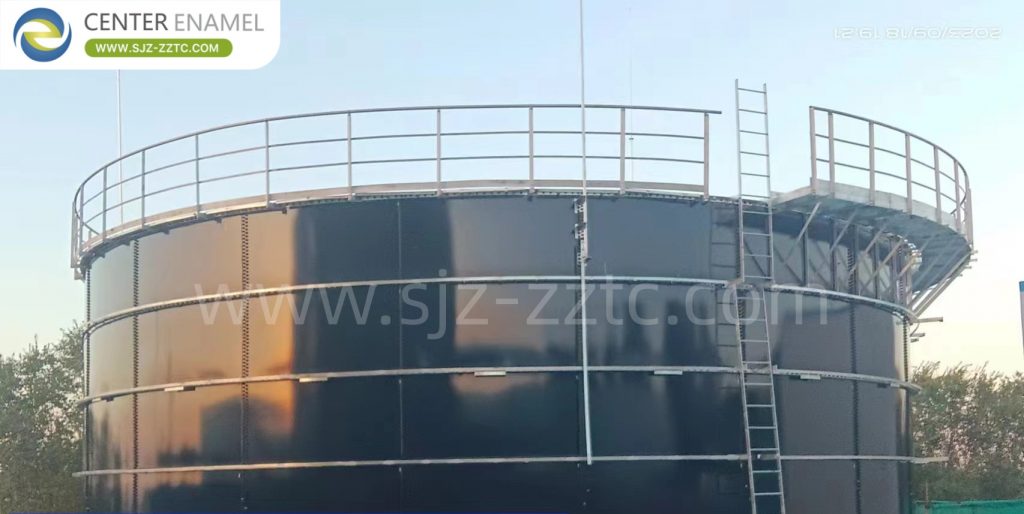
Center Enamel's flagship Glass-Fused-to-Steel (GFS) tanks represent the global benchmark for wastewater containment. By fusing high-tech glass enamel to specialized steel at temperatures exceeding 820°C, we create a material that combines the structural strength of steel with the chemical inertness of glass. These tanks offer unparalleled resistance to the organic acids and corrosive hydrogen sulfide generated during wastewater treatment processes.
Complete Project Delivery
As a full-service EPC Contractor, Center Enamel provides comprehensive turnkey solutions that simplify the entire project development process:
Customized Design: Tailoring solutions to match specific wastewater characteristics, regional climate conditions, and regulatory requirements.
Manufacturing Excellence: Operating Asia's largest GFS tank production base with over 200 enamel patents, ensuring independent supply of all core equipment.
Efficient Installation: Utilizing hydraulic jacking technology for rapid top-down assembly in challenging site conditions.
International Quality Standards: All products comply with ISO 28765, AWWA D103, CE, and NSF61 certifications, with every tank undergoing rigorous 1500V high-voltage spark testing.
Proven Performance Across Industries
Center Enamel's solutions have been successfully deployed across diverse industrial applications, addressing the full range of organic pollution challenges:
Textile Wastewater: Our turnkey solutions for textile mills have achieved significant COD reduction through advanced coagulation-flocculation and biological treatment processes.
Beverage Production: For beverage manufacturing facilities, we implement high-rate anaerobic reactors to manage fluctuating organic loads with COD levels ranging from 2,000 to over 10,000 mg/L.
Food Processing: Our durable containment infrastructure provides stable environments for high-efficiency treatment of organic-rich wastewater.
Conclusion
Understanding the differences between BOD, COD, and TOC is essential for effective wastewater management. While BOD measures biodegradable organic pollution, COD captures the total oxidizable load, and TOC provides a direct measure of organic carbon content. Each parameter serves a distinct purpose in monitoring water quality and designing appropriate treatment strategies.
Center Enamel provides the durable infrastructure and EPC expertise needed to address all these pollution parameters effectively. With our comprehensive turnkey solutions, facilities can achieve significant organic load reduction while generating renewable energy and reducing operational costs.
Frequently Asked Questions (FAQ)
Q1: Why is COD always higher than BOD in wastewater?
COD measures all oxidizable organic compounds—both biodegradable and non-biodegradable—using a strong chemical oxidant, while BOD measures only the oxygen consumed by microorganisms during biological degradation of organic matter over a specific period. Since COD captures everything BOD measures plus additional non-biodegradable material, it will always produce a higher value for the same sample.
Q2: Can TOC values be converted to COD or BOD values?
While no exact conversion exists since they measure different chemical properties, approximate conversions can be made under specific conditions. Assuming organic carbon has an elemental composition of CH₂O, COD can be approximated as 2.67 times TOC. For substrates rich in carbohydrates, BOD/COD ratios typically fall between 0.7 and 0.8.
Q3: What does a low BOD/COD ratio indicate about wastewater?
A low BOD/COD ratio indicates that a significant portion of the organic matter is not biodegradable or may be toxic to microorganisms. This suggests the wastewater contains persistent compounds that require pre-treatment or specialized treatment methods before biological processes can be effectively applied.