
What is the Function of the Gas Holder? Essential Role in Biogas Storage Systems
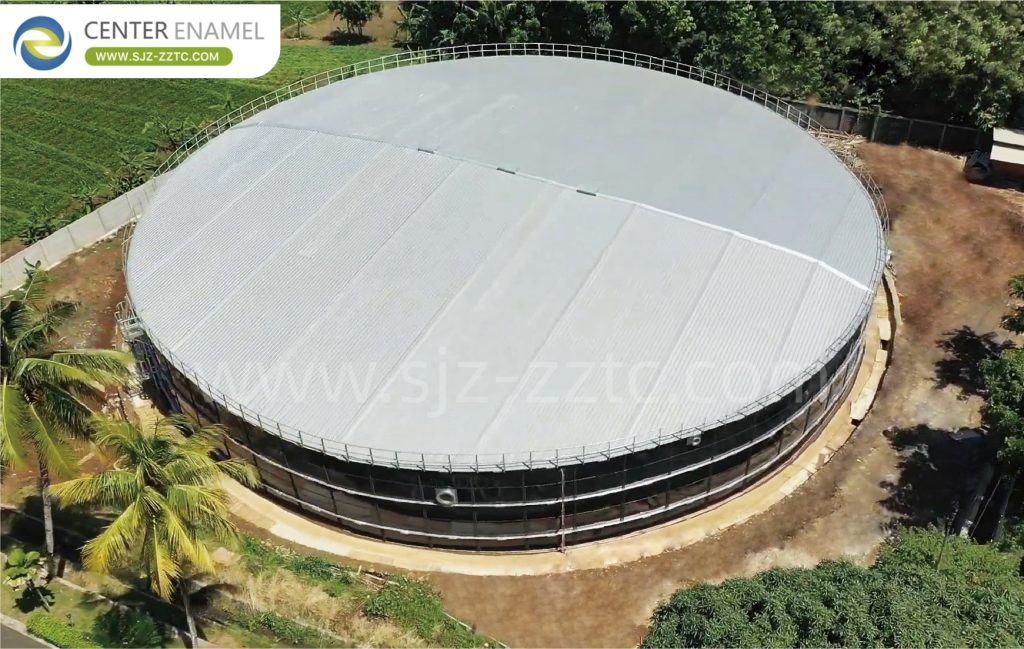
The gas holder is a critical component in any biogas production system, serving as the dedicated storage solution for the methane-rich gas generated during anaerobic digestion. While the digester is responsible for the biological conversion of organic waste into biogas, the gas holder ensures this valuable fuel is safely captured, stored, and made available for productive use. Understanding the function of the gas holder is essential for anyone involved in biogas projects, as it directly impacts the efficiency, safety, and economic viability of the entire waste-to-energy system.
What is a Gas Holder?
A gas holder is an airproof container designed to collect and store biogas produced from anaerobic digestion . In a standard biogas plant, the system consists of two primary components: the digester (or fermentation tank) and the gas holder . The digester provides the anaerobic environment where microorganisms break down organic matter, while the gas holder captures the resulting biogas and prevents air from entering the system, maintaining the anaerobic conditions essential for continued gas production .
Modern gas holders are engineered to accommodate the variable nature of biogas production. Since gas is generated at a low, fluctuating pressure from the digesters, the storage solution must be flexible enough to handle these variations while maintaining a stable supply for downstream utilization .
The Core Functions of a Gas Holder in Biogas Production
The gas holder fulfills several essential functions that make it indispensable to biogas operations :
Gas Collection and Storage: The primary function is to capture every cubic meter of biogas produced and store it until needed. This prevents methane emissions to the atmosphere and ensures the energy is available for productive use.
Pressure Regulation: Biogas is produced at low, variable pressure. The gas holder acts as a buffer, regulating pressure fluctuations and ensuring a stable, continuous gas supply to utilization equipment such as boilers, generators, or gas upgrading systems .
System Stability: By accommodating natural volume fluctuations in biogas production, the gas holder prevents system instability and protects sensitive downstream machinery .
Anaerobic Seal: The gas holder creates an airproof seal over the digester, preventing oxygen from entering and maintaining the anaerobic conditions essential for methane-producing bacteria to thrive .
Fugitive Emission Control: The hermetic seal provided by modern gas holders prevents the release of methane—a potent greenhouse gas—into the atmosphere and significantly reduces odor emissions from the digestion process .
Gas Holder Design: Types and Configurations
Several gas holder designs are available, each suited to different applications and scales. The choice of design impacts cost, durability, and operational efficiency.
Double Membrane Gas Holders
The double membrane gas holder is the most widely adopted solution in modern biogas plants . It consists of three main layers :
Bottom Membrane: Seals the foundation to prevent gas leakage and provides corrosion resistance.
Inner Membrane: Stores the biogas and automatically expands or contracts based on storage volume.
Outer Membrane: Forms a pressurized chamber that maintains constant pressure on the inner membrane and protects it from weather extremes .
This design offers significant advantages. The outer membrane is kept inflated by a continuous air supply, creating a structurally rigid dome that withstands high winds, heavy snow loads, and UV radiation . The inner gas-holding membrane remains independent, allowing for dynamic volume adjustment and stable pressure regardless of storage level .
Alternative Gas Holder Designs
Traditional gas holders include steel floating covers that rise and fall with the fermentation mix, equipped with gas outlets and overflow pipes for sludge management . However, double membrane systems have largely superseded these designs due to their cost-effectiveness, superior durability, and integration capabilities .
The Role of the Gas Holder in the Biogas Plant Process
In a complete biogas plant, the gas holder serves as the vital link between gas production and utilization . The process flow follows this sequence:
Feedstock Preparation: Organic waste is processed and fed into the digester.
Anaerobic Digestion: Microorganisms break down organic matter, producing biogas.
Gas Collection: The biogas is captured instantly by the gas holder.
Pressure Regulation: The holder buffers pressure fluctuations and provides stable supply.
Utilization: The biogas is supplied to boilers, CHP units, or upgrading systems for energy recovery .
Without a properly functioning gas holder, the biogas would escape to the atmosphere, wasting a valuable renewable energy resource and contributing to greenhouse gas emissions.
Key Equipment Supporting Gas Holder Operation
A complete biogas system includes several ancillary components that work alongside the gas holder:
Gas Outlet and Piping: Transports biogas from the holder to utilization equipment.
Pressure Relief Valve: A safety device that prevents overpressure or underpressure events .
Condensate Discharge System: Removes moisture that accumulates in the holder .
Gas Detection Equipment: Monitors methane concentration between membranes for safety .
Support Fan: Maintains outer membrane pressure using explosion-proof motors .
Torch System: Safely flares excess biogas when pressure management is required.
Benefits of Modern Gas Holder Technology
Advanced gas holder designs offer multiple operational and economic advantages:
Cost Optimization: Modular, lightweight construction reduces capital investment and installation time compared to rigid steel holders .
Space Efficiency: Can be installed directly on top of digesters, saving valuable floor area .
Rapid Installation: Installation can be completed in as little as 2 to 5 days .
Durable Materials: Specialized composite fabrics resist corrosion from moisture, hydrogen sulfide, and other biogas components .
All-Weather Protection: Outer membranes provide proven protection against wind, snow, and UV radiation .
Automatic Control: Integrated pressure stabilization and safety systems ensure reliable operation .
Center Enamel: One-Stop Biogas Solutions for Global Customers
Center Enamel is a global leader in advanced biogas storage solutions, offering comprehensive services from design to installation and long-term support. With decades of experience and successful projects in over 100 countries, Center Enamel provides complete biogas systems engineered to international standards .
Comprehensive Services
Customized Engineering Design: Tailored solutions based on feedstock characteristics, climate conditions, and project goals.
Process Design and Equipment Supply: Complete anaerobic digestion systems including digesters, gas holders, and purification equipment.
Glass-Fused-to-Steel (GFS) Tanks: Premium storage tanks with exceptional corrosion resistance for biogas applications .
Double Membrane Gas Holders: State-of-the-art gas storage designed for integration with biogas plant infrastructure .
Quality and Certifications
Center Enamel's products conform to the most demanding international standards, including quality management, drinking water safety, and occupational health certifications. This commitment provides an independent guarantee of quality and compliance with stringent regulations .
Global Project Experience
Center Enamel has delivered successful biogas projects worldwide. For example:
Biogas Project in Malaysia
Tank dimensions: φ22.93m x 12.325m (H) (1 unit)
Total volume: 5,087 m³ (1 unit)
Completion year: 2025
Biogas Project in France
Process: CSTR
Tank dimensions: φ18.33m x 8.4m (H) (1 unit)
Total volume: 2,215 m³ (1 unit)
Completion year: 2021
Conclusion
The gas holder is an essential component that enables efficient biogas capture, storage, and utilization. By providing dynamic pressure regulation and maintaining anaerobic conditions, the gas holder ensures maximum energy recovery from organic waste while preventing methane emissions and odor problems. Modern double membrane gas holders offer superior durability, cost-effectiveness, and operational flexibility. Partnering with Center Enamel provides access to world-class engineering, proven technologies, and comprehensive project services, ensuring biogas projects achieve optimal performance and long-term sustainability.
FAQ Section
1. Why is a gas holder necessary in a biogas plant?
A gas holder is essential because it captures and stores biogas produced at low, variable pressure, prevents methane emissions, and ensures a stable gas supply for energy utilization. It also maintains the anaerobic seal over the digester .
2. How does a double membrane gas holder work?
A double membrane gas holder consists of an inner membrane that stores biogas and expands or contracts based on volume, and an outer membrane inflated with air that maintains constant pressure and protects against weather. The system ensures stable, low-pressure gas supply .
3. What types of gas holders does Center Enamel provide?
Center Enamel provides state-of-the-art double membrane gas holders designed for integration with biogas plants, livestock wastewater treatment, food waste treatment, and industrial applications. The company also supplies complete biogas storage systems with GFS tanks and supporting equipment .